
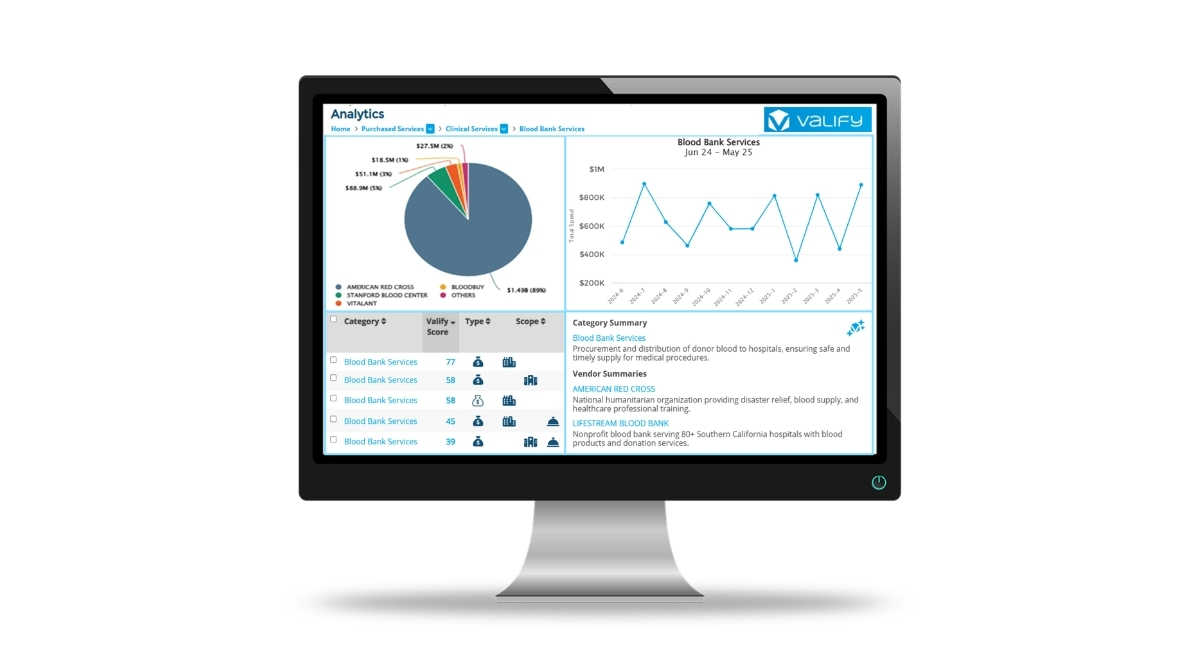
Healthcare organizations are facing a perfect storm of margin pressure, rising operating costs, workforce shortages, inflation, and increasing complexity across their supplier networks. While many hospitals have successfully optimized traditional supply expenses, one of the largest opportunities for sustainable savings remains largely hidden: purchased services.
Purchased services encompass the outsourced services hospitals depend on every day, including equipment maintenance, clinical engineering, information technology, facilities management, environmental services, laundry and linen programs, and numerous other operational support functions. Despite representing millions of dollars in annual spend, these categories are often managed outside centralized supply chain processes, creating significant visibility gaps and missed savings opportunities.
As hospitals move beyond traditional cost-cutting initiatives, purchased services optimization has emerged as a critical pathway toward long-term financial resilience. The challenge is not simply finding savings but identifying the right opportunities, prioritizing them effectively, and implementing changes that create sustainable value without disrupting operations.
Why Purchased Services Have Become a Strategic Priority
Healthcare leaders are under pressure to improve margins while simultaneously supporting growth, innovation, and evolving care delivery models. At the same time, many health systems are managing increasingly diverse vendor ecosystems that span hundreds of service categories and thousands of suppliers.
Unlike medical supplies, purchased services are difficult to compare and standardize. Service agreements vary based on response times, contract language, equipment requirements, operational dependencies, and service-level expectations. As a result, pricing inefficiencies often remain hidden for years.
Common challenges include:
- Contracts that automatically renew without meaningful review
- Multiple vendors performing similar services across facilities
- Department-led purchasing decisions with limited enterprise oversight
- Limited visibility into vendor performance and market pricing
- Difficulty determining whether current rates are competitive
What makes purchased services especially challenging is that finance teams often see costs only after purchasing decisions have already been made. By then, opportunities to negotiate, benchmark, or consolidate services may have already passed.
The Shift from Cost Cutting to Value Creation
Historically, many healthcare organizations approached expense management through isolated cost-reduction initiatives. Today’s environment requires a different mindset.
As highlighted at the 2025 Valify Summit, healthcare organizations must move from reactive cost cutting toward strategic value creation. Rather than focusing solely on reducing expenses, leading organizations are using analytics, benchmarking, automation, and category expertise to create measurable, sustainable financial improvement.
This evolution requires a more intelligent approach to purchased services management, one built around data-driven decision making.
The Purchased Services Roadmap
For many health systems, the question is not whether savings opportunities exist, but where to begin.
Valify’s approach can be organized into a five-step roadmap designed to help healthcare leaders identify, prioritize, and capture sustainable savings opportunities.
Step 1: Establish Complete Spend Visibility
The first step is creating a comprehensive understanding of what the organization is actually buying.
Many health systems have purchased services expenditures scattered across departments, facilities, contracts, invoices, and vendors. Without centralized visibility, opportunities remain hidden.
Organizations should begin by evaluating:
- Category spend
- Vendor concentration
- Facility-level spending patterns
- Contract status and renewal dates
- Historical spend trends
- Service utilization patterns
Valify’s spend analytics capabilities provide visibility across more than 1,400 categories, helping organizations develop a clearer picture of their purchased services landscape.
Step 2: Use Indicators to Prioritize Opportunities
Not every category deserves equal attention.
One of the biggest challenges facing healthcare supply chain and finance leaders is determining where limited resources should be focused.
Valify Indicators were developed specifically to help answer critical questions such as:
- What categories should be in scope?
- Which categories should receive the highest priority?
- What are the spend trends?
- What KPIs should be measured?
- How does performance compare against benchmarks?
Valify Indicators leverage category, vendor, hospital, and KPI-based scoring methodologies to simplify opportunity identification and highlight the areas most likely to generate meaningful results.
Step 3: Benchmark Against the Market
Visibility alone is not enough.
A hospital may know exactly what it is spending, but still lack the information needed to determine whether prices are competitive.
Effective benchmarking helps organizations understand:
- How category spending compares with peers
- Whether rates align with market conditions
- Which categories represent significant outliers
- Where opportunities exist to improve contract terms
Valify supports benchmarking through category market-share insights, KPI benchmarks, contract comparisons, regional supplier intelligence, and rate benchmarking services.
Step 4: Optimize Contracts and Vendor Strategy
Once opportunities have been identified, healthcare organizations can begin implementing changes.
Common opportunities include:
- Renegotiating contracts approaching renewal
- Standardizing service levels across facilities
- Reducing vendor fragmentation
- Leveraging enterprise purchasing power
- Improving contract compliance
- Evaluating alternative sourcing models
For example, a purchased services assessment may uncover categories where spending has increased significantly faster than patient volume growth or inflation, indicating opportunities for deeper review.
Step 5: Measure Sustainable Value
The final step is ensuring that savings are sustained.
Successful organizations monitor:
- Savings realization
- Vendor performance
- Service quality
- Contract compliance
- KPI improvements
- Operational outcomes
This allows healthcare leaders to move beyond one-time projects and establish ongoing value creation programs.
The Indicators Every Hospital Should Monitor
One of the most powerful aspects of Valify Indicators is the ability to quickly identify early warning signs that suggest savings opportunities may exist.
Spend Growth Outpacing Operational Growth
When category spending increases significantly faster than patient volumes, inflation, or other operational metrics, leaders should investigate underlying drivers. The laundry and linen example presented at the Valify Summit showed spend growth of nearly 29% compared to significantly lower inflation and volume increases, highlighting a potential opportunity area.
Vendor Fragmentation
Multiple vendors performing similar work may indicate opportunities for consolidation, standardization, and increased negotiating leverage. The ability to identify fragmented spend across categories can reveal opportunities that would otherwise remain hidden.
Contract Expiration Risk
Contracts approaching renewal often represent the best opportunity to revisit pricing, service levels, and contract terms before costs become embedded for another cycle.
Benchmark Variance
Categories performing significantly above peer benchmarks should be prioritized for additional review. Benchmark variance frequently highlights categories where organizations may be overpaying relative to market norms.
Category Spend Concentration
Focusing on categories with the greatest spend allows organizations to maximize the return on sourcing and optimization efforts.
Equipment Service Agreements: One of Healthcare’s Biggest Hidden Opportunities
Hospitals carefully evaluate equipment purchases, but the service agreements attached to those assets often receive far less scrutiny.
Over time:
- Equipment utilization changes
- Service requirements evolve
- Pricing becomes outdated
- Contract terms renew automatically
This creates conditions where organizations may continue paying for service structures that no longer align with operational needs.
However, healthcare leaders must balance cost reduction with operational performance. Lower service rates provide little benefit if poor service impacts equipment uptime, delays patient care, or increases the burden on clinical teams.
The goal is not simply finding the lowest price. It is finding the best value.
Why Supplier Consolidation Isn’t Enough
Many organizations view supplier consolidation as the primary solution to purchased services complexity.
While reducing vendor count may create efficiency and leverage, consolidation alone does not guarantee better outcomes.
Some suppliers may cost more because they deliver superior service quality, response times, or operational reliability. Others may appear less expensive until service disruptions generate hidden costs elsewhere in the organization.
The most effective supplier decisions combine:
- Cost analysis
- Service-level evaluation
- Operational risk assessment
- Performance measurement
- Benchmarking data
This balanced approach ensures that savings opportunities remain sustainable over time.
How Valify Helps Hospitals Optimize Purchased Services
Valify helps healthcare organizations tackle purchased services challenges through:
- Spend Analytics across 1,400+ categories
- Purchased Services Opportunity Assessments
- Contract Visibility and Compliance Monitoring
- KPI Benchmarking
- Supplier and Category Market Intelligence
- Workplan Management and Opportunity Tracking
- eRFP Tools and Category Templates
- Diversity Spend Reporting
- Power and Pinpoint Benchmarking Services
- Valify Indicators for Opportunity Identification and Prioritization
Together, these capabilities help organizations convert spend intelligence into measurable financial outcomes.
Frequently Asked Questions
What are purchased services in healthcare?
Purchased services include outsourced services hospitals rely on for daily operations, such as equipment maintenance, clinical engineering, environmental services, information technology, facilities management, laundry and linen services, and other contracted operational support functions.
Why are purchased services difficult to manage?
Unlike supply categories, services are often decentralized, difficult to standardize, and influenced by service levels, contract language, and operational requirements. This makes benchmarking and comparison more challenging.
What are Valify Indicators?
Valify Indicators are a scoring methodology that helps healthcare organizations identify purchased services opportunities based on category, vendor, facility, and KPI performance. They help leaders determine which opportunities should receive priority attention.
What indicators should hospitals monitor?
Organizations should monitor spend trends, benchmark variance, vendor fragmentation, contract expiration dates, category concentration, and KPI performance to identify cost-saving opportunities.
Why is benchmarking important?
Benchmarking provides context that internal spend data alone cannot deliver. It helps healthcare organizations understand whether rates, utilization, and performance align with market conditions and peer organizations.
How can hospitals reduce purchased services costs without increasing risk?
A successful strategy combines spend analytics, benchmarking, supplier evaluation, contract optimization, and collaboration with operational stakeholders to ensure savings do not negatively impact service quality or patient care.
Is supplier consolidation always the best strategy?
No. While consolidation can improve leverage and reduce complexity, organizations must also evaluate service quality, operational requirements, supplier performance, and risk before making consolidation decisions.
How does Valify help healthcare organizations create sustainable value?
Valify combines analytics, benchmarking, contract intelligence, market insights, and opportunity prioritization tools to help organizations move beyond cost-cutting initiatives and create long-term financial value.
Learn More:
