
Key Takeaways
Healthcare procurement is shifting from vendor-driven relationships to data-driven decision-making due to rising costs and operational pressure. Health systems now use spend analytics, benchmarking, and contract insights to improve visibility, identify savings, and enhance sourcing outcomes. Platforms like Valify help organizations compare pricing, optimize contracts, and drive sustainable financial performance.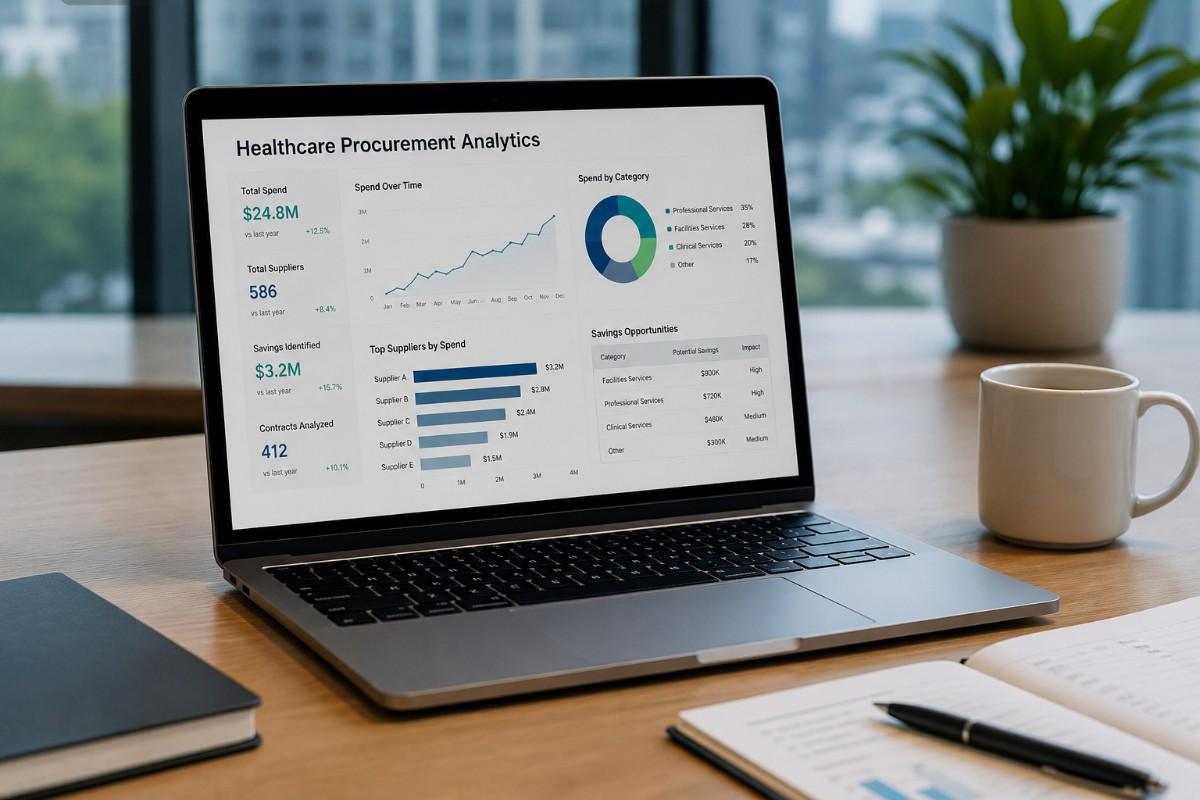
Why Health Systems Are Rebuilding Procurement Around Data-Driven Decisions
Many healthcare procurement practices were traditionally characterized by long vendor tie-ups and past buying behaviors. As important as these relationships still are, the rising cost of healthcare alongside workforce shortages and the financial pressure on health systems in today’s market call for a more strategic approach.
It is no longer the case that health systems are just procuring data; now they are moving toward data-driven procurement with spend analytics, benchmarking, and with spend analytics, benchmarking, and contract insights driving purchasing decisions that truly deliver value.
Valify is one of those tools that helps enable this transition by obtaining greater visibility into purchased services spend, comparing the vendor pricing against public and private market trends, so that hospitals can clearly understand ways to compare different approaches with complex vendor portfolios head-on to unlock cost savings.
The Limitations of Vendor-Centric Procurement
Strong supplier relationships have always been an important part of healthcare operations. Trusted vendors understand organizational needs, support critical services, and often become long-term partners.
However, relationships alone no longer provide enough information to make the best procurement decisions.
Limited Visibility Into Purchased Services Spend
One of the biggest challenges facing procurement teams is fragmented data.
Purchased services spending is often spread across departments, facilities, and financial systems. Vendor information may exist in multiple formats, making it difficult to develop a complete picture of organizational spending.
Without centralized visibility, organizations frequently encounter:
- Fragmented supplier data
- Manual reporting processes
- Limited insight into department-level spending
- Inconsistent vendor categorization
These gaps make it harder to identify duplicate vendors, evaluate enterprise-wide spending patterns, or prioritize sourcing opportunities.
Procurement Decisions Based on History Instead of Performance
Many vendors remain in place simply because they have always provided a service.
Over time, contracts renew, pricing changes, and service requirements evolve, but organizations may not revisit whether those agreements continue to represent the best value.
This often results in:
- Missed savings opportunities
- Pricing differences across facilities
- Limited competitive evaluation
- Contracts that no longer align with current organizational priorities
Data allows procurement teams to evaluate vendors based on measurable outcomes rather than historical relationships alone.
Lack of Benchmarking
Even when organizations understand what they are spending, they may struggle to determine whether those costs are competitive.
Without external benchmarking, procurement leaders often lack answers to important questions.
- Are our service rates consistent with the market?
- Are peer health systems paying less?
- Could we negotiate stronger contract terms?
Healthcare-specific benchmarking provides the context necessary to answer these questions with confidence.
Valify combines benchmarking intelligence with purchased services analytics to help organizations compare vendor pricing, contract structures, and performance against relevant healthcare market data.
Why Data Has Become Procurement’s Most Valuable Asset
Modern procurement depends on visibility.
The more complete the picture, the better the decisions.
Unified Spend Visibility
Leading health systems are bringing together accounts payable data, vendor information, and purchased services contracts into centralized platforms.
This creates:
- Consolidated spend reporting
- Standardized vendor categorization
- Enterprise-wide visibility
- Better financial transparency
Instead of managing information across multiple spreadsheets and disconnected systems, procurement leaders gain a single source of truth that supports faster and more informed decision-making.
Market Benchmarking
It shows where money is going and how it is being spent.
It benchmarks state or local spending to show whether it is competitive.
Procurement teams have a more substantial negotiating edge as well as improved confidence in sourcing decisions when pricing and contract structures are compared against peers and the current market conditions.
Valify offers healthcare industry-specific comparisons that allow organizations to find out which contracts are above-market, view pricing validation, and identify the best sourcing opportunities where spend can be saved.
Performance-Based Vendor Evaluation
Price is only one measure of value.
Similarly, high-performing procurement organizations assess vendors not only on service quality but also on contract utilization and vendor responsiveness, as well as long-term performance.
By tracking these metrics, procurement teams can identify suppliers that continue to provide value while also pinpointing agreements that may need renegotiation or a competitive evaluation.
Four Ways Data Improves Financial Performance
The shift toward data-driven procurement is about more than improving visibility. It enables healthcare organizations to make smarter decisions that strengthen financial performance over time.
Identifies Hidden Savings Opportunities
Many opportunities for savings simply remain invisible without deeper analytics.
Organizations will uncover the following by analyzing purchased services at the category and vendor level:
- Duplicate vendors providing similar services
- Pricing inconsistencies across facilities
- Categories with above-market spending
- Opportunities for contract consolidation
This includes analyzing spend that has the potential to deliver meaningful commercial impact, rather than just guessing.
Accelerates Strategic Sourcing
Better data leads to better sourcing decisions.
When procurement teams have access to clean spend data, vendor performance history, and market benchmarks, they can prepare for sourcing initiatives more efficiently.
This supports:
- Faster RFP development
- More accurate supplier comparisons
- Better-informed negotiations
- Improved sourcing outcomes
Valify helps healthcare organizations streamline strategic sourcing by combining purchased services analytics, benchmarking intelligence, and advisory expertise that support more confident decision-making throughout the sourcing process.
Improves Contract Compliance
Awarding a contract is only the beginning.
Organizations also need to ensure vendors perform according to agreed terms and that purchasing activity remains aligned with negotiated agreements.
Data-driven procurement supports stronger contract management by helping organizations:
- Monitor contract utilization
- Reduce off-contract spending
- Improve vendor accountability
- Track contract performance over time
Greater visibility allows procurement and finance teams to identify issues before they become costly problems.
Delivers Sustainable Cost Reductions
Conventional cost-reduction programs are predominantly about one-off projects.
Modern procurement is always in continuous mode.
By continuously monitoring the environment, organizations can recognize emerging opportunities when market conditions change, contracts come close to renewal, or spending shifts.
Instead of viewing savings as an episodic event, leading health systems develop repeatable processes that can drive sustained economic enhancement over the long term.
What Modern Health Systems Expect From Procurement Technology
While technology forms an integral part of procurement strategy, organizations desire more from you than just basic reporting tools.
To make quicker and better decisions, today’s platforms must deliver actionable insights.
Key capabilities include:
- Automated spend analytics
- Purchased services intelligence
- Healthcare-specific vendor benchmarking
- Enterprise contract visibility
- Savings opportunity tracking
- Workflow automation
- Executive dashboards
- Data-driven sourcing recommendations
Valify combines these capabilities in one platform built specifically for healthcare.
How Leading Health Systems Are Transforming Procurement with Data
Adopting a structured procurement modernization journey
First, it all begins with centralizing enterprise spend data.
Third, information about vendors is standardized to deliver a consistent view of vendors across the enterprise. The contracts are compared to peers and market opportunities to find savings.
Sourcing decisions based on these insights are made by teams separately.
Lastly, they track savings, monitor performance, and continuously improve outcomes. It transforms procurement from a series of discrete transactions into an ongoing cycle.
Why Vendor Relationships Still Matter But Data Leads the Conversation
But the value of supplier relationships does not collect dust with data-driven procurement.
Although many providers may prefer in-house, trusted vendors will remain a vital component of care delivery and operational excellence.
The only thing that changes is the management of those relationships as you progress from familiarity into dealing with raw data.
Performance indicators, benchmarking, and contract data help establish a more fact-based decision-making process.
This approach benefits both sides by establishing clearer expectations, better accountability, and higher-quality outcomes.
Data is not in competition with relationships; it enables them.
Why Health Systems Choose Valify
Health systems are adopting solutions that improve visibility and confidence in procurement decisions.
Valify supports this shift by helping organizations:
- Gain visibility into purchased services spend
- Benchmark pricing against peers
- Identify savings opportunities
- Streamline sourcing workflows
- Improve contract performance and compliance
- Track realized savings
Valify combines analytics, benchmarking, and advisory support to enable data-driven procurement.
The result is greater transparency, stronger governance, and more strategic purchasing.
See How Valify Helps Health Systems Build Data-Driven Procurement
A new era in healthcare procurement.
Succeeding is not just about managing vendors or managing contracts anymore; it demands that you have visibility, intelligence, and data curation to make the right decisions.
Health systems that take this approach will be able to find savings, improve vendor performance, and enhance financial resilience.
Valify also empowers organizations to establish performance benchmarks, pinpoint opportunities, and enhance purchased services expenditures.
Request A Demo now to witness the power of Valify in enabling smarter procurement decisions.
Frequently Asked Questions
Why are health systems moving toward data-driven procurement?
Health systems are going to the data instead of leaning into historical relationships as rising costs and vendor complexity become a challenge of their own.
How does benchmarking improve procurement decisions?
It normalizes pricing and performance against market benchmarks to enhance negotiations and sourcing.
What role does spend analytics play in procurement?
It highlights the spending behaviors and costs, acting as a catalyst for savings initiatives and better oversight.
How does Valify support healthcare procurement?
It delivers benchmarking, spend insights, and contract intelligence for better financial results.
Can data-driven procurement improve vendor relationships?
Sure, it increases transparency and enables more value-based partnerships.

The Valify Editorial Team is dedicated to sharing insights, strategies, and innovations that help healthcare organizations gain control of purchased services spend. Backed by years of expertise in data analytics, procurement, and healthcare technology, the team curates practical resources and thought leadership to guide hospitals and health systems toward greater efficiency and savings. By combining industry knowledge with real-world case studies, the Valify Editorial Team delivers content that empowers decision-makers to drive smarter, data-driven sourcing strategies.
