Purchased services quietly support nearly every function inside a hospital. Environmental services, food and nutrition, facilities support, IT, transport, outsourced clinical support, these services keep operations running day after day without much attention.
For a long time, purchased services were treated as background spend. They were necessary, but rarely strategic. As long as services were delivered and invoices were paid, they stayed out of focus.
That reality has changed. Financial pressure, operational complexity, and tighter oversight expectations have pushed purchased services into the spotlight. Audits are no longer about squeezing savings wherever possible. They are about visibility, control, and understanding how service spend truly impacts the organization.
Purchased Services Represent One of the Largest Controllable Costs
Purchased services make up a meaningful portion of hospital operating budgets. In many health systems, they represent roughly a quarter of total operating spend. That places them on par with other major cost categories that receive far more attention.
Because these services span nearly every department, they influence both cost and performance. Decisions made years ago around service vendors can still shape budgets today, often without anyone realizing it.
Why This Spend Often Escapes Strategic Oversight
Purchased services are not clinical supplies. They are spread across departments and facilities, sourced at different times, and managed by different teams. Rarely are they viewed in aggregate.
Without a centralized view, leadership may know the total spend number but lack insight into vendor overlap, pricing consistency, or whether services still align with current needs. This makes strategic oversight difficult, even in well-managed organizations.
Why Purchased Services Are Structurally Hard to Manage
-
Decentralized Purchasing Creates Fragmentation
Most purchased services start with a practical need. A department needs something done, finds a vendor that can handle it, and moves ahead so work doesn’t stall. Procurement may review the contract, but usually after the decision has already been made.
When this happens repeatedly across departments and facilities, fragmentation sets in. The same type of service gets contracted multiple times. Different vendors do similar work. Pricing isn’t consistent, and no one is looking at it all together because no one was meant to.
-
Contracts Vary Widely in Structure and Terms
Purchased services contracts tend to reflect the moment they were signed. Some are detailed, others are bare-bones. Many are written on vendor templates, not hospital standards.
Pricing models, renewal language, escalation clauses, and service definitions change from one agreement to the next. As years pass, those differences pile up. At that point, comparing contracts isn’t straightforward, and managing them the same way across the organization becomes unrealistic.
-
Lack of Standard Pricing Makes Comparison Difficult
Services don’t price like products. There’s no unit cost to line up and compare. What a hospital pays often depends on local market conditions, how long the vendor relationship has existed, and how the original deal was structured.
Without benchmarks, pricing decisions rely on what feels reasonable rather than what the market is actually doing. That makes it hard to know whether a rate is fair, outdated, or simply accepted because it hasn’t been questioned.
What Hospitals Risk When Vendors Are Not Audited
-
Pricing and Contract Terms Drift Over Time
When contracts are not reviewed regularly, pricing and terms often drift away from what was originally negotiated. Billing may no longer align with contract language, and errors can persist unnoticed for years.
-
Paying for Services That No Longer Match Actual Use
Services that once made sense may no longer be used at the same level or at all. Workflow changes, staffing shifts, and new technology can reduce the need for certain services, while contracts continue unchanged.
-
Automatic Renewals Limit Flexibility
Many purchased services contracts renew automatically. Without proactive review, hospitals miss opportunities to renegotiate scope, pricing, or vendor mix. Over time, flexibility erodes and outdated agreements remain in place.
The Operational Impact of Unreviewed Purchased Services
-
Inconsistent Service Performance Across Facilities
When no one is checking in regularly, service quality starts to depend on the location, not the contract. One site stays on top of a vendor. Another doesn’t. Nothing is technically “wrong,” but the experience isn’t the same everywhere, and over time that gap becomes noticeable.
-
Increased Compliance and Governance Challenges
Unreviewed contracts tend to blur the rules. Spend slips off contract. Vendors stay active longer than they should. New ones get added because it’s easier than revisiting an old agreement. None of this usually happens at once, but it adds up and makes governance harder to hold together.
-
Internal Friction Between Departments
Finance sees the numbers. Operations sees the day-to-day issues. Procurement sees the contracts. When those views don’t line up, conversations slow down. Decisions get pushed back, not because people disagree, but because no one has the full picture.
Purchased Services Play a Direct Role in Patient Experience
Services That Patients Notice Immediately
Patients notice environmental services, food and nutrition, transport, and support services right away. These services shape comfort, safety, and overall perception of care.
When Cost Decisions Quietly Affect Quality
When services are managed purely as expenses, quality can suffer quietly. Without audits, there is limited accountability to ensure cost decisions do not undermine performance or patient experience.
What a Modern Purchased Services Audit Actually Involves
-
Starting With Accounts Payable Data
Accounts payable data shows what is actually happening, not just what contracts say should happen. Audits begin by examining real spend and comparing it to contract assumptions at the vendor level.
-
Understanding Vendor Overlap and Concentration
Audits reveal how many vendors are providing similar services within the same category. High overlap often indicates opportunities to simplify, consolidate, or renegotiate.
-
Reviewing Utilization and Ongoing Value
Audits help answer basic questions: Is the service still necessary? Does the cost reflect the benefit being delivered today?
Why Benchmarking Is Central to Effective Audits
Why Purchased Services Pricing Is Hard to Judge in Isolation
Local contracts and limited transparency make it difficult to judge pricing without context. What seems reasonable in isolation may be far from market norms.
How Peer Benchmarking Changes Decision-Making
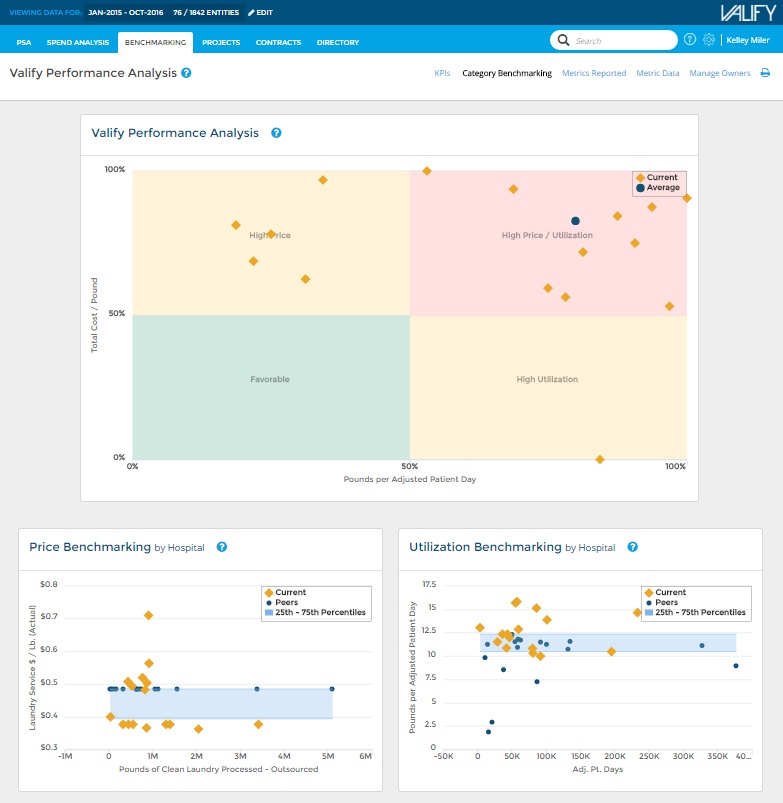
Benchmarking provides market context. Comparing pricing, terms, and vendor market share against peer hospitals strengthens negotiating positions and supports more confident decisions.
Turning Audits Into Ongoing Governance
-
The Limits of One-Off Audit Exercises
One-time audits often produce short-term savings that fade over time. Without follow-through, old habits return.
-
Centralized Contract Visibility as a Control Point
Centralized visibility into contracts supports renewal awareness and consistent terms across facilities.
-
Aligning Departments Around a Shared Process
Clear ownership and shared processes reduce surprises and improve cooperation between departments.
How Valify Supports Purchased Services Audits at Scale
-
Creating Visibility Across Purchased Services Categories
Valify cleanses and categorizes accounts payable data across purchased services categories, providing clear, line-item insight.
-
Providing Market Context Through Benchmarking
Valify’s benchmarking shows vendor market share and competitive pricing context, supporting informed negotiations.
-
Supporting Sustainable Oversight and Compliance
Monitoring spend patterns and tracking initiatives helps hospitals maintain control and sustain improvements.
Why Regular Audits Matter for Hospitals Going Forward
-
Financial Control Without Undermining Care
Audits support savings that align with service performance, not at its expense.
-
Operational Simplicity and Reduced Risk
Fewer vendors and clearer governance reduce operational complexity.
-
Stronger Position for Long-Term Stability
Purchased services audits are not a short-term cost-cutting tactic. They are a management discipline.
Visibility is the Starting Point for Control
Hospitals can’t control service spend they don’t actually see. When purchased services sit in the background, decisions end up being made on habit, not information. Audits force a pause. They show what’s in place, what’s still useful, and what’s simply been left untouched. That kind of visibility is what allows hospitals to manage service spend with the same seriousness they already apply to labor and supplies.
If you want to see how clearer visibility and benchmarking can support better decisions around purchased services, schedule a demo with Valify.
Frequently Asked Questions:
What qualifies as purchased services in a hospital?
Purchased services are outside services hospitals rely on to function every day. This includes things like environmental services, food and nutrition, facilities maintenance, IT and telecom, transport, clinical support, and administrative support.
How often should purchased services vendors be audited?
Most hospitals start by reviewing their larger service categories once a year. Ongoing checks in between help catch changes early, before contracts or spend drift too far.
What information is needed to conduct an audit?
Accounts payable data usually tells the real story. Contracts, renewal terms, and a basic understanding of how services are actually being used fill in the gaps. Benchmarking helps add market context.
How does benchmarking improve audit outcomes?
Benchmarking shows how pricing and terms compare to similar hospitals. That context makes it easier to have direct, informed conversations with vendors and make better sourcing decisions.
Can purchased services audits affect patient satisfaction?
Yes. Many purchased services directly influence patient comfort, safety, and experience.
The Valify Editorial Team is dedicated to sharing insights, strategies, and innovations that help healthcare organizations gain control of purchased services spend. Backed by years of expertise in data analytics, procurement, and healthcare technology, the team curates practical resources and thought leadership to guide hospitals and health systems toward greater efficiency and savings. By combining industry knowledge with real-world case studies, the Valify Editorial Team delivers content that empowers decision-makers to drive smarter, data-driven sourcing strategies.