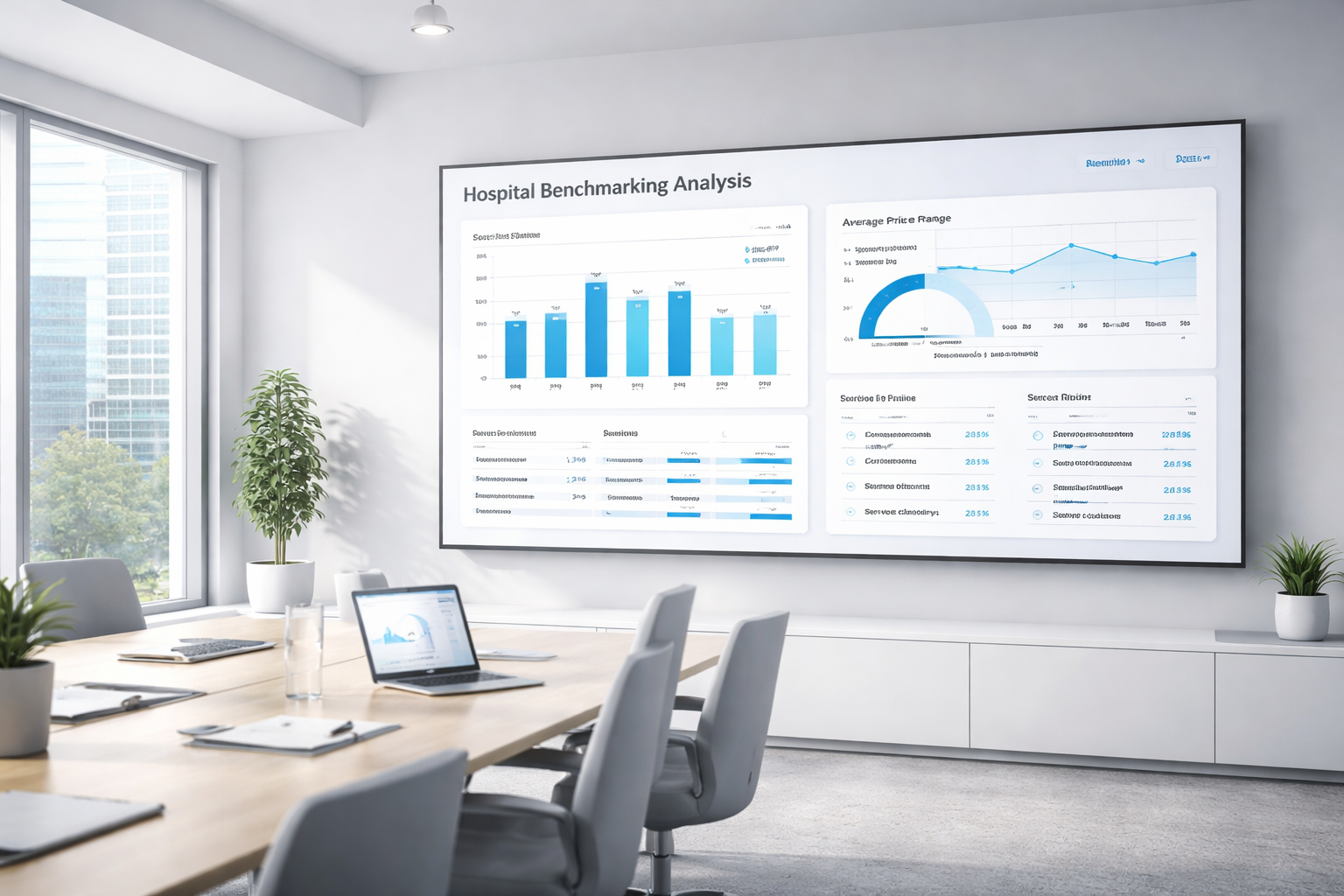

Purchased-services-cost-reduction-dashboard-in-hospital-boardroom

Achieve Measurable Cost Reduction Across Purchased Services With Valify

Hospitals are operating under fixed reimbursement, rising operating costs, and increasing financial scrutiny. One of the largest opportunities to strengthen margins lies within healthcare purchased services, yet these expenses often remain decentralized, inconsistently governed, and difficult to benchmark.

Valify helps health systems centralize purchased services through data driven visibility, structured sourcing, and disciplined governance, delivering measurable savings and sustainable cost reduction solutions while protecting patient care and operational performance.

Schedule a Demo 

The Challenge: Purchased Services Are Complex To Manage At Scale

Purchased services span nearly every part of a health system, from environmental services and clinical programs to IT and HR. Over time, contracts vary by facility, rates differ, and oversight becomes fragmented, making consistent cost reduction solutions harder to implement.

Contract variation limits leverage

When similar services are priced differently across locations, it becomes difficult to know where the organization truly stands. Leadership may not have a clear answer to a simple question: Are we paying consistent, market competitive rates across the system?

Visibility gaps delay opportunity

Without clean, consolidated data, vendor overlap and pricing differences are not always obvious. Opportunities to standardize agreements or consolidate vendors often require significant manual effort to uncover.

Cost reduction needs a structure to last

Health systems frequently run targeted sourcing initiatives. Those efforts can deliver savings. The challenge is sustaining them. Lasting financial improvement requires consistent visibility, shared accountability, and governance that continues beyond the negotiation cycle. Sustainable cost reduction solutions must function as an ongoing enterprise strategy.

A Structured Roadmap To Sustainable Savings

Valify transforms healthcare purchased services into a centralized, data driven strategy built on four integrated pillars that support enterprise wide cost reduction solutions.

Complete Spend Visibility

You cannot manage what you cannot see. Valify’s spend analytics technology cleanses and normalizes accounts payable data across facilities and categorizes 95 percent or more of non labor purchased services into more than 1,400 categories, powered by over one trillion dollars in categorized spend.

  • Comprehensive Purchased Services Assessments
  • CheckPoint Benchmarks against peer organizations
  • Detailed line item spend visibility
  • Identification of competitive contract opportunities
  • Centralized contract management solutions

Benchmarking And Accelerated Sourcing

Once visibility is established, benchmarking and sourcing create measurable financial opportunity through structured analysis and disciplined execution.

  • Benchmarks powered by more than one trillion dollars in categorized spend
  • Vendor Market Share insights across more than 550,000 vendors
  • eRFP tools with healthcare specific templates
  • Aggregated sourcing events that increase negotiating leverage
  • Access to more than 250 pre negotiated contracts across more than 110 purchased services categories

Custom Contracting Aligned To Your Market

Strategic savings often require localized sourcing flexibility. Valify enables regional vendor engagement and customized contracting while maintaining enterprise level governance.

  • Local vendor sourcing aligned to geographic requirements
  • Diversity vendor spend tracking and sourcing visibility
  • Vendor consolidation to reduce redundancy
  • Co terminous contracting
  • Compliance alignment across facilities

Governance And Sustainable Optimization

Sustainable margin improvement requires ongoing oversight, stakeholder alignment, and performance tracking beyond initial sourcing events. Governance ensures cost reduction solutions continue delivering measurable impact over time.

  • Implementation of centralized contracting structures
  • Identification of fragmented and rogue spend
  • Establishment of clear category ownership
  • Strengthened vendor compliance monitoring
  • Continuous savings tracking through the WorkPlan dashboard

Why Valify Is Different

Healthcare organizations need more than a one time cost reduction initiative. They need a structured approach built specifically for healthcare purchased services. Valify stands apart for several reasons.

Focused exclusively on healthcare purchased services

We do not operate across unrelated industries or general expense categories. Our technology, contracts, and advisory services are purpose built for acute healthcare systems.

Integrated model combining technology, contracts, and advisory

Valify unifies spend analytics technology, benchmarking intelligence, preferred supplier contracts, and advisory expertise into a single program. This creates deeper insight and stronger execution than siloed solutions.

Data powered by scale

Our insights are supported by more than one trillion dollars in categorized spend, 1,400 plus purchased services categories, and Vendor Market Share analysis across more than 550,000 vendors.

Built for sustainable governance

Savings are reinforced through centralized contracting, compliance monitoring, benchmarking, and continuous tracking within the WorkPlan dashboard.

National buying power with local flexibility

Valify Solutions Group provides access to more than 250 pre negotiated contracts while allowing flexibility for local vendor and diversity sourcing initiatives.

Designed for measurable financial impact

Clients typically achieve 10 to 30 percent savings in targeted categories while improving compliance and operational alignment through structured cost reduction solutions.

How Your Health System Reduces Cost And Strengthens Margins

A structured cost reduction strategy delivers measurable financial and operational improvement across your organization.

Lower overall purchased services expense

Enterprise wide visibility and benchmarking identify pricing inconsistencies, contract gaps, and savings opportunities that reduce total non labor expense.

Eliminate pricing variation and financial leakage

Standardized contracting and vendor consolidation remove redundant agreements, inconsistent rates, and off contract spend that weaken margins.

Increase negotiating leverage

Aggregated sourcing and consolidated vendor portfolios strengthen your organization’s position in rate negotiations and contract terms.

Improve contract utilization and compliance

Centralized oversight increases adherence to preferred agreements, ensuring negotiated savings are fully captured.

Sustain savings over time

Ongoing monitoring, governance, and performance tracking prevent expense creep and reinforce long term margin protection.

Start Your Savings Roadmap

Healthcare purchased services represent one of the most practical and lower risk opportunities to improve margins. Schedule a demo to see how Valify can help your organization gain complete spend visibility, accelerate sourcing, and build sustainable governance across healthcare purchased services.

Contact Us

Frequently Asked Questions:

How long does implementation take?
Organizations begin receiving actionable insights shortly after accounts payable data integration and categorization.

Does Valify replace our GPO?
Valify complements existing GPO relationships by focusing specifically on healthcare purchased services categories.

How are savings sustained?
Savings are reinforced through governance frameworks, benchmarking, contract management solutions, and continuous monitoring through the WorkPlan dashboard.

Is this disruptive to operations?
Our advisory team works within existing operational structures to strengthen governance and alignment without disrupting workflows.

Benchmarking in Healthcare Procurement

Benchmarking in Healthcare Procurement: Why Peer Comparison Matters

Key Takeaways

Many hospitals are under the impression that they are paying reasonable prices for the services they buy, however, only a small number can confirm this through real peer comparisons. Benchmarking enables purchasing departments to clearly understand the exact costs hospitals in the U.S., similar in size and type, incur, which in turn helps them avoid overpaying and provides them with stronger negotiating power. Valify simplifies the entire process, leading to faster and more accurate results, which also enable hospitals to uncover unseen opportunities and adjust their expenditures according to current market prices.

Are the costs you are paying for supplies reasonable or competitive? While many organizations think they do, only a small number can substantiate their claims with actual comparisons.

Every procurement team has a responsibility to make sure the organization is not overspending. Benchmarking requires commitment and careful review, yet the financial benefits that come from identifying fair market pricing can support growth and free up working capital for other priorities.

The entire process has been made much easier by modern digital tools. Data-driven benchmarking platforms and reliable peer comparison resources are advantageous to companies not only in identifying areas where they can cut costs, but also in creating more transparent and trusted partnerships with their suppliers.

The Challenges and Limitations of Benchmarking

Benchmarking may sound straightforward, but it can be challenging to apply within healthcare systems. The entire exercise depends on good data. If the information you are working with is incomplete or inconsistent, the comparison will not provide you with much insight.

Finding the right peers is another barrier. On paper, two hospitals may appear comparable, but their operational environments may differ greatly. Case mix, geography, payer mix, and local market pressures all influence performance in ways that are not always immediately apparent.

Payer contracts introduce another level of difficulty, because contract terms can vary widely. This makes it challenging to compare reimbursement or cost performance without taking the time to normalize the data correctly. There is also a human element to consider. People may feel uneasy about what benchmarking could expose or worry that it might lead to sudden shifts in direction. This reaction is common and understandable.

These issues can be managed with better tools, better data handling, and active communication. When teams understand the purpose and see how benchmarking protects margin and improves operations, it becomes much easier to gain support.

Why this matters

Hospitals operate in a crowded service marketplace with increasing non-labor spend. According to KFF, purchased services can account for up to 30 percent of a typical U.S. hospital’s total operating expenses. Even slight price fluctuations in these service categories can significantly impact the stability of margins. Benchmarking ensures that procurement is always aware of the actual market conditions and not influenced by assumptions made by suppliers. Comparison with peers directs the process from reactive cost reduction to informed decision-making that ensures the long-term financial well-being of the company.

What is Benchmarking in Healthcare Procurement?

Benchmarking in healthcare enables institutions to evaluate their actual performance, rather than relying on methods such as guesswork or the assumption that everything is “fine.” It means looking at your financial and operational results, then comparing them against your own goals, similar providers, and recognized industry standards. You can identify where money is being lost, where workflows are slowing down, or where your performance is lagging behind others when gaps appear.

This process is not only about cost. Patient-centered benchmarking can also support better experience, fewer delays, and stronger outcomes. When teams understand their current position, they can make changes that truly matter.

The core building blocks of benchmarking include:

  • Gathering accurate data
  • Choosing the right peers or comparison groups
  • Studying the results and identifying what needs to change
  • Repeating the cycle so improvement does not stall

By making benchmarking a consistent part of operational planning, healthcare organizations can adjust strategies in a more grounded way, protect margins, and stay better aligned with what the market is proving works.

Why Peer Comparison Matters

The marketplace situation for hospitals in the U.S. is complicated because they face the problem of non-labor costs that continue to rise, and among all the expenses, purchased services account for the largest share. Comparison with peers not only provides the teams with an understanding of the true market-clearing price, but also helps them through historical vendor rates and internal assumptions. The department that performed better in benchmarking has the potential to uncover savings that would be otherwise concealed if one relied solely on internal contract reviews.

Advantage in the competitive landscape

Benchmarking becomes a competitive advantage as it identifies measurable operational savings without introducing new clinical risk. In an environment where strategic growth depends on disciplined expense management, peer comparison positions hospitals to protect financial capacity while maintaining service quality.

The Emotional Side of Procurement Decisions

Every day, procurement teams deal with contracts, pricing data, and spreadsheets, but their work is often emotionally taxing. If the team believes they were acting responsibly during the negotiations but then discovers that a different hospital paid significantly less for the same service, they will likely feel misled. That sense of doubt affects more than one purchase. It impacts how the team views every future negotiation.

Fair pricing builds confidence. When staff know they are paying a rate that matches what similar hospitals secured, they can approach vendors with stronger conviction and less second-guessing. It boosts morale because people feel their work is protecting the organization, rather than unknowingly draining resources. This is one of the quiet, overlooked benefits of benchmarking. It restores trust in the decision-making process and keeps the team grounded in market reality, rather than relying on assumptions.

Benchmarking in Action

Benchmarking can be implemented in structured steps. Hospital procurement groups can treat this as a repeatable discipline.

Step-by-step framework

  • Step one: Identify the purchased service category to review. This might include environmental services, food service, clinical engineering, patient transport, or revenue cycle services.
  • Step two: Collect pricing, contract structure, and performance metrics. That includes rate schedules, annual escalators, incentive structures, fees, surcharges, turnaround time metrics, and vendor SLAs.
  • Step three: Compare against peer ranges within category type, region, size, and patient volume tiers. A tertiary care academic center should not benchmark against a critical access rural facility.
  • Step four: Use benchmarking findings to challenge assumptions during negotiation or renewal cycles. This may involve renegotiating rates, restructuring vendor performance guarantees, or engaging in competitive bidding with greater clarity.
  • Step five: Reassess each renewal period to make sure your pricing and contract structure remain aligned with current benchmarks.

Common Pitfalls

Benchmarking loses value when the comparison group is not aligned. A small regional hospital cannot compare with an integrated national academic system. Without context, data can mislead rather than clarify. Another common issue arises when procurement teams interpret raw numbers without considering the nuances. Pricing structures for purchased services differ based on scope, geographic complexity, and service level variation.

Misinterpreting benchmark variance can result in unrealistic target expectations. Procurement leaders should use benchmarking as a directional tool rather than a rigid, absolute requirement. The power of benchmarking lies in identifying meaningful deviations across peers while maintaining a contextual understanding of the data.

Making Benchmarking a Habit

Benchmarking should be routine. Contracts age quickly in a shifting healthcare economy. Rates that were reasonable three years ago may not align today. Hospitals should embed benchmarking into renewal cycles and strategic sourcing programs. Continuous benchmarking helps procurement stay grounded in credible market signals rather than relying on static legacy knowledge.

Routine benchmarking also improves organizational discipline. It teaches teams where to push, where to accept, and where to prioritize time. When benchmarking becomes part of the standard operating rhythm, hospitals reduce the risk of overspending quietly. The goal is not perfection. The goal is reliable alignment.

How Valify Enables Benchmarking for Purchased Services in Healthcare

Purchased services have stayed unexamined for years because many hospital teams believed there was no clean standard to compare against. This has now changed. U.S. health systems can now study real invoice activity and contract conditions across peer organizations. When teams understand where their pricing stands within the broader market, it becomes clear which categories are stable and which ones require adjustment.

Benchmarking helps protect operating margin in a way that does not rely on guesswork. It enables more confident negotiations and helps prevent hidden cost increases across key support areas such as clinical engineering, waste management, transcription, outsourced scheduling, dietary services, and call center operations. The difference between paying the market average and paying a premium compounds over time. Peer comparison helps teams stay centered in actual pricing truth rather than assuming a rate is fair because it feels familiar.

Start with five of the purchased service categories your team spends the most on. Pull your recent invoices and compare those prices against current U.S. peer benchmarks. If your rates land above the midpoint, bring that category forward for a deeper review. Valify’s intervention provides clarity and faster comparisons, enabling you to make informed decisions and begin reducing unnecessary expenditures immediately.

Frequently Asked Questions

Q1: How Often Should Hospitals Benchmark Their Procurement Contracts?

A1: Benchmarking must be assessed in every renewal cycle. Quarterly spot checks can be suitable for quick or high-volatility categories. When the process of benchmarking is considered as a constant mechanism instead of a sporadic project, it has maximum effectiveness.

Q2: Can Smaller Hospitals Benefit From Benchmarking?

A2: Indeed. Smaller hospitals generally receive the biggest advantages, and this is mainly because they are usually unable to negotiate as effectively as large systems. Benchmarking then provides them with a reference framework that not only validates their efforts but also diminishes the power of the vendor.

Q3: What Tools Are Available for Procurement Benchmarking?

A3: The hospitals have a range of options to compare their cost structures, including internal consortium data, third-party benchmarking platforms, regional peer collaboratives, and national purchased service databases. The various tools offer different levels of insight, yet all share the common purpose of establishing market grounding.

Q4: How Accurate Is Benchmarking Data?

A4: Accuracy depends on the quality and relevance of the comparison group. When peer alignment is chosen correctly, benchmarking reveals realistic and actionable ranges. It is not designed to produce a single perfect number but to identify whether a hospital is positioned within or outside a normal boundary.

Q5: Is Benchmarking Only About Cost, or Does It Also Improve Service Quality?

A5: Benchmarking strengthens both. While cost alignment is a primary benefit, peer performance comparison also reveals variations in quality. Hospitals can evaluate service level reliability, response time, risk, and operational stability alongside cost. Balancing both price and performance ensures contracts support clinical continuity and operational reliability.

Source:

KFF – Gaps in Hospital Finance Data and Transparency

Achieving Operational Excellence

A Key Step in Achieving Operational Excellence

In the dynamic landscape of healthcare services, managing purchased services – those provided by outside companies – is paramount. Benchmarking plays a crucial role in this process by applying a disciplined approach to negotiating pricing, service level agreements (SLAs) and contract terms and conditions.

What is Power Benchmarking?

Purchased services are critical to healthcare operations – encompassing a wide range of outsourced services such as language interpretation, laundry and linen, security and hundreds of other categories.

We select categories for Power Benchmarking based on provider feedback, overlapping initiatives, and/or top spend categories to solicit agreements and pertinent information from health systems and Valify subscribers. Our team reviews and processes this information to provide a customized report tailored to the health system’s performance in relation to its peers.

Goal of Power Benchmarking

The primary goal of Power Benchmarking is to gather and analyze various data within pre-selected categories of purchased services. The analysis enables healthcare organizations to:

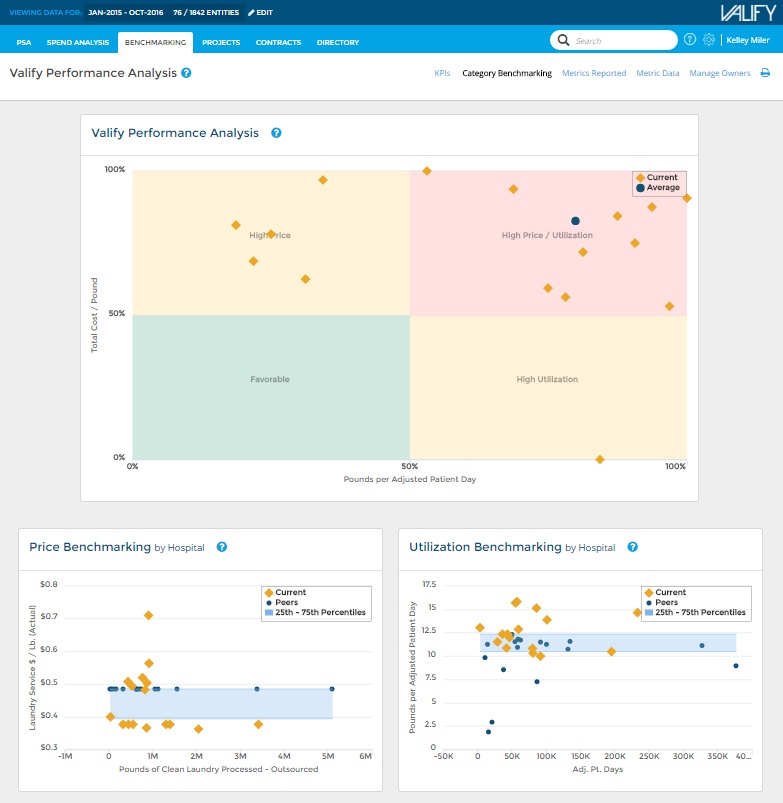
  • Identify Price Ranges: Power Benchmarking delves into the pricing structures of healthcare organizations and their peers, enabling them to gauge competitiveness and negotiate effectively with vendors.
  • Uncover Metrics around SLAs: SLAs are crucial to ensure quality and reliability. Power Benchmarking captures and compares SLAs, offering insights into industry standards and performance expectations.
  • Determine Best Practices: By studying best practices adopted by top performers, healthcare providers can learn and implement strategies that drive efficiency and quality.
  • Assess Terms and Conditions: Valify reviews agreements across different suppliers and hospitals to identify contract terms and conditions prevalent in a given category. This analysis aids in structuring contracts that are fair, comprehensive, and aligned with industry norms.

What Healthcare Providers Can Achieve Through Power Benchmarking

Power Benchmarking returns value to healthcare organizations in three ways:

  • Cost Savings: Comparing prices allows healthcare organizations to identify cost-saving opportunities and negotiate competitive contracts.
  • Improved Quality: By adopting industry best practices and leveraging SLA metrics, healthcare providers can enhance service quality and patient satisfaction.
  • Enhanced Vendor Management: Clearly defined contractual terms and conditions gets everyone on the same page and supports healthy relationships with vendors in managing contracts efficiently.

“By leveraging Power Benchmarking, they can navigate the complexities of outsourcing services effectively, ultimately leading to improved operational performance and better patient care.”

Healthcare organizations need to work with a partner in purchased services solutions that offers Power Benchmarking. Participation in this program helps providers optimize cost management, quality and vendor relationships. By leveraging Power Benchmarking, they can navigate the complexities of outsourcing services effectively, ultimately leading to improved operational performance and better patient care.

If you want to enhance your organization’s efficiency and effectiveness in purchased services, participation in Power Benchmarking is one way to do that. To learn more about how Valify can help achieve your goals in purchased services, with an average savings of 10%-30%, or to inquire about participation in Power Benchmarking, email us at info@getvalify.com.

Purchased Services Insight

Benchmark your way to greater insights and savings in purchased services

Visualizing purchased services spending is essential for controlling costs at any hospital or health system. After all, purchased services comprise 45 percent of a hospital’s non-labor budget. The ability to drill down on spending across a well-organized hierarchy of more than 1,200 potential purchased services categories provides an even more precise picture of how dollars are being spent. Spending data alone, however, offers only directional insights.

Continue reading

Valify Purchased Services

Don’t Lose Your Shirt On Purchased Services

valify_facebook_1200x630

As hospital executives focus on surviving major industry changes such as new payment models and shrinking reimbursements, the cost reduction spotlight seems to be focused more on M&A activity and labor reductions rather than purchased services. This is despite the potential to achieve significant savings without disrupting patient care.

Continue reading

Power Benchmarking

How to Benchmark Your Capital Equipment Service Contract Spend

capital-equipment

Investment in capital equipment is a decision that shouldnt be made lightly, particularly for health care organizations. There are many factors to consider when selecting equipment that best suits your needs, with the bottom line being the consideration of total lifetime costs associated with its use. Other factors may include: Continue reading