Nurse checking patients blood pressure

Clinical Services in Healthcare: When to Outsource & When Not To

Key Takeaways

Choosing which clinical services to subcontract is not a straightforward task; nonetheless, it can be a time and money saver. Most hospitals have their radiology interpretations, laboratory testing, remote patient monitoring, and tele-ICU collaborations done by outside experts. This not only frees up more time for doctors to attend to patients but also facilitates faster results. However, outsourcing can also be risky, such as having a disparity in quality or losing a certain degree of control. Intelligent hospitals monitor costs, turnaround times, and patient outcomes, using software like Valify to help with decisions and ensure that outsourcing is indeed a value-adding activity.

One of the hardest decisions that a healthcare leader has to make is when to outsource clinical services. Hospitals that have to pay for clinical services at the same time that they are expected to provide high-quality patient care need a strong guideline to know which services to outsource and which to retain in-house. Healthcare outsourcing, mainly for clinical functions, is transforming the care delivery process and the way organizations manage their expenses. The healthcare outsourcing market, which is mainly driven by international demand, is expanding very quickly as providers are trying to attain better operational efficiency.

Why This Decision Matters in 2026

Today’s healthcare environment is more complex and competitive than ever:

These trends mean hospitals must understand not just if they should outsource, but when and how outsourcing fits into their strategy.

What Are Clinical Services in Healthcare?

“Clinical services” include all activities directly related to patient care, diagnosis, treatment, and therapeutic support. Common Clinical Services That May Be Outsourced

  • Imaging interpretation (radiology reads)
  • Pathology or specialized lab work
  • Dialysis support services
  • Tele‑ICU or remote monitoring
  • Pharmacy compounding or clinical support
  • Specialty clinician consult services

These differ from administrative outsourcing, like billing or scheduling; they affect clinical outcomes, quality, and patient experience.

The Growing Role of Outsourcing in Healthcare

Outsourcing clinical functions is no longer a niche strategy. Healthcare providers are increasingly working with third‑party specialists because:

  • Staffing shortages make it hard to recruit and retain specialized clinical professionals.
  • Hospitals face rising operational costs and need predictable budgets.
  • New technologies enable remote diagnostics and monitoring.
  • Regulatory complexity makes in‑house management more burdensome.

Today, hospitals can partner with outside specialists to deliver certain clinical services without compromising quality or continuity of care.

Benefits of Outsourcing Clinical Services

Let’s examine the fundamental reasons why hospitals choose to contract clinical services and how these reasons correspond with the overall business and clinical objectives.

  • Access to Specialized Talent

By outsourcing, hospitals get a chance to use the facilities of the most skilled professionals without incurring the burden of full in-house staffing costs. For instance, rural or community hospitals may send their radiology readings to imaging groups having the specialized expertise for better accuracy.

  • Better Control Over Costs

Most hospitals find that outsourcing leads to the reduction of costs in the whole process, particularly for the services that are highly specialized or require expensive equipment. Outsourcing changes the capital costs (CapEx) into predictable operating costs (OpEx), thus allowing the leaders to budget more confidently.

  • Faster Results for Critical Services

The dedicated outsourced partners generally provide faster results, especially in the areas of imaging reads or remote patient monitoring. This can also result in freeing up clinicians so that they can concentrate more on patient care, which will not only improve outcomes but also staff satisfaction.

  • Flexibility to Scale Up or Down

If there is an increase in the number of patients, outsourcing clinical teams can also increase according to the demand. This would eliminate the long-term hiring and training efforts, which are often costly. Hospitals that adopt outsourcing strategically can even increase or decrease their services without causing a major disruption to their workforce.

Risks & When NOT to Outsource Clinical Services

Outsourcing clinical functions isn’t risk‑free. It may be the wrong choice when:

  • Quality Control Is Essential

Some hospitals deliver consistently higher quality care because their internal teams understand organizational standards and culture. If outsourcing partners cannot meet quality benchmarks, patient outcomes may suffer.

  • Loss of Operational Control

Outsourcing means relying on an external team to manage workflows, data, and clinical protocols. This can be challenging if the partner’s processes are not tightly integrated. If there are no clear Service Level Agreements (SLAs) in the contracts, there can be gaps in care and accountability left unattended. 

  • Cultural or Strategic Misalignment

Certain clinical services need to be well integrated with the internal teams and the entire workflow of the institution. It is a must for outsourced partners to be on the same page with the institution in terms of values and goals; otherwise, the whole service delivery might seem alienating. 

  • Data Security and Compliance Concerns

One of the key elements of clinical outsourcing is the strictest following of privacy regulations (like HIPAA). If the vendors are lacking in the area of compliance, the probability of a data breach happening is greater.  Key takeaway: Outsourcing should not result in violation of patient privacy or compliance with regulations. 

How to Decide: Key Indicators for Outsourcing

To make a smart decision and avoid common pitfalls, hospitals should track both financial and quality indicators.

Financial KPIs to Consider

Metric What It Tells You
Cost per clinical service Whether internal costs exceed national or peer benchmarks
Spend variance over time Gaps between budgeted and actual clinical spend
Capital vs. operating costs Potential savings from outsourcing
Return on investment (ROI) Whether outsourcing yields measurable savings

Using a tool like Valify’s spend analytics, hospitals can uncover hidden opportunities and risks in clinical service spend.

Operational & Quality Metrics

  • Turnaround time for lab or imaging services
  • Patient outcome measures (e.g., readmission rates)
  • Clinical compliance scores and error rates
  • Patient satisfaction scores

A rising trend in delays or quality dips may signal that internal resources are stretched too thin.

Capacity & Strategic Considerations

Ask questions like:

  • Does our facility have the staffing to support this service internally?
  • Is demand for this clinical service growing faster than we can scale?
  • Would outsourcing improve patient experience or clinical outcomes?

If the answer is “yes” to multiple questions, an outsourced evaluation is likely warranted.

Best Practices for Outsourcing Clinical Services

Once the decision is made to outsource, execute with a strategy that protects quality and maximizes value.

  • Choose Partners With Proven Outcomes

Look for vendors with benchmarked performance data, ideally tied to quality and turnaround metrics.

  • Align Outsourcing With Internal Goals

Make sure the outsourcing partnership supports your broader clinical and operational strategy, not just cost reduction.

This means aligning performance metrics, communication frequency, and reporting structures.

  • Build a Strong Governance Framework

Set up review cadences, oversight committees, and performance dashboards with clear thresholds for quality and compliance.

Valify’s WorkPlan dashboard and benchmarking tools help ensure that outsourced clinical services remain on track.

  • Use Data to Monitor Performance

Track outcomes over time using objective data:

  • Monthly performance dashboards
  • Quality benchmarks vs. industry standards
  • Cost savings compared to forecasted internal costs

Real‑time visibility enables continuous improvement, not just quarterly or annual reviews.

Real‑World Examples of Clinical Outsourcing

Example 1: Radiology Reporting

A mid‑sized hospital outsourced radiology interpretations during peak hours. Turnaround time improved by 25%, while internal staff could focus on urgent inpatient needs.

Example 2: Specialized Laboratory Testing

A hospital without high‑complexity lab equipment partners with a specialized vendor for advanced tests. Internal costs drop while diagnostic accuracy improves.

Example 3: Remote Patient Monitoring

An integrated health system deployed outsourced remote monitoring services for chronic care patients. Patient follow‑ups improved, and hospital readmissions fell.

Decide, Outsource, Excel with Valify

Outsourcing clinical services can be a great advantage for hospitals, but only if the decision is backed up by data and is in line with the goals of patient care. It is not merely a matter of saving money; rather, it involves making intelligent choices that ensure quality and efficiency.

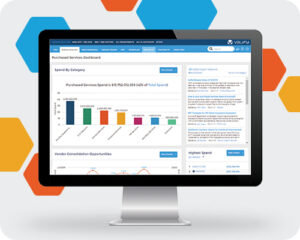
We provide hospitals with a comprehensive view of our Purchased Services expense, which covers clinical categories as well. Our analytics, benchmarking tools, and contract management solutions give you the insights essential for making decisions regarding the outsourcing of certain services or keeping them in-house.

Are you curious about how outsourcing can lead to the efficiency of the operations and better healthcare?

Schedule a demo with Valify today and get rid of the uncertainties in your decision-making process.

Frequently Asked Questions:

Which clinical services in hospitals should be recommended for outsourcing at the very beginning?

The top candidates include services that require specialized skills and involve high equipment costs: the likes of radiology reads, lab tests, tele-ICU support, and pharmacy compounding. Also, consider the areas where the internal staff are overworked or where the technology costs are the highest to start with.

What are the implications of outsourcing on patient wait times and care quality?

Outsourced specialists would probably be able to provide quicker results, which would consequently reduce the possibilities of delays for imaging or lab work. This, in turn, will allow the in-house clinicians to concentrate more on the bedside care which is very likely to improve the whole patient’s experience.

What should I be cautious of when selecting a clinical services vendor?

You should pay attention to the quality benchmarks, the reliability of the turnaround time, and the strict compliance standards. A difference in culture or lack of communication can lead to gaps in care, so always do a thorough check.

How is outsourcing actually saving my hospital money?

Monitor costs by service, ROI, and operating vs. capital expenses. Actual spending compared to industry benchmarks not only shows the true savings but also helps identify areas for further improvement.

Can benchmarking and data really point out the specific services that should be outsourced?

Definitely. Data analytics illuminate the ‘hidden’ costs, areas of discrepancies in performance, and places where efficiency can be increased. Expanding tools such as Valify’s spend insights allow empowered and informed, evidence-based decision-making from the leaders.

Valify logo on blue background

What’s Ahead for Hospital Purchased Services Cost Reduction Technology in 2018

Purchased services represents up to 45% of the non-labor expense budget within a health system. As more executives look to purchased services categories for potential expense reduction, 2018 is an important year, and Valify has several important innovations planned to assist clients in controlling and reducing purchased services expense in the year ahead:

Continue reading

Monitoring Purchased Services Expenses

Monitoring Purchased Services Expenses – Part 2: Best Practices and How to Get Started

In part one of this two-part series, we stated that continual monitoring is the only way to ensure actual spend aligns with budgeting expectations. We discussed at length the many red flags, pitfalls, and common missteps on the path to successful and regular monitoring.

Though the process of tracking and monitoring expenses to find realized savings is difficult perhaps more difficult for purchased services than for any other area within a hospital below are best practices that have been proven effective.

In part two of this series, we discuss the top best practices and tips to make monitoring expenses easier, faster, and more successful.

Continue reading

Monitoring Purchased Services Expenses

Monitoring Purchased Services Expenses – Part 1: Understanding the Road Blocks, Red Flags and Pitfalls

Unlike with tracking expenses for products and capital within a health system, purchased services are difficult to quantify. Purchased services have no item number, are primarily fulfilled by local vendors, and are purchased off-PO 75-85% of the time. These factors make purchased services a complex area in which to manage budgets, to track expenses, and to implement compliance without the proper tools and best practices.

If purchased services expenses are not monitored regularly, there is no guarantee health systems will see the savings that were planned for following a rigorous vendor negotiation. This can be defeating for those who spent the time and energy finding a better deal and can ultimately be bad for business when expected savings are missing on the bottom line at year end.

Continual monitoring is the only way to ensure actual spend aligns with savings expectations. Purchased services expense tracking and monitoring is an ongoing process with plenty of pitfalls and common missteps. However, purchased services professionals can make the monitoring process more manageable and productive by knowing the pitfalls to look out for and by following the industry best practices (see blog: Monitoring Purchased Services Expenses. Part 2: Best Practices and How to Get Started). Continue reading

Purchased Services Analytics

Why Purchased Services Audits Are Becoming Critical for Hospitals

Key Takeaways

Purchased services aren’t new. What’s new is how much risk they carry when no one is really watching them. In most hospitals, service vendors pile up over time. Contracts get renewed automatically. Pricing drifts. Some services stop being used the way they once were, but the spend keeps going anyway. Because everything is spread across departments, no one sees the full picture unless they stop and look for it. That’s what audits do. They slow things down just enough to show what’s actually in place, which vendors are active, what’s being paid for, and whether it still makes sense. When hospitals use real AP data and add benchmarking, conversations with vendors change. Decisions get easier. Governance improves. Bottom line: if hospitals want control over service spend, they need visibility first. Audits are how that visibility starts.

Purchased services quietly support nearly every function inside a hospital. Environmental services, food and nutrition, facilities support, IT, transport, outsourced clinical support, these services keep operations running day after day without much attention.

For a long time, purchased services were treated as background spend. They were necessary, but rarely strategic. As long as services were delivered and invoices were paid, they stayed out of focus.

That reality has changed. Financial pressure, operational complexity, and tighter oversight expectations have pushed purchased services into the spotlight. Audits are no longer about squeezing savings wherever possible. They are about visibility, control, and understanding how service spend truly impacts the organization.

Purchased Services Represent One of the Largest Controllable Costs

Purchased services make up a meaningful portion of hospital operating budgets. In many health systems, they represent roughly a quarter of total operating spend. That places them on par with other major cost categories that receive far more attention.

Because these services span nearly every department, they influence both cost and performance. Decisions made years ago around service vendors can still shape budgets today, often without anyone realizing it.

Why This Spend Often Escapes Strategic Oversight

Purchased services are not clinical supplies. They are spread across departments and facilities, sourced at different times, and managed by different teams. Rarely are they viewed in aggregate.

Without a centralized view, leadership may know the total spend number but lack insight into vendor overlap, pricing consistency, or whether services still align with current needs. This makes strategic oversight difficult, even in well-managed organizations.

Why Purchased Services Are Structurally Hard to Manage

  • Decentralized Purchasing Creates Fragmentation

Most purchased services start with a practical need. A department needs something done, finds a vendor that can handle it, and moves ahead so work doesn’t stall. Procurement may review the contract, but usually after the decision has already been made.

When this happens repeatedly across departments and facilities, fragmentation sets in. The same type of service gets contracted multiple times. Different vendors do similar work. Pricing isn’t consistent, and no one is looking at it all together because no one was meant to.

  • Contracts Vary Widely in Structure and Terms

Purchased services contracts tend to reflect the moment they were signed. Some are detailed, others are bare-bones. Many are written on vendor templates, not hospital standards.

Pricing models, renewal language, escalation clauses, and service definitions change from one agreement to the next. As years pass, those differences pile up. At that point, comparing contracts isn’t straightforward, and managing them the same way across the organization becomes unrealistic.

  • Lack of Standard Pricing Makes Comparison Difficult

Services don’t price like products. There’s no unit cost to line up and compare. What a hospital pays often depends on local market conditions, how long the vendor relationship has existed, and how the original deal was structured.

Without benchmarks, pricing decisions rely on what feels reasonable rather than what the market is actually doing. That makes it hard to know whether a rate is fair, outdated, or simply accepted because it hasn’t been questioned.

What Hospitals Risk When Vendors Are Not Audited

  • Pricing and Contract Terms Drift Over Time

When contracts are not reviewed regularly, pricing and terms often drift away from what was originally negotiated. Billing may no longer align with contract language, and errors can persist unnoticed for years.

  • Paying for Services That No Longer Match Actual Use

Services that once made sense may no longer be used at the same level or at all. Workflow changes, staffing shifts, and new technology can reduce the need for certain services, while contracts continue unchanged.

  • Automatic Renewals Limit Flexibility

Many purchased services contracts renew automatically. Without proactive review, hospitals miss opportunities to renegotiate scope, pricing, or vendor mix. Over time, flexibility erodes and outdated agreements remain in place.

The Operational Impact of Unreviewed Purchased Services

  • Inconsistent Service Performance Across Facilities

When no one is checking in regularly, service quality starts to depend on the location, not the contract. One site stays on top of a vendor. Another doesn’t. Nothing is technically “wrong,” but the experience isn’t the same everywhere, and over time that gap becomes noticeable.

  • Increased Compliance and Governance Challenges

Unreviewed contracts tend to blur the rules. Spend slips off contract. Vendors stay active longer than they should. New ones get added because it’s easier than revisiting an old agreement. None of this usually happens at once, but it adds up and makes governance harder to hold together.

  • Internal Friction Between Departments

Finance sees the numbers. Operations sees the day-to-day issues. Procurement sees the contracts. When those views don’t line up, conversations slow down. Decisions get pushed back, not because people disagree, but because no one has the full picture.

Purchased Services Play a Direct Role in Patient Experience

Services That Patients Notice Immediately

Patients notice environmental services, food and nutrition, transport, and support services right away. These services shape comfort, safety, and overall perception of care.

When Cost Decisions Quietly Affect Quality

When services are managed purely as expenses, quality can suffer quietly. Without audits, there is limited accountability to ensure cost decisions do not undermine performance or patient experience.

What a Modern Purchased Services Audit Actually Involves

  • Starting With Accounts Payable Data

Accounts payable data shows what is actually happening, not just what contracts say should happen. Audits begin by examining real spend and comparing it to contract assumptions at the vendor level.

  • Understanding Vendor Overlap and Concentration

Audits reveal how many vendors are providing similar services within the same category. High overlap often indicates opportunities to simplify, consolidate, or renegotiate.

  • Reviewing Utilization and Ongoing Value

Audits help answer basic questions: Is the service still necessary? Does the cost reflect the benefit being delivered today?

Why Benchmarking Is Central to Effective Audits

Why Purchased Services Pricing Is Hard to Judge in Isolation

Local contracts and limited transparency make it difficult to judge pricing without context. What seems reasonable in isolation may be far from market norms.

How Peer Benchmarking Changes Decision-Making

Benchmarking provides market context. Comparing pricing, terms, and vendor market share against peer hospitals strengthens negotiating positions and supports more confident decisions.

Turning Audits Into Ongoing Governance

  • The Limits of One-Off Audit Exercises

One-time audits often produce short-term savings that fade over time. Without follow-through, old habits return.

  • Centralized Contract Visibility as a Control Point

Centralized visibility into contracts supports renewal awareness and consistent terms across facilities.

  • Aligning Departments Around a Shared Process

Clear ownership and shared processes reduce surprises and improve cooperation between departments.

How Valify Supports Purchased Services Audits at Scale

  • Creating Visibility Across Purchased Services Categories

Valify cleanses and categorizes accounts payable data across purchased services categories, providing clear, line-item insight.

  • Providing Market Context Through Benchmarking

Valify’s benchmarking shows vendor market share and competitive pricing context, supporting informed negotiations.

  • Supporting Sustainable Oversight and Compliance

Monitoring spend patterns and tracking initiatives helps hospitals maintain control and sustain improvements.

Why Regular Audits Matter for Hospitals Going Forward

  • Financial Control Without Undermining Care

Audits support savings that align with service performance, not at its expense.

  • Operational Simplicity and Reduced Risk

Fewer vendors and clearer governance reduce operational complexity.

  • Stronger Position for Long-Term Stability

Purchased services audits are not a short-term cost-cutting tactic. They are a management discipline.

Visibility is the Starting Point for Control

Hospitals can’t control service spend they don’t actually see. When purchased services sit in the background, decisions end up being made on habit, not information. Audits force a pause. They show what’s in place, what’s still useful, and what’s simply been left untouched. That kind of visibility is what allows hospitals to manage service spend with the same seriousness they already apply to labor and supplies.

If you want to see how clearer visibility and benchmarking can support better decisions around purchased services, schedule a demo with Valify.

Frequently Asked Questions:

What qualifies as purchased services in a hospital?
Purchased services are outside services hospitals rely on to function every day. This includes things like environmental services, food and nutrition, facilities maintenance, IT and telecom, transport, clinical support, and administrative support.

How often should purchased services vendors be audited?
Most hospitals start by reviewing their larger service categories once a year. Ongoing checks in between help catch changes early, before contracts or spend drift too far.

What information is needed to conduct an audit?
Accounts payable data usually tells the real story. Contracts, renewal terms, and a basic understanding of how services are actually being used fill in the gaps. Benchmarking helps add market context.

How does benchmarking improve audit outcomes?
Benchmarking shows how pricing and terms compare to similar hospitals. That context makes it easier to have direct, informed conversations with vendors and make better sourcing decisions.

Can purchased services audits affect patient satisfaction?
Yes. Many purchased services directly influence patient comfort, safety, and experience.

Purchased Services in Healthcare

The Vision for Valify: Building the Best for Purchased Services in Healthcare

Healthcare purchased services have come a long way in the three years since we founded Valify. In that time, purchased services has transformed from a misunderstood budget area to a top financial savings opportunity and priority for healthcare organizations nationwide.

Continue reading

Streamline Purchased Services Analytics

Solve the top 3 purchased services spending challenges with timely data and analytics

One of the biggest difficulties healthcare purchased services professionals face is trying to negotiate more favorable vendor contracts for their hospital or health system. With hundreds of vendors spread across numerous departments and facilities, it is nearly impossible — without the right data analytics platform — to have enough time and information to build a persuasive case.

Continue reading

Purchased Services Insight

Benchmark your way to greater insights and savings in purchased services

Visualizing purchased services spending is essential for controlling costs at any hospital or health system. After all, purchased services comprise 45 percent of a hospital’s non-labor budget. The ability to drill down on spending across a well-organized hierarchy of more than 1,200 potential purchased services categories provides an even more precise picture of how dollars are being spent. Spending data alone, however, offers only directional insights.

Continue reading

Purchased Services Analysis

Does Your Value Analysis Team Focus on Purchased Services?

bigstock-healthcare-medical-expense-mon-106262555

Over the last 10-15 years, Value Analysis teams have successfully implemented cost savings initiatives for commodities, physician preference items, and even pharmaceuticals. However, an area that is often overlooked by Value Analysis committees is Purchased Services. 

Continue reading