8 Data Points Every Healthcare CFO Should Monitor for Better Cost Control

Key Takeaways

Monitoring labor, supply chain, asset utilization, and revenue cycle data enables CFOs to control costs and stay ahead of financial risks. These metrics reveal waste, guide staffing decisions, and strengthen day-to-day decision-making. With Valify, hospitals gain continuous tracking across all major spend categories, delivering clearer visibility, stronger margins, and the financial stability needed in today’s demanding healthcare landscape.

Ask any healthcare CFO about their top concerns, and the answers are remarkably consistent: rising operating costs, tight labor markets, supply chain challenges, and the pressure to deliver more services with less funding. In today’s financial environment, the line between breaking even and running a deficit often comes down to one factor: how closely you monitor the numbers that matter most.

Not all data carries the same weight. Some metrics create more noise than value, leading to unnecessary distractions. When a CFO understands which factors truly matter, decisions become less reactive and far more strategic. This clarity makes it possible to spot risks before they reach the balance sheet, negotiate with confidence, and guide the organization toward stronger margins.

In this guide, eight crucial data points are outlined that every healthcare CFO should monitor—metrics that impact workforce stability, asset utilization, revenue cycle performance, and overall long-term financial sustainability. With Valify, hospitals can track these metrics more efficiently, gaining actionable insights that drive better financial and operational outcomes.

Why Data-Driven Decision-Making Is Non-Negotiable for CFOs

Escalating Costs & Shrinking Margins

Hospitals are facing pressure from both directions. The costs of salaries, contract labor, and hiring are constantly increasing. Additionally, due to inflation and supply chain issues, even the most basic goods are becoming increasingly expensive. There are also compliance requirements that involve costs for reporting, audits, new regulations, and cybersecurity safeguards.

Simultaneously, reimbursement models are changing in a way that will be more favorable to outcomes than to volume. Even the best-managed hospitals are finding themselves repeatedly adjusting their budgets as payer contracts are altered and patient populations shift to outpatient care.

In this environment, relying on instinct alone is no longer sufficient. Precise, reliable data has become the essential financial lifeline that guides every decision.

Complex Revenue Models Demand Better Visibility

Healthcare is no longer governed by simple fee-for-service billing. CFOs now navigate a world shaped by:

  • Bundled payments
  • Risk-sharing arrangements
  • Value-based care
  • Quality-tied reimbursements

Each model comes with its own metrics and financial triggers. The only way to manage them effectively is by maintaining tight control over performance indicators across departments.

From Reactive to Proactive Financial Management

Traditional financial management waits for month-end reports and reacts only after the damage is done. Today, that delay is simply too costly. CFOs now expect real-time visibility—giving them the power to act early and prevent wider repercussions, whether that means adjusting staffing levels, renegotiating contracts, or identifying a service line that’s quietly losing money.

When data is accessed and used regularly as a daily tool, rather than being reviewed and used as a historical summary, cost control is transformed into a more precise, rapid, and sustainable process.

8 Data Points Every Healthcare CFO Should Monitor

These eight indicators reflect where hospitals spend dollars—and where inefficiencies can quietly drain millions.

A. Workforce Efficiency

1. Labor Cost per Adjusted Patient Day

Labor is the largest controllable expense in healthcare. Even a small change in overtime or staffing can dramatically shift margins.

Why it matters:

This metric shows how much labor costs fluctuate with patient volume. If labor costs rise while adjusted patient days remain flat, it’s a clear signal that staffing models need attention.

Signals worth watching:

  • Over time, creeping above target levels
  • Growing reliance on agency or traveling staff
  • Productivity gaps between units

What CFOs should do:

Pair staffing analytics with flexible scheduling models. Work closely with nursing leadership to align resources with demand, not tradition.

2. Vacancy & Turnover Rates

It’s easy to underestimate how costly turnover really is. The financial impact isn’t just recruitment—it’s onboarding time, decreased productivity, overtime to fill gaps, and burnout among remaining staff.

Why it matters:

High turnover often indicates deeper issues: workload strain, culture concerns, and compensation misalignment.

Signals worth watching:

  • Unit-specific turnover spikes
  • Extended time-to-hire
  • Increased use of short-term contractors

CFO Action:

Support retention programs that deliver measurable ROI and help you keep the dedicated staff already contributing to your success.

B. Supply Chain & Purchased Services

3. Supply Cost per Case or Procedure

Every surgical case, imaging exam, or inpatient encounter has a supply profile. Small inefficiencies stack up quickly.

Why it matters:

When supply cost per case varies widely—for the same procedure type—it’s often tied to inconsistent product use, lack of standardization, or outdated vendor contracts.

CFO Action:

  • Standardize preference cards
  • Strengthen compliance with GPO contracts
  • Identify savings opportunities in purchased services

This metric often reveals waste that isn’t intentional—just unnoticed.

4. Purchased Services Spend by Vendor & Category

Purchased services represent a major spend area that’s often under-managed. Duplicate vendors, overlapping contracts, and unclear performance metrics are common.

Why it matters:

Hospitals may unknowingly work with more vendors than necessary. Redundant services create oversight challenges and dilute negotiating power.

CFO Action:

  • Consolidate vendors where appropriate
  • Renegotiate contracts based on performance
  • Track SLAs to ensure value

Careful oversight of purchased services can unlock hidden savings without cutting quality.

C. Operational & Asset Utilization

5. High-Cost Asset Utilization Rates

Hospitals invest heavily in imaging machines, surgical equipment, and monitoring systems. When those assets sit idle, the financial hit is immediate.

Why it matters:

Unused or underused equipment drains capital dollars without delivering ROI.

CFO Action:

  • Encourage departments to share assets
  • Lease underutilized equipment instead of buying
  • Review utilization before approving new purchases

Often, the issue is not overbuying—it’s a lack of visibility into current capacity.

D. Revenue Cycle & Margin Protection

7. Days in Accounts Receivable (A/R)

Cash flow determines how well a hospital can absorb rising costs and unexpected shifts. A/R days provide a window into the health of the revenue cycle.

Why it matters:

Delays in reimbursement hurt working capital. The longer claims remain unpaid, the harder it is for hospitals to fund day-to-day operations efficiently.

Signals to watch:

  • Growing denial rates
  • Rising rework costs
  • Aging A/R past 90 days

CFO Action:

  • Improve clean claim rates
  • Automate denial management
  • Strengthen payer communication

Small issues in the revenue cycle snowball quickly without close monitoring.

8. Net Margin by Service Line

Some departments generate steady margins; others quietly drain resources. CFOs need clarity on which service lines deserve expansion and which need intervention.

Why it matters:

Margin visibility ensures strategic resource allocation. Without it, profitable departments may be subsidizing underperforming ones.

CFO Action:

  • Grow high-margin programs
  • Redesign or sunset unprofitable lines
  • Align staffing and supply costs with volume trends

Service line strategy becomes far more effective with real-time margin data.

Integrating Data Points for Holistic Cost Control

Monitoring every metric one at a time is a good practice, but the real advantage comes from the insights gained by analyzing all the metrics together.

Data Dashboards & Analytics Platforms

With Valify, dashboards consolidate labor, supply chain, revenue cycle, and operational data into a single view. This unified perspective gives CFOs and department leaders a common reality—and a shared responsibility for outcomes.

Cross-Department Collaboration

Finance can’t fix inefficiencies by itself. When operations, clinical leadership, and supply chain teams all review the same figures, agreement becomes natural rather than forced.

Predictive Analytics

The patterns in staffing, equipment utilization, or revenue cycle performance can alert the organization to risks even before they appear in the financial statements. Predictive models catch CFOs as they prepare, rather than letting them react.

Conclusion

Today, hospitals are under financial stress that they have never experienced before. However, if healthcare CFOs have the right data at their disposal, they can not only protect margins but also make strategic decisions and lead their organizations to long-term success.

These eight indicators provide a solid, realistic basis for more effective cost management.

In medical finance, the adage still applies:

What gets measured gets managed. What gets managed becomes sustainable.

If your hospital is seeking clearer insights into expenses, supplier performance, and contract opportunities, Valify’s platform, designed specifically for this purpose, enables hospitals to make data-driven, results-based decisions.

Discover how Valify empowers your organization with cost control and spend management. Request a demo now.

FAQs

Which data point delivers the fastest savings?

Supply cost per case and purchased services often produce the quickest, most visible savings.

How often should CFOs review these metrics?

Weekly for active operations, monthly for deeper trend reviews.

Can smaller hospitals track these without costly tools?

Yes—basic dashboards, organized spreadsheets, and clear workflows can cover the essentials.

How do these data points support value-based care?

They highlight inefficiencies, improve resource allocation, and ensure care quality aligns with cost expectations.

What’s the biggest barrier to acting on this data?

Siloed departments and slow adoption of shared processes.

Source: Statista – Hospital

The Role of Transparency in Building Stronger Vendor–Hospital Relationships

Key Takeaways

Transparency catalyzes hospitals to establish honest and robust vendor relationships. Unambiguous data, open communication, and shared tools eliminate surprises, enhance accountability, and boost performance. Gradually, this honesty makes costs predictable, avoids disputes, and turns hospitals and vendors into real partners rather than keeping them as isolated sides.

If you look at how hospitals operate today, you’ll see an environment defined by urgency, complexity, and constant demand. In such an environment, openness between hospitals and suppliers is no longer viewed as a convenient extra but as a quiet force that helps operations run smoothly.

Hospitals once accepted unclear price lists, brief service reports, and one-way communication. Today, the pressure is intense, margins are thin, and the demand for accountability is strong. Secrecy does not work anymore.

In this context, “transparency” goes beyond polite updates or sharing a spreadsheet at renewal. It involves meaningful data, clear expectations, and honest performance reporting. When both sides commit to openness, the relationship shifts from transactional to collaborative.

This article examines how transparency fosters stronger vendor-hospital relationships, such as trust that endures longer, communication that clarifies rather than complicates, and operational alignment that genuinely saves time, money, and stress

Why Vendor–Hospital Relationships Matter

Hospitals depend on vendors more than most people realize. Behind every procedure, every safe patient discharge, every functioning department, there’s a long line of contracted partners supporting the process. And when those relationships run smoothly, the entire hospital benefits.

Financial Stakes

Vendor purchases of services, equipment, consumables, and technology platforms are a major part of hospital operating costs. Even one contract can affect expenses by hundreds of thousands of dollars.

A lack of clarity not only creates confusion but adds cost. Uncertain prices, unexpected charges, or inconsistent billing weaken budget accuracy. When hospitals understand their spending clearly, they can make better decisions, adjust budgets quickly, and prevent unnoticed revenue loss.

Operational Impact

Vendor performance affects many departments. Late deliveries disrupt clinical work. Slow maintenance affects patient areas. Poor documentation forces compliance teams to fix gaps later. Transparency helps hospitals anticipate and prevent these issues.

Strategic Value

Great suppliers do more than fulfill orders. They support hospital growth, recognize emerging trends, introduce improvements, and help operations become more efficient.

Forward-looking vendors thrive only when both sides are open to change. Hospitals that expect innovation but do not share information often miss opportunities for new ideas and long-term improvement.

The Transparency Gap in Healthcare Partnerships

Despite growing awareness, a transparency gap still exists. It usually stems from old habits, outdated systems, or fear that openness may weaken negotiating power.

Common Pain Points

Opaque pricing structures

Some vendors continue to rely on combined line items or unclear service fees that require more detective work than necessary.

Incomplete performance data

Hospitals could receive a contemporary report that appears comprehensive but conveys next to nothing about what actually occurred that month.

Limited visibility into sourcing or subcontracting

Who are the suppliers? What are the subcontractors? Hospitals won’t be able to evaluate the risks or quality completely without being informed.

Consequences of Low Transparency

Trust erosion

Even small issues can plant doubt, and doubt accumulates quickly.

Missed opportunities

When vendors fail to share insights openly, hospitals lose access to innovations or operational improvements that could benefit them.

Contract disputes

Unclear terms and vague performance reports often explode into disagreements later.

Compliance gaps

Hospitals operate under strict rules. Any hidden or incomplete information can put them at risk, even unintentionally.

What Transparency Looks Like in Practice

Transparency becomes effective when it is specific, measurable, and consistent.

Financial Clarity

Hospitals want to understand exactly what they’re paying for and why. Good vendors break down pricing honestly:

  • Itemized invoices
  • Clear explanations for surcharges
  • Disclosure of any markups or rebates
  • Predictable, documented billing cycles

This level of openness prevents sticker shock and builds confidence.

Performance Reporting

Every vendor should be able to articulate how well they performed—not just through words, but data.

  • Service-level agreements (SLAs)
  • Key performance indicators (KPIs)
  • Quality metrics
  • Trends over time, not isolated snapshots

When a vendor is willing to show numbers consistently, hospitals can track improvement and address gaps early.

Operational Openness

When supply chains are involved, the smallest details can make the biggest difference.

  • Inventory availability
  • Delivery timelines
  • Back-order risks
  • Sourcing details
  • Any anticipated operational disruptions

This transparency helps hospitals adjust before problems land on the floor.

Compliance and Ethical Standards

A trustworthy vendor shares:

  • Regulatory adherence
  • Ethical sourcing information
  • Audit history
  • Certifications and renewals

Hospitals rely on this information to ensure their own compliance.

How Transparency Strengthens Vendor–Hospital Relationships

Transparency not only prevents problems but also strengthens the quality of vendor–hospital relationships.

Builds Mutual Trust

When vendors are willing to be fully transparent, even when it feels uncomfortable, it signals confidence and reliability. Hospitals no longer have to question what’s happening behind the scenes, and that shift fundamentally strengthens the relationship.

Improves Negotiation Outcomes

Honesty is the basis of all negotiations. If the hospital knows the vendor’s real cost pressures or resource limitations, the dialogue becomes more sensible and knowledgeable.

Enhances Problem-Solving

Problems will always arise. The difference lies in how quickly both sides reach the root cause. Transparent data shortens that path and shifts efforts from blame to action.

Encourages Long-Term Partnerships

Hospitals are loyal to vendors who demonstrate reliability, not only in performance but also in honesty. Transparency creates a strong bond of trust where both parties feel that they are partners, not just in a transactional relationship.

Technology’s Role in Enabling Transparency

The right tools turn transparency from an idea into a built-in habit.

Contract Lifecycle Management (CLM) Tools

Hospitals can finally escape outdated spreadsheets and scattered contract folders. CLM systems provide:

  • A shared digital home for all contracts
  • Automated reporting
  • Renewal alerts
  • Side-by-side comparison of obligations and performance

Everyone works from the same source of truth.

Vendor Management Systems (VMS)

These systems give real-time visibility into vendor performance:

  • Delivery timelines
  • Spend analytics
  • Compliance status
  • Request and ticket histories

With dashboards available on demand, no one has to guess—or wait for end-of-month updates.

AI & Data Analytics

Hospitals often deal with huge datasets. AI tools help surface insights that would otherwise stay buried:

  • Predictive forecasting
  • Anomaly detection
  • Performance trend analysis
  • Early warnings before issues escalate
  • Transparency becomes proactive instead of reactive

Secure Communication Platforms

When conversations, documents, and updates stay centralized, misunderstandings shrink dramatically. Everything lives in one place: documented, trackable, and easy to reference.

Building Transparency Into Vendor–Hospital Contracts

Transparency shouldn’t rely solely on goodwill. It needs structure.

Define Clear KPIs & SLAs

Contracts should articulate:

  • How performance is measured
  • What the expected thresholds are
  • When reports are due
  • What happens if targets aren’t met

When expectations are written upfront, accountability becomes natural.

Specify Data-Sharing Protocols

Contracts must clarify:

  • What data will be shared
  • How often
  • In what format
  • Through which platform

This prevents ambiguity later.

Include Audit Rights

Hospitals need the ability to verify claims when necessary, for financial, operational, and compliance-related purposes.

Incorporate Mutual Accountability Clauses

Transparency shouldn’t flow only one way. Hospitals also owe vendors clarity on internal processes, expectations, and constraints. Balanced accountability strengthens the relationship.

Overcoming Barriers to Transparency

In practice, transparency is always simple. Both parties must work through internal and external challenges.

Vendor Resistance

Some vendors hesitate to reveal pricing structures or operational issues, fearing it may weaken their position. The mindset needs to shift toward transparency as a competitive strength.

Hospital Silos

Some of the teams that act independently are procurement, finance, legal, and clinical teams. In cases where these groups fail to communicate their expectations, vendors receive conflicting signals. The initial step on the way to external clarity is internal alignment.

Technology Adoption Problems

Even the best systems fail when teams are not trained well. Successful transparency efforts depend on proper onboarding, clear workflows, and steady support.

Measuring the Benefits of Transparency

Once transparency becomes part of the culture, its impact is evident everywhere.

  • Fewer disputes and contract issues
  • Higher SLA compliance rates
  • More accurate pricing and fewer billing surprises
  • Improved vendor retention
  • More predictable operational performance
  • Better long-term planning for both sides

Hospitals also experience reduced stress—because visibility replaces uncertainty.

Conclusion

Achieving transparency between hospitals and vendors isn’t easy, but the rewards are substantial. When hospitals and suppliers move beyond working in isolation and start collaborating as true partners, performance improves across the board.

Vendors who share data openly and maintain clear, consistent communication become trusted allies in driving better outcomes. In today’s high-pressure healthcare environment, transparency empowers smarter, faster decision-making. When both sides have a complete view, they act with confidence and build stronger trust.

Ultimately, transparency doesn’t just streamline processes—it delivers better financial results and enables staff to treat patients more efficiently, which is every hospital’s top priority.

Ready to make transparency work for you? Contact Valify today.

FAQs

How can hospitals ensure vendors stay transparent?

Set clear reporting expectations and maintain regular check-ins to ensure effective communication and collaboration.

What tech supports transparency?

CLM and vendor management tools with shared dashboards.

Can transparency lower costs?

Yes—clear pricing and performance data prevent waste and surprise fees.

How does transparency affect performance monitoring?

It provides reliable metrics to track and address issues quickly.

Is transparency harder with multiple vendors?

It takes coordination, but shared systems make it manageable.

Source: Statista – Healthcare interoperability – statistics and facts

Maintaining Compliance in Healthcare Contract Management: Tools & Best Practices

Key Takeaways

Compliance with healthcare contracts is very important to health systems and hospitals. Strong oversight reduces legal and financial risk, operational efficiency, and vendor relationships. This blog explains the challenges hospitals face, the tools that can help manage contracts effectively, and the best practices that can be used to ensure that compliance is maintained.

Why Contract Compliance Matters in Healthcare

Contract management in healthcare is complex. Hospitals and health systems handle many agreements, including IT support and clinical staffing, equipment maintenance, and supply procurement. Each contract carries financial, operational, and legal responsibilities. Missing even a minor detail may be quite expensive. Non-compliance with the regulations, including HIPAA, the Stark Law, or the Anti-Kickback Statute, may result in fines, disruption of operations, and adverse publicity. 

A recent incident involved a U.S. hospital that was fined for a misunderstood contract resulting in a HIPAA breach, costing them not only financially, but also reputationally. This article guides healthcare leaders on how to apply best practices towards the compliance of contracts, error reduction, and improving vendor negotiations. Hospitals can also manage contracts effectively and reduce the risk through a structured and proactive approach.

Understanding Healthcare Contract Compliance

What is Healthcare Contract Compliance?

Healthcare contract compliance means ensuring that every agreement follows regulatory rules, internal policies, and financial expectations. It involves:

  • Checking the accuracy.
  • Following up on the compliance with obligations.
  • Making sure that performance is in accordance with the agreement terms.

Proactively managing compliance helps reduce legal exposure, protect financial stability, and support ethical responsibilities to patients and stakeholders.

Why Compliance Matters in Healthcare Contract Management

Non-compliance can cause significant consequences:

  • Legal Penalties: Violations of HIPAA, Stark Law, or Anti-Kickback laws may result in substantial fines or even criminal liability.
  • Financial Losses: Ineffective contract management can result in unnecessary overpayments, duplication of charges, or loss of cost-saving opportunities.
  • Reputational Damage: Hospitals that do not adhere to the regulations or contract requirements may lose the confidence of the patients, partners, and the rest of the healthcare community.

A health system with multiple facilities discovered overlapping vendor contracts that had gone unnoticed for months, causing losses of more than $300,000. Once the issue was corrected, the organization recovered funds and improved operational control.

Key Regulations Impacting Healthcare Contracts

Healthcare contracts are influenced by several key federal regulations:

  1. HIPAA (Health Insurance Portability and Accountability Act): Protects patient data and stipulates that signed contracts involving sensitive data must be measured with stringent privacy expectations.
  2. Stark Law: This prohibits physicians from making referrals to places where they hold a financial interest, which influences the way hospitals form contracts.
  3. Anti-Kickback Statute (AKS): It illegalizes the giving or receiving of incentives to make a referral, which has a direct influence on the vendor setups and payment conditions.

These regulations have to be learned and implemented in the management of contracts. To ensure the compliance of the contracts, they should be written, revised, and tracked to assist the hospital in its functioning.

Common Challenges in Healthcare Contract Compliance

Complex and Lengthy Contracts

Hospitals manage contracts at once. A number of contracts are long, detailed, and full of legalisms. Important sentences, such as the dates of renewal, service-level agreements (SLAs), payment terms, etc., may be lost under many pages of thick text. The lack of such information may lead to overpayment, service delays, or compliance violations. In one instance, a health care provider has recently found out that there was a provision in a vendor contract that automatically rolled over with an increased rate. This would have cost the hospital tens of thousands of dollars annually unless it was properly monitored.

Manual Contract Management Processes

Many hospitals still depend on spreadsheets, email threads, or paper files. These manual processes are:

  • Time-consuming: It takes hours to find, verify, and update contract data by teams.
  • Error-prone: Misfiled documents, missed deadlines, and overlooked clauses are common.
  • Non-scalable: Manual management is more challenging to handle as the number of hospitals increases.

The inability to have centralized data makes it hard to spot rogue expenditure or ensure that there is steady compliance with the regulatory requirements.

Changing Regulatory Environment

The policies and laws of healthcare are dynamic. To remain up to date, it is necessary to constantly monitor, train, and adjust the system. Contracts that were in compliance a year ago may require amendments today. Hospitals should remain alert and actively respond to such changes to avoid fines or a loophole in operations.

Tools to Enhance Healthcare Contract Compliance

Contract Lifecycle Management (CLM) Software

CLM software centralizes contract data, automates workflows, and provides real-time visibility into contract management. Benefits include:

  • Centralized repository for all agreements
  • Automated reminders for renewals, expirations, or performance reviews
  • Streamlined collaboration between legal, procurement, and finance teams

The solutions provided by Valify are built into the CLM platforms, providing practical insights into the purchased services, highlighting inefficiencies, and streamlining compliance tracking. Hospitals are able to comfortably handle contracts, mitigate the risk, and discover savings opportunities.

AI and Machine Learning for Contract Review

AI tools enhance compliance by:

  • Flagging non-compliant clauses
  • Highlighting potential risks in complex contracts
  • Suggesting corrective actions based on regulatory guidelines

The application of AI to review contracts in hospitals has also been associated with faster processing, fewer errors, and compliance with standards. AI is a second pair of eyes that is invaluable in identifying problems that could have been overlooked due to manual reviews.

Vendor Management Systems

Vendor Management Systems (VMS) help hospitals monitor vendor performance, contract renewals, and compliance. Key features include:

  • Alerts for upcoming deadlines or incomplete documentation
  • Dashboards for monitoring vendor accountability
  • Centralized reporting for executive review

Combining VMS and contract management would help to ensure vendors fulfill the contract, minimize off-contract spending, and keep regulatory compliance.

Best Practices for Maintaining Compliance

Standardize Contract Templates

Using pre-vetted templates reduces risk and increases efficiency. Standardized contracts:

  • Ensure consistency across departments
  • Simplify auditing and review
  • Reduce drafting time and errors

In one example, a health system that adopted standardized IT service contract templates reduced its contract review time by nearly 40% while remaining fully aligned with regulatory requirements.

Regular Training and Education

Ongoing training keeps staff informed about regulations and internal policies. Well-informed teams:

  • Understand current compliance requirements
  • Minimize errors in contract execution
  • Implement best practices consistently across departments

Conduct Routine Audits and Reviews

Regular audits help identify gaps, overlaps, or non-compliant agreements. Regular review allows hospitals to:

  • Detect expired or redundant contracts
  • Correct compliance issues before they escalate
  • Optimize vendor agreements for cost savings

For example, an audit at a regional health system revealed overlapping janitorial contracts, allowing the hospital to consolidate services and save $200,000 annually.

Foster Collaboration Across Departments

Legal, finance, procurement, and operations teams should work together. Cross-functional collaboration:

  • Ensures contracts are consistently reviewed
  • Assigns clear accountability
  • Promotes proactive issue resolution

Departments aligned on compliance reduce errors and create a culture of accountability.

How Valify Helps Hospitals Maintain Contract Compliance

Visibility Into Service Spending

Valify provides complete visibility into purchased services, highlighting inefficiencies, contract gaps, and compliance risks. Hospitals can detect off-contract spend, monitor SLAs, and identify cost-saving opportunities.

Smart Vendor Negotiation Guidance

Valify’s tools help hospitals negotiate better deals while maintaining compliance. Benchmarks, spend analytics, and supplier performance insights enable:

  • Alignment of spend with preferred contracts
  • Improved regulatory adherence
  • Enhanced negotiation leverage

Explore Valify’s vendor management solutions.

Automated Alerts and Compliance Tracking

Valify automates notifications about expired contracts, implements compliance, and monitors non-adherence to agreed-upon terms. These characteristics enable hospital teams to operate fast, which assures compliance and operational efficiency.

Take Control of Healthcare Contract Compliance

Adherence is crucial to minimize the risk, enhance the effectiveness of operations, and promote high-quality care. By adopting the latest instruments, adhering to best practices, and utilizing data-driven insights, hospitals are able to streamline the process of managing contracts and still remain within the regulations. Valify assists hospitals in acquiring visibility, ensuring compliance, and streamlining spending on purchased services. With actionable insights and automated tracking, hospitals can effectively manage contracts and achieve quantifiable savings.

CTA: Ready to streamline your healthcare contracts and ensure compliance? Contact Valify today for a demo!

FAQs

Q: What happens if a healthcare contract is non-compliant?

A: Failure to comply may lead to legal fines, financial disruptions, and negative publicity. There is also the risk of hospitals having their operations interrupted or disagreements with their vendors.

Q: How often should hospitals review their contracts for compliance?

A: The review of contracts is advisable on a regular basis, particularly in renewal periods or in case of a change in regulations, in order to maintain compliance.

Q: Can AI really help in contract compliance?

A: Yes. AI tools flag risky clauses, monitor regulatory alignment, and reduce manual errors, improving overall compliance accuracy.

Q: What role does vendor management play in compliance?

A: Vendor management plays a key role in compliance by monitoring vendor performance, tracking contract obligations and renewal dates, and ensuring each provider meets regulatory and service standards. This reduces risk and strengthens oversight.

Q: How does Valify improve contract compliance for hospitals?

A: Valify provides visibility into purchased services, smart negotiation insights, and automated alerts to monitor compliance and identify savings opportunities.

Centralizing Purchased Services Data

Centralizing Purchased Services Data to Improve Negotiation Power

Key Takeaways

Centralizing purchased services data gives hospitals a clear view of all vendor spending in one place. This visibility helps them compare costs, find savings, and use total spend data to negotiate stronger, fairer contracts. With Valify's analytics, healthcare leaders gain the negotiation power to save more and manage vendors effectively.

Hospitals are spending millions, without always knowing where

Hospitals and health systems spend heavily on purchased services, everything from IT support and waste management to clinical equipment repair and linen services. Labor already accounts for nearly 60% of hospital expenses, while supplies and drugs make up another 21%. That leaves purchased services as a massive and often under-managed area of spend.

Without a centralized view of purchased services data, organizations lose visibility into what they’re actually paying for. Costs slip through the cracks. Contracts overlap. Vendors overcharge or deliver below expectations.

Centralizing spend data doesn’t just clean up the mess; it transforms it into negotiation power. When hospitals bring their purchased services analytics together under one system, they gain real-time insight into who they’re paying, for what, and how that compares to the market. The result comes out to measurable savings, stronger contracts, and better patient outcomes.

Why Purchased Services Data Is Often Disconnected

To fix the problem, hospitals must first understand why their purchased services data is scattered and disconnected.

Siloed Spend Across Departments

In many hospitals, departments manage their vendors independently. One team might negotiate with a local IT provider, while another handles the same service at a higher rate. Without a shared data system or unified purchasing policy, spend becomes fragmented.

Each department does its best, but no one sees the full picture, and vendors quickly realize they can price inconsistently across locations.

Lack of Consistent Categorization

A second issue lies in categorization. Vendors are often labeled differently from one facility to another. The same janitorial service might appear under three different GL codes. That inconsistency makes purchasing services benchmarking nearly impossible.

Without standardized categories, leaders can’t tell where they’re overspending or how they compare to similar hospitals nationwide.

Hidden Costs Reduce Visibility

Rogue or off-contract spending compounds the problem. Sometimes, a facility will hire a new vendor just to get a job done. Overlapping contracts and duplicate agreements quietly drain budgets. Because these transactions are scattered across systems, no one sees the waste until it’s too late.

That’s why data centralization isn’t optional anymore, it’s the foundation of every effective spend management strategy.

The Power of Centralizing Spend Visibility

Once spending data is connected in one place, hospitals can finally see what’s happening system-wide and take action with confidence.

Real-Time Analytics Across Facilities

With centralized purchased services data, leaders can quickly view trends by service line, vendor, or location. Executive real-time analytics ascertain and pinpoint the exact places where costs go up, vendors do not perform well, and contracts should be renegotiated.

Accountability follows visibility. Inefficiencies can’t hide when every facility reports to the same dataset.

Standardized Categories for Easier Comparison

For example, Valify places spending into more than 1,400 service categories, which allows completely correct comparisons. The effective categorization of spending makes benchmarking actionable.

Hospitals can immediately determine how their tariffs compare to those of industry peers, single out the nonconformists, and concentrate on the most promising savings initiatives.

Pinpoint Where Contracts Fall Short

Centralized dashboards make it easy to spot performance gaps. Are certain vendors missing service-level agreements? Are invoices matching negotiated rates? These insights help procurement teams hold suppliers accountable and redirect spend to vendors who deliver real value.

Data-Driven Negotiation Advantages

Centralizing data transforms the way hospitals negotiate, benchmark, and manage vendors.

Leverage Spend Volume for Better Rates

When data is centralized, hospitals can combine spending from multiple facilities to show vendors their true value as a customer. That aggregated visibility translates directly into bargaining power.

Instead of negotiating as separate buyers, systems negotiate as one, and that difference can unlock significant savings.

Use Benchmarks to Strengthen Negotiating Leverage

Benchmarks bring facts into every conversation. Comparing rates against national averages or percentile data helps procurement teams set realistic, data-backed targets.

Purchased services analytics make it easy to walk into vendor meetings armed with facts, not assumptions.

Identify Rogue Spend to Reinsource to Preferred Vendors

Off-contract purchases dilute negotiation power. Centralization exposes where rogue spending occurs, allowing teams to redirect those dollars to preferred, contracted vendors.

That shift not only improves compliance but also increases volume-based discounts, reinforcing your vendor negotiation strength.

Reduce Contract Fragmentation

Centralized visibility allows hospitals to align contract expiration dates and consolidate similar services under fewer suppliers. The result of less fragmentation is a system that is less complex, has easier renewals, and a wider price consistency throughout.

How Centralization Works in Practice

Understanding how centralization operates in real-world settings helps hospitals plan smoother transitions.

Cleansing and Categorizing AP Spend Data

The process begins with cleansing existing accounts payable data. Duplicates are removed, vendor names are normalized, and spend mapped into standardized categories.

Once organized, purchased services analytics start revealing trends that were previously invisible, such as redundant vendors or misaligned rates.

Consolidated Dashboards and Workplans

Modern platforms offer dashboards where savings initiatives, compliance metrics, and vendor performance data live together. Leaders can share progress with executives in real time and track results across every facility.

Alerts for Compliance and Spending Issues

Automated alerts flag unapproved vendors, unusual spending spikes, or contract violations before they escalate. Teams get notified early, keeping budgets and compliance on track.

Integrating Data Across Systems

Hospitals often use multiple MMIS or ERP systems, each in different formats. Centralization brings them together into a single, reliable source of truth for purchased services.

That integration forms the backbone of sustainable healthcare spend management.

Overcoming Implementation Challenges

While centralization offers clear benefits, getting there takes planning, training, and clear communication.

Data Integration from Dispersed Systems

Merging data from multiple platforms can seem complex, but modern integration tools simplify the process. The key is maintaining accuracy during migration so leaders can trust every number.

Training Teams to Embrace New Tools

Even the best data is useless if people don’t know how to use it. Simple dashboards and role-based training drive adoption. When non-technical staff can navigate reports easily, the organization moves faster.

Managing Change Without Delays

Introducing centralized systems requires alignment from leadership down to department managers. Communicating early wins, cost savings, and strategic value helps maintain momentum.

Addressing Initial Resistance

Change often meets hesitation. Some teams may worry about extra added workload or losing control. Showing early wins like identifying duplicate contracts in the first 30 days turns skeptics into advocates.

Maximize ROI with Ongoing Insights

After implementation, the focus shifts to maintaining progress and expanding the value of centralized analytics.

Continuous Tracking via Dashboards

The implementation process takes a turn to keep up the results. Dashboard track KPIs such as compliance, savings by category, and contract renewal timelines ensuring efforts remain aligned with the goals.

Progress Alerts for Initiative Alignment

Automatic alerts flag delays or performance deviations. These notifications make teams responsible and keep the project on the right path.

Shared Insights for Organizational Buy-In

The use of reports and visual dashboards simplifies the communication of results. By becoming engaged through the shared success stories, the leadership will be more committed to continuous optimization.

Tying Results Back to Patient Experience

Every dollar saved through the centralized purchasing of services data supports better care delivery. Reduced waste translates into reinvestment in technology, staffing, and patient outcomes.

Cost efficiency isn’t about cutting corners; it’s about ensuring every resource directly supports care quality.

Achieve Negotiation Power with Centralized Data

Consolidating the purchased services data not only reduces costs, but also builds a competitive edge. It gives hospitals and health systems a clearer and stronger position at the negotiation table, helping them save more and deliver value across departments.

Valify allows organizations to change the uncoordinated spending data into a single intelligence that is easy to act on and accessible in one location.

Would you like to see the impact of your data?

Book a demo with Valify today and learn how centralized analytics can lead to better contracts, stronger relationships with vendors, and savings that can be quantified.

FAQs

What is centralized purchased services data?

It’s a single, unified view of all vendor and service-related spending across an organization. It brings together data from multiple departments and systems into one platform, providing clarity and control.

How does it improve negotiation power?

By combining and analyzing spend across facilities, hospitals can negotiate from a position of strength supported by data, benchmarks, and total volume visibility

Can multi-hospital systems use it?

Yes. In fact, multi-facility systems gain the most from centralization since it eliminates fragmentation and allows group-wide contracts to deliver maximum savings.

What are common savings results?

Organizations typically see double-digit cost reductions in key service categories once data visibility improves. The impact grows over time as compliance and contract management mature.

How fast can we see ROI after implementation?

Most organizations begin identifying savings opportunities within the first 90 days. Sustained optimization continues as analytics deepen and vendor negotiations evolve.

Sources:

American Hospital Association: Advertorial: Hospital Challenges Mount As Costs, Inflation Rise | AHA 

Key Performance Indicators for Healthcare Vendors

Key Performance Indicators for Healthcare Vendors: Tracking Success Beyond Cost

Key Takeaways

Hospitals are rethinking how they define vendor success, moving beyond basic cost savings. Leaders now look at a fuller picture, reliability, quality, responsiveness, innovation, and patient impact, to understand true vendor value. This balanced view builds transparency, strengthens partnerships, and keeps vendors aligned with the core mission of better patient care. Valify helps support this shift by providing hospitals with clear visibility into purchased services data, enabling them to compare vendors, track performance, and uncover opportunities that would otherwise remain hidden.

Walk into any hospital boardroom today, and you’ll hear the same concern repeated again and again: rising costs. Between staffing shortages, supply chain pressures, and new technology investments, every dollar counts. It’s no surprise that vendor performance is often measured purely in financial terms.

However, hospitals recognize that looking at things just through the lens of cost does not reveal the entire picture. A supplier may quote the cheapest price, but simultaneously create minor inconveniences daily, postpone shipments, lose items, or become untraceable when errors occur. Such disruptions can incur costs and, more importantly, disrupt care delivery, annoy personnel, and even affect the patients’ experience.

That’s why the smartest health systems are shifting how they define value. They’re building performance frameworks that measure vendors on savings, reliability, quality, service, and innovation.

In other words: success isn’t just affordable; it’s better.

Why Vendor KPIs Matter More Than Ever

The hospitals rely on a large number of vendors every day to secure their needs in supply, maintenance, technology, cleaning, food, and many other services. This is a delicate ecosystem where one small problem in one area can affect others.

Key performance indicators (KPIs) are essential in modern vendor management. They represent a methodology for monitoring the good, spotting shortcomings, and making everybody accountable for the same metrics.

When KPIs are properly established, they can give hospitals a clear picture. They will change the performance issue into a common language between the supply chain teams and the vendors. No more vague promises, only data. No more finger-pointing, only progress.

However, KPIs are ineffective unless they focus on what truly matters, rather than only on the easiest metrics to measure.

Building KPIs That Actually Work

Too often, KPI frameworks are built in spreadsheets and then quietly forgotten. They’re either too complicated to maintain or focused on vanity metrics that don’t drive change.

Hospitals that get this right do a few things differently:

1. Start With the “Why”

Don’t copy a KPI list from another organization. Ask what problems you’re trying to solve. Maybe you’re facing repeated OR delays, equipment shortages, or inconsistent support. Build your metrics around those pain points.

2. Keep It Simple

You don’t need 25 KPIs to know how a vendor is performing. Start with five to seven that capture the essentials. Make sure they’re measurable, clear, and easy to update.

3. Measure Together

KPIs shouldn’t feel like a trap for vendors. Share results openly and review them collaboratively. The goal is to identify opportunities, not assign blame.

4. Balance Numbers With Narrative

Metrics tell you what happened. Conversations tell you why. Combine data with qualitative feedback from your teams.

5. Adjust as You Go

If a metric isn’t useful, replace it. Your KPIs should evolve as your hospital’s needs change.

Six KPI Areas That Go Beyond Cost

Let’s explore the six areas hospitals should focus on to build a well-rounded view of vendor performance.

1. Delivery and Reliability

When supplies or services arrive late, hospital workflows grind to a halt. A single delay can cancel procedures, idle staff, and frustrate patients.

What to track:

  • On-time delivery rate
  • Order accuracy and completeness
  • Average lead time
  • Frequency of backorders or substitutions

What it tells you:

Reliability metrics show whether a vendor can be trusted to meet commitments, especially under pressure. The best vendors don’t just deliver; they communicate. They alert you early if an issue arises and work proactively to resolve it.

2. Quality and Compliance

Quality failures aren’t just inconvenient; they’re dangerous. Hospitals must know that every product, device, and service meets regulatory and clinical standards.

What to track:

  • Product defect rate or return rate
  • Recall frequency or corrective actions
  • Audit scores or compliance reviews
  • Documentation and certification updates

What it tells you:

High defect or recall rates suggest weak processes. A strong vendor invests in quality control, transparent documentation, and fast remediation when issues appear.

3. Cost and Value

Yes, cost still matters, but not in isolation. A slightly higher-priced vendor who saves you time, reduces waste, or improves efficiency often delivers greater long-term value.

What to track:

  • Total cost of ownership
  • Verified cost savings or cost avoidance
  • Contract compliance
  • Value-added initiatives

What it tells you:

These metrics help you see beyond the purchase price. They show which vendors contribute to sustainable cost control instead of short-term discounts.

4. Service and Responsiveness

When a problem happens, how a vendor responds says everything. Hospitals need partners who are easy to reach, fast to act, and willing to own the solution.

What to track:

  • Average response and resolution time
  • Escalation rate for unresolved issues
  • Feedback from frontline users
  • SLA (service-level agreement) compliance

What it tells you:

Service metrics highlight whether your vendor treats your hospital as a priority. A partner who resolves issues within hours instead of days keeps operations steady and staff confident.

5. Innovation and Improvement

Healthcare never stands still. Vendors who help you adapt through new ideas, smarter processes, or better technology, create value that no discount can match.

What to track:

  • Number of improvement or innovation initiatives launched jointly
  • Outcomes from pilot projects
  • Adoption rate of new tools or systems
  • Vendor-driven process enhancements

What it tells you:

Innovation KPIs show whether your vendors are thinking ahead with you, not just fulfilling purchase orders.

6. Clinical and Patient Impact

Every supply chain decision ultimately touches the patient experience. Reliable vendors help keep surgeries on schedule, equipment functional, and care teams focused.

What to track:

  • Number of delayed or cancelled procedures linked to vendor issues
  • Equipment downtime affecting patient care
  • Safety events connected to product or service failures
  • Staff feedback on clinical usability or reliability

What it tells you:

These KPIs connect vendor performance directly to your mission. Because at the end of the day, good vendor management isn’t about logistics — it’s about care continuity.

Turning Data Into Dialogue

Collecting KPIs is one thing; using them is another. The best hospitals treat vendor performance as an ongoing conversation.

Here’s how to bring that to life:

  1. Create a vendor scorecard. Keep it visual and easy to read, and use color coding to quickly flag strong or weak areas.
  2. Schedule quarterly reviews. Don’t wait for contract renewals to discuss performance. Meet regularly to share progress and feedback.
  3. Focus on trends, not blame. A single bad month isn’t the issue. Repeated misses are. Look for patterns, and work together to solve root causes.
  4. Recognize good performance. Vendors who consistently exceed expectations deserve recognition. Publicly acknowledging their effort builds stronger relationships.
  5. Stay flexible. As needs shift, say, during a pandemic or supply shortage, revisit priorities and adjust metrics accordingly.

When done right, these reviews feel less like audits and more like collaboration sessions. The conversation moves from “what went wrong?” to “how can we make this even better?”

A Quick Example

Picture a regional hospital working with a medical equipment vendor.

They’d been dealing with unpredictable deliveries and occasional quality issues for months. Instead of renegotiating the price, the hospital built a shared KPI program. Together, they chose five key metrics:

  1. On-time delivery
  2. Defect rate
  3. Average issue resolution time
  4. Cost avoidance initiatives
  5. Staff satisfaction with vendor support

Both teams reviewed results monthly. When delivery performance slipped, they discovered the issue wasn’t the vendor’s warehouse but the hospital’s inconsistent ordering schedule. After fixing it, delivery accuracy jumped, downtime dropped, and trust improved.

That’s the power of shared visibility.

Common Pitfalls (And How to Avoid Them)

Even the most well-intentioned KPI programs can fall flat. Here are the usual culprits and how to dodge them:

  • Focusing only on price. Savings mean little if reliability or quality suffers.
  • Tracking too much. Ten meaningful KPIs beat fifty irrelevant ones.
  • Poor data quality. If information is inconsistent or delayed, insights lose impact.
  • No ownership. Assign clear responsibility for collecting, reviewing, and acting on results.
  • Lack of communication. Vendors can’t improve what they don’t know. Keep the dialogue open and ongoing.

The Payoff: True Partnership

When hospitals adopt a different and more holistic approach to assessing the performance of their vendors, something significant happens: the entire relationship changes.

Such a relationship transformation entails that the dialogue is not confined to strategic conversations but also transactions.

Thus, vendors begin to think of ideas rather than excuses. Teams cooperate on efficiency, innovation, and the impact on the patient.

And yes, there is cost reduction, but the latter comes from a more innovative and less disruptive process, rather than just the result of more arduous negotiations.

That’s the difference between handling a contract and cultivating a partnership.

Final Thoughts

Vendor KPIs should not be viewed as the hospital being the overlord and trying to control everything. Instead, they are a means of making parties adapt to one another.

In this way, they inform hospitals of vendors with similar values and those that fall short by showing them the prevailing situations. In addition, they continuously urge the vendors to realize that their work is not only about the products and the invoices but mainly about supporting the people on the front line.

When you look beyond cost, you start measuring what really matters:

  • Did the supplies arrive when needed?
  • Did they perform as expected?
  • Did the partnership make the hospital stronger?

Those are the metrics that build resilient health systems. They are worth tracking, and that’s where Valify comes in. 

Because in the end, every performance indicator points back to the same outcome — better care for the patients who depend on it.

FAQs

  1. What are KPIs in healthcare vendor management?

Key Performance Indicators (KPIs) are defined as the measures that hospitals have implemented to evaluate each vendor in terms of cost, quality, reliability, and service standards.

  1. Why should hospitals look beyond cost when evaluating vendors?

Judging a vendor by price is an enormous error, as it fails to consider the delivery dependability, product quality, and impact of patient care, which directly influence the hospital’s efficiency.

  1. What are the most crucial vendor KPIs for hospitals?

Hospitals should keep track of the following vendor KPIs: delivery timeliness, product quality, service responsiveness, vendor contributions to innovation, and overall vendor impact on clinical outcomes.

  1. How do vendor KPIs improve hospital-vendor relationships?

The use of transparent KPIs leads to an atmosphere in which responsibility is taken and cooperation is encouraged, making it easier for the vendors and hospitals to join in the efforts to transpose and gain mutual benefits.

  1. How often should hospitals review vendor KPI performance?

It is best to analyze the KPI results every three months to spot trends, discuss improvements, and set goals based on the operational changes that have taken place.

Businessman working on Desk office business financial accounting calculate

Your Hospital Should Regularly Audit Purchased Services Vendors. Here’s Why.

If you’re responsible for leading a healthcare system, you already know that numerous vendors are required to ensure operations run smoothly. There are the various medical device suppliers physicians depend on for treating patients, janitorial services that keep facilities clean, landscapers that maintain an immaculate exterior, cafeteria services that make sure people are fed, and many other contractors who contribute to a functioning hospital.

Continue reading

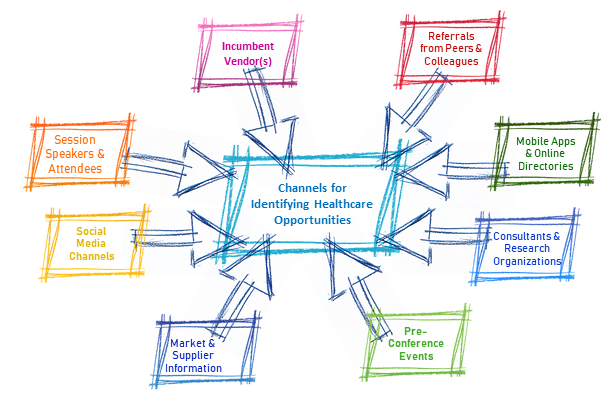
Channels to indentify healthcare opportunities

‘Speed Dating’ Vendors at Healthcare Conferences

Conferences are popular ways to connect your healthcare organization’s internal intelligence to the external intelligence that conference speakers, exhibitors, and attendees offer. Educational sessions, keynote addresses, pre-conference events, and a myriad of opportunities to meet with conference speakers, exhibitors, and attendees in both structured and informal settings are very powerful ways to gather the information you need to make smart decisions. But healthcare conferences can have thousands, even tens of thousands of attendees and hundreds of exhibitors. How can you efficiently sort through so many potential opportunities? It’s important to not let the sheer size of these events overwhelm your ability to realize the value they present. Speed-dating vendors at healthcare conferences is one potentially useful approach to conquering the conference crowd.

Continue reading

Vendor Interactions Healthcare Conferences

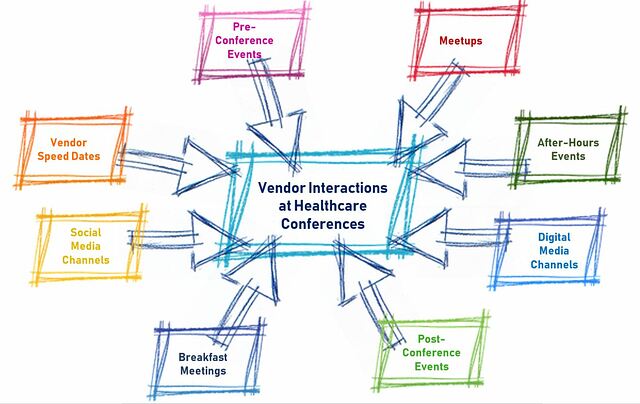
Getting the Most Out of Vendor Interactions at Healthcare Conferences

Major healthcare conferences like the upcoming 2018 HIMSS Conference & Exhibition and more specialized forums like the AHIP Consumer Experience & Digital Health Forum held a couple weeks ago in Nashville are great opportunities to learn a lot in a short period of time.

Being able to easily meet and interact with exhibitors, engaging with a variety of 3rd parties about the opportunities, challenges and issues your company is facing, and the ability to quickly obtain key information to help you assess whether a specific vendor’s offerings and company culture align with your needs are three main reasons why people attend healthcare conferences.

Continue reading