8 Data Points Every Healthcare CFO Should Monitor for Better Cost Control

Key Takeaways

Monitoring labor, supply chain, asset utilization, and revenue cycle data enables CFOs to control costs and stay ahead of financial risks. These metrics reveal waste, guide staffing decisions, and strengthen day-to-day decision-making. With Valify, hospitals gain continuous tracking across all major spend categories, delivering clearer visibility, stronger margins, and the financial stability needed in today’s demanding healthcare landscape.

Ask any healthcare CFO about their top concerns, and the answers are remarkably consistent: rising operating costs, tight labor markets, supply chain challenges, and the pressure to deliver more services with less funding. In today’s financial environment, the line between breaking even and running a deficit often comes down to one factor: how closely you monitor the numbers that matter most.

Not all data carries the same weight. Some metrics create more noise than value, leading to unnecessary distractions. When a CFO understands which factors truly matter, decisions become less reactive and far more strategic. This clarity makes it possible to spot risks before they reach the balance sheet, negotiate with confidence, and guide the organization toward stronger margins.

In this guide, eight crucial data points are outlined that every healthcare CFO should monitor—metrics that impact workforce stability, asset utilization, revenue cycle performance, and overall long-term financial sustainability. With Valify, hospitals can track these metrics more efficiently, gaining actionable insights that drive better financial and operational outcomes.

Why Data-Driven Decision-Making Is Non-Negotiable for CFOs

Escalating Costs & Shrinking Margins

Hospitals are facing pressure from both directions. The costs of salaries, contract labor, and hiring are constantly increasing. Additionally, due to inflation and supply chain issues, even the most basic goods are becoming increasingly expensive. There are also compliance requirements that involve costs for reporting, audits, new regulations, and cybersecurity safeguards.

Simultaneously, reimbursement models are changing in a way that will be more favorable to outcomes than to volume. Even the best-managed hospitals are finding themselves repeatedly adjusting their budgets as payer contracts are altered and patient populations shift to outpatient care.

In this environment, relying on instinct alone is no longer sufficient. Precise, reliable data has become the essential financial lifeline that guides every decision.

Complex Revenue Models Demand Better Visibility

Healthcare is no longer governed by simple fee-for-service billing. CFOs now navigate a world shaped by:

  • Bundled payments
  • Risk-sharing arrangements
  • Value-based care
  • Quality-tied reimbursements

Each model comes with its own metrics and financial triggers. The only way to manage them effectively is by maintaining tight control over performance indicators across departments.

From Reactive to Proactive Financial Management

Traditional financial management waits for month-end reports and reacts only after the damage is done. Today, that delay is simply too costly. CFOs now expect real-time visibility—giving them the power to act early and prevent wider repercussions, whether that means adjusting staffing levels, renegotiating contracts, or identifying a service line that’s quietly losing money.

When data is accessed and used regularly as a daily tool, rather than being reviewed and used as a historical summary, cost control is transformed into a more precise, rapid, and sustainable process.

8 Data Points Every Healthcare CFO Should Monitor

These eight indicators reflect where hospitals spend dollars—and where inefficiencies can quietly drain millions.

A. Workforce Efficiency

1. Labor Cost per Adjusted Patient Day

Labor is the largest controllable expense in healthcare. Even a small change in overtime or staffing can dramatically shift margins.

Why it matters:

This metric shows how much labor costs fluctuate with patient volume. If labor costs rise while adjusted patient days remain flat, it’s a clear signal that staffing models need attention.

Signals worth watching:

  • Over time, creeping above target levels
  • Growing reliance on agency or traveling staff
  • Productivity gaps between units

What CFOs should do:

Pair staffing analytics with flexible scheduling models. Work closely with nursing leadership to align resources with demand, not tradition.

2. Vacancy & Turnover Rates

It’s easy to underestimate how costly turnover really is. The financial impact isn’t just recruitment—it’s onboarding time, decreased productivity, overtime to fill gaps, and burnout among remaining staff.

Why it matters:

High turnover often indicates deeper issues: workload strain, culture concerns, and compensation misalignment.

Signals worth watching:

  • Unit-specific turnover spikes
  • Extended time-to-hire
  • Increased use of short-term contractors

CFO Action:

Support retention programs that deliver measurable ROI and help you keep the dedicated staff already contributing to your success.

B. Supply Chain & Purchased Services

3. Supply Cost per Case or Procedure

Every surgical case, imaging exam, or inpatient encounter has a supply profile. Small inefficiencies stack up quickly.

Why it matters:

When supply cost per case varies widely—for the same procedure type—it’s often tied to inconsistent product use, lack of standardization, or outdated vendor contracts.

CFO Action:

  • Standardize preference cards
  • Strengthen compliance with GPO contracts
  • Identify savings opportunities in purchased services

This metric often reveals waste that isn’t intentional—just unnoticed.

4. Purchased Services Spend by Vendor & Category

Purchased services represent a major spend area that’s often under-managed. Duplicate vendors, overlapping contracts, and unclear performance metrics are common.

Why it matters:

Hospitals may unknowingly work with more vendors than necessary. Redundant services create oversight challenges and dilute negotiating power.

CFO Action:

  • Consolidate vendors where appropriate
  • Renegotiate contracts based on performance
  • Track SLAs to ensure value

Careful oversight of purchased services can unlock hidden savings without cutting quality.

C. Operational & Asset Utilization

5. High-Cost Asset Utilization Rates

Hospitals invest heavily in imaging machines, surgical equipment, and monitoring systems. When those assets sit idle, the financial hit is immediate.

Why it matters:

Unused or underused equipment drains capital dollars without delivering ROI.

CFO Action:

  • Encourage departments to share assets
  • Lease underutilized equipment instead of buying
  • Review utilization before approving new purchases

Often, the issue is not overbuying—it’s a lack of visibility into current capacity.

D. Revenue Cycle & Margin Protection

7. Days in Accounts Receivable (A/R)

Cash flow determines how well a hospital can absorb rising costs and unexpected shifts. A/R days provide a window into the health of the revenue cycle.

Why it matters:

Delays in reimbursement hurt working capital. The longer claims remain unpaid, the harder it is for hospitals to fund day-to-day operations efficiently.

Signals to watch:

  • Growing denial rates
  • Rising rework costs
  • Aging A/R past 90 days

CFO Action:

  • Improve clean claim rates
  • Automate denial management
  • Strengthen payer communication

Small issues in the revenue cycle snowball quickly without close monitoring.

8. Net Margin by Service Line

Some departments generate steady margins; others quietly drain resources. CFOs need clarity on which service lines deserve expansion and which need intervention.

Why it matters:

Margin visibility ensures strategic resource allocation. Without it, profitable departments may be subsidizing underperforming ones.

CFO Action:

  • Grow high-margin programs
  • Redesign or sunset unprofitable lines
  • Align staffing and supply costs with volume trends

Service line strategy becomes far more effective with real-time margin data.

Integrating Data Points for Holistic Cost Control

Monitoring every metric one at a time is a good practice, but the real advantage comes from the insights gained by analyzing all the metrics together.

Data Dashboards & Analytics Platforms

With Valify, dashboards consolidate labor, supply chain, revenue cycle, and operational data into a single view. This unified perspective gives CFOs and department leaders a common reality—and a shared responsibility for outcomes.

Cross-Department Collaboration

Finance can’t fix inefficiencies by itself. When operations, clinical leadership, and supply chain teams all review the same figures, agreement becomes natural rather than forced.

Predictive Analytics

The patterns in staffing, equipment utilization, or revenue cycle performance can alert the organization to risks even before they appear in the financial statements. Predictive models catch CFOs as they prepare, rather than letting them react.

Conclusion

Today, hospitals are under financial stress that they have never experienced before. However, if healthcare CFOs have the right data at their disposal, they can not only protect margins but also make strategic decisions and lead their organizations to long-term success.

These eight indicators provide a solid, realistic basis for more effective cost management.

In medical finance, the adage still applies:

What gets measured gets managed. What gets managed becomes sustainable.

If your hospital is seeking clearer insights into expenses, supplier performance, and contract opportunities, Valify’s platform, designed specifically for this purpose, enables hospitals to make data-driven, results-based decisions.

Discover how Valify empowers your organization with cost control and spend management. Request a demo now.

FAQs

Which data point delivers the fastest savings?

Supply cost per case and purchased services often produce the quickest, most visible savings.

How often should CFOs review these metrics?

Weekly for active operations, monthly for deeper trend reviews.

Can smaller hospitals track these without costly tools?

Yes—basic dashboards, organized spreadsheets, and clear workflows can cover the essentials.

How do these data points support value-based care?

They highlight inefficiencies, improve resource allocation, and ensure care quality aligns with cost expectations.

What’s the biggest barrier to acting on this data?

Siloed departments and slow adoption of shared processes.

Source: Statista – Hospital

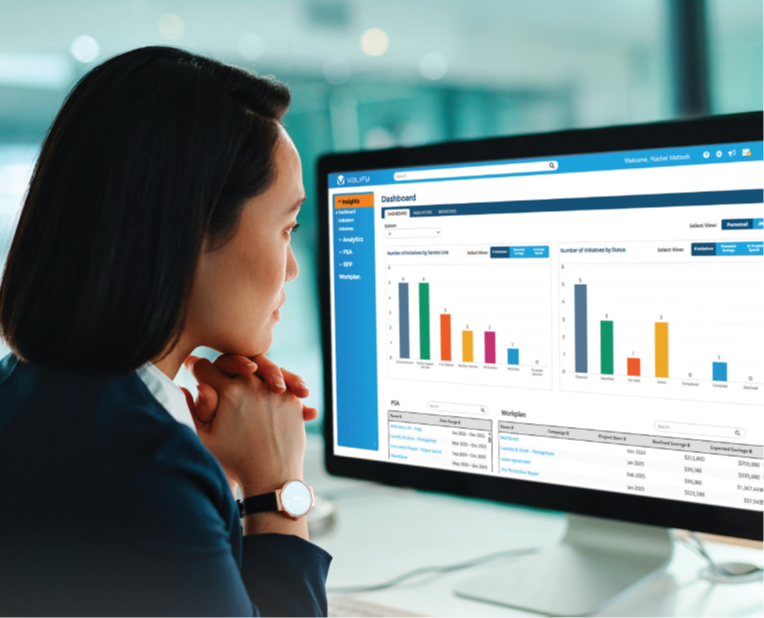
dark haired woman looking at graph on computer screen

Behind the Innovation: Valify Insights

With thousands of categories and vendors, hospital spending on purchased services can be significant. Yet, the data needed to manage these costs is often opaque and fragmented, making it difficult for organizations to spot trends and identify savings opportunities.

Valify’s advanced technology platform directly addresses this challenge with the introduction of Valify Insights.

“Valify Insights was born out of a need to look deeper at what triggers and constitutes a savings opportunity in purchased services,” said Les Popiolek, Chief Executive Officer of Valify. “Our goal is to cut through the complexity and make data analysis both simple and sophisticated for hospitals and health systems.”

hands working at table with tablet displaying graphs

By applying a quantitative approach, Valify Insights enables healthcare organizations to quickly pinpoint where savings in purchased services exist, prioritize which areas to address, and estimate the potential value of these opportunities. Whether it’s confirming that current cost-saving efforts are on track or revealing unexpected opportunities to reduce spending with specific vendors or categories, Valify Insights brings simplicity, clarity and actionable insights to the decision-making process.


The Power Behind Valify Insights

Valify Insights is powered by two core technologies.

The first being Valify’s proprietary technology and data intelligence platform focused exclusively on purchased services, which the company has been operating for more than a decade. Today, Valify has amassed and processed billions of rows of data from more than 1,400 hospitals across the nation, representing over $1.3 trillion in categorized purchased services spend.

As Popiolek put it, “I can say with great confidence that no one else has the sheer volume of data we do and can analyze it in such meaningful ways like our technology can.”

Purchased services data is complex. There are dozens of details – like contracts, invoices, vendors, hospitals, and time periods – that can be used to examine how, where and when money is spent. This creates a daunting number of ways that hospitals and health systems can analyze the past and present of their purchased services spend.

people pointing at sheet of paper displaying data

This is where AI comes in as the second technology core to Valify Insights. While adhering to strict data security and compliance standards, Valify Insights leverages AI to rapidly automate, interpret and digest all the data into something actionable.

For instance, the Valify Score – a pivotal feature within Valify Insights – evaluates data across numerous attributes (not just cost) to assign a score to each service category a hospital outsources, showing which categories require urgent action and which can be addressed later. Moreover, AI continually updates Valify Scores as new spending data becomes available, offering real-time guidance to support cost-saving initiatives.


A GPS to Value

Purchased services are usually managed at the hospital or even department level – rarely are they managed across a system. This can lead to missed opportunities if not using technology and data to connect the dots.

If a health network looks at its holistic purchased services spend, it could appear that the organization reduced total spend in a certain category. Valify Insights can peel back the layers and see that at certain hospitals within the system, spend has actually increased – prompting the question about why this is happening, which could be because each hospital is using a different vendor or there aren’t consistent contracts in place.

“Valify Insights provides clarity as to what is happening with a health system’s purchased services spend, so more can be uncovered as to why it is happening,” said Popiolek.

However, the real value hospitals and health systems gain from Valify Insights is what they choose to do with the data.

“Valify Insights is like a GPS system for driving value in purchased services management,” Popiolek explained. “The route you take to get to your destination is up to you. In other words, it’s what you do with the data that truly makes a difference.”

Clients should know that with its end-to-end suite of services, Valify is fully equipped to help them transition their insights into an action plan. This includes benchmarking services, expert advisory consultants, and access to a preferred supplier network portfolio with pre-negotiated supplier terms and vendors that have already passed a rigorous RFP process. In fact, Valify can manage purchased services initiatives and programs from start to finish.


Unmatched in the Industry

Valify Insights can be the driving force behind how health systems set their purchased services priorities. With data from hospitals across the nation and of all GPO affiliations, subscribers have an unfound gateway to create greater value and procure quality outsourced services for their organizations.

“The speed and depth of insights we provide is unequivocally unmatched in the industry,” Popiolek emphasized. “I’m confident that no other company in the market can provide the insights we do, and I challenge anyone to try.”


Take control of your purchased services strategy today. Contact us to learn how Valify Insights can help you uncover new savings opportunities.

man and women in professional attire reviewing screen for budgets

Purchased Services and Budget Planning: What to Tackle Now

Many healthcare organizations enter the budget season with a familiar challenge: how to stretch limited resources while still delivering exceptional care. Purchased services are often overlooked in this process, even though they make up more than half of non-labor spend in many systems.

This playbook is for healthcare executives, supply chain leaders, and finance teams preparing for the next budget cycle. If purchased services have been overlooked, now is the time to refocus. In this post, we’ll share practical strategies to help you identify hidden inefficiencies, reduce spend, and lay the groundwork for the year ahead.

Why purchased services should be part of your strategy

Hospitals are under growing pressure. Inflation, tariffs, and rising costs continue to squeeze already tight budgets. At the same time, staffing shortages are making it harder for teams to gain traction. Many departments are being asked to do more with less, and that includes supply chain.

One persistent challenge is that purchased services often fly under the radar. While leadership may assume supply chain has it covered, not all purchased services categories fall within their scope. Without visibility, contracts can remain fragmented, siloed, or simply unnoticed. For instance, in working with one of our Valify clients, we discovered a vendor agreement that had been auto-renewing since 1989!

These blind spots can cost healthcare organizations both time and money. With the right tools and support, they can turn into wins. Purchased services may be the most unrecognized opportunity many hospitals have available today.


Four tactics that work

If you’re ready to get serious about optimizing your purchased services spend, here are four tactics that can strengthen your strategy heading into the next fiscal year.

Leverage your GPO contract portfolio

If you need to change vendors, GPO contracts are one of the best ways to accelerate that process. Valify gives you access to a broad portfolio of pre-vetted agreements through Valify Solutions Group (VSG), our preferred supplier network, so you can source more quickly and confidently.

This kind of access helps hospitals move away from outdated or underperforming contracts and into agreements with stronger pricing, better service terms, and clearer accountability. It’s one of the quickest buttons you can push when you’re looking to drive near-term savings.

Use benchmarking beyond pricing

Benchmarking isn’t a once-a-year activity. It should be used throughout the year to monitor pricing drift, identify outliers, and uncover contracts that may have gone unchecked for too long.

Smart benchmarking goes beyond unit costs. With Valify’s GPO-agnostic data and category-specific insights, you can benchmark against a wide slice of the market. That allows you to evaluate fragmentation and compare your spend across vendors and peer systems.

These insights give you a stronger position at the negotiation table and help you avoid overpaying simply because of legacy contracts or inertia.

Prioritize based on potential impact

Not all savings opportunities are worth your time. When bandwidth is limited, the key is to focus on the categories where you can move the needle.

Features like Valify Score make this easier by highlighting spend spikes and surfacing categories where sourcing intervention could lead to immediate returns. This is especially useful when you need to justify your efforts to senior leadership or build alignment around your roadmap.

Bring in advisory support

Hospitals that lack capacity or internal expertise may benefit from outsourcing their purchased services strategy. Valify’s Advisory Services group works alongside your team to assess opportunities, engage with stakeholders, and drive implementation.

There’s no upfront cost to get started, which makes this support accessible for organizations of all sizes. Advisory teams can help you uncover priority areas, secure executive buy-in, and manage complex negotiations — all while ensuring the work gets done.


Valify Powers Progress

If you’re using this planning season as a time to course correct or uncover hidden opportunities, now is the perfect time to tap into some of Valify’s features. These capabilities can help you gain insights faster, hold vendors accountable, and share findings more effectively across your team.

AI Spend Insights

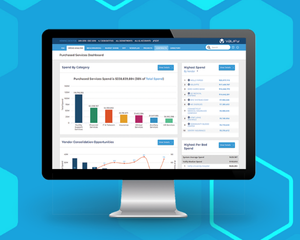
computer desktop showing graphs on screen on blue background

This feature combines the strength of Valify’s data platform with custom AI support, allowing users to interact with their spend data like never before.

You can ask questions to explore spending trends within a category, drill down by vendor or facility, or spot outliers that might otherwise be buried in spreadsheets. Even better, AI Spend Insights can return results in the form of custom charts and reports, making it easy to share findings with stakeholders or prepare for executive conversations.

Workplan

female hands holding pen with calculator

Workplan tracks how actual spend is trending against what’s been contracted, making it easier to spot when something starts to drift.

By catching these issues early, you can course correct before costs accumulate and throw off your budget. It’s a valuable way to hold vendors accountable to their agreements and stay ahead of unexpected costs.

Marketshare View

This feature shows you how much leverage you have based on your spend relative to the total market.

Let’s say the total market for a supplier is $1 million, and your organization accounts for $900,000. That puts you in a strong position when it comes time to negotiate. Marketshare View adds context that makes benchmarking more actionable, helping you understand your influence, not just your spend.

Combining these together can increase the accuracy of your decisions and help you act on insights with greater speed and confidence.


Plan smarter for the year ahead

No matter what challenges your team faced this year, your next budget cycle is a chance to reset and build momentum.

Whether you need the right tools, proven tactics, or expert support, Valify is here to help. Now is the time to bring more clarity and control to your purchased services strategy.

Schedule a complimentary demo today to see what’s possible.

Spend Analytics

AI-Powered Spend Analytics in Healthcare | Cut Costs with Valify

Key Takeaways

AI-powered spend analytics helps healthcare organizations reduce costs by providing clear visibility into spending patterns, vendor usage, and pricing discrepancies. It replaces manual reporting with real-time insights, supports informed decision-making, and identifies savings opportunities without disrupting clinical operations. As healthcare shifts toward value-based care and transparency, data-driven spend management is becoming essential.

The U.S. healthcare system is under relentless pressure. Costs are spiraling. But the goal isn’t just to cut; it’s to cut smartly without compromising care quality.

Yet many hospitals and health systems remain stuck in a loop. Data sits in silos. Vendor relationships are murky. Sourcing processes feel more reactive than strategic. The tools many organizations use aren’t keeping up.

This is where AI-powered Spend Analytics Technology steps in. Not as a tool for blanket budget slashing, but as a high-precision lens that helps procurement and finance leaders find savings without cutting corners.

Valify leads the charge with healthcare-specific, AI-driven Spend Analytics Technology that turns complex spend data into action-ready intelligence.

Why Traditional Cost-Cutting Fails

Many healthcare systems rely on outdated tools or basic business intelligence dashboards. These aren’t built to handle the complexity of modern healthcare procurement.

Here’s what typically goes wrong:

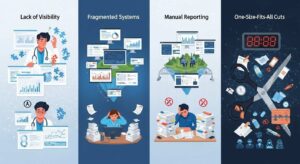
Why Traditional Cost-Cutting Fails

1. Lack of Visibility

Most teams can’t see the whole picture. They may know how much they spent, but not where, why, or with whom. There’s often no clear link between spending and clinical outcomes.

2. Fragmented Systems

ERP, finance, and supply chain platforms often operate in silos. That makes it nearly impossible to get a consolidated view of procurement behavior.

3. Manual Reporting

Reporting is tedious. Analysts spend hours preparing spreadsheets, only for the data to be outdated when decisions are made. These delays slow everything down.

4. One-Size-Fits-All Cuts

When you don’t know where waste lives, your only option is to make general cuts. However, these non-targeted actions risk hurting patient services, staffing, or outcomes.

Most cost-cutting efforts are reactive and ineffective without advanced categorization and AI-driven insights. You can’t optimize what you can’t see clearly.

What Is AI-Powered Spend Analytics?

AI-powered spend analytics is a technology solution that uses artificial intelligence and machine learning to turn disorganized spending data into actionable business intelligence.

Core Functions:

  • Cleansing messy or duplicate vendor data
  • Normalizing inconsistent formats across departments
  • Classifying purchases using healthcare-specific taxonomies (e.g., surgical implants, imaging, purchased services)
  • Analyzing historical patterns, pricing trends, and peer benchmarks

It doesn’t just show you how much you’ve spent. It helps you understand what you bought, who you bought it from, and whether it was the best choice, in real time. With a solution like Valify, hospitals and health systems gain transparency and control over spending like never before.

Tangible Ways AI Spend Analytics Reduces Costs in Healthcare

1. Spotting Hidden Spend Leaks

Not all waste is obvious. Some of the most damaging leaks are hidden deep within line-item details.

AI can:

  • Detect purchases made outside of approved contracts (contract leakage)
  • Flag duplicate or split purchases made by separate departments
  • Reveal price inconsistencies for the same product purchased from different vendors or at other locations.

By catching these early, organizations can prevent unnecessary losses and renegotiate more favorable terms.

2. Uncovering Redundant Vendors

Vendor sprawl is a common issue. Over time, health systems work with multiple suppliers for the same products or services.

AI-powered analytics can:

  • Identify overlapping vendors supplying the same SKU or category
  • Recommend vendor consolidation opportunities.
  • Reveal volume-based discounts by directing more spending to fewer preferred partners.

This reduces costs, streamlines supplier management, and strengthens strategic relationships.

3. Driving Smarter Category Strategy

AI doesn’t just provide data, it gives context.

It breaks down spending by particular, healthcare-relevant categories, such as:

This allows sourcing teams to:

  • See exactly where money is going, down to the line item
  • Identify categories with the most potential for savings.
  • Prioritize efforts based on clinical value vs. financial impact.

No more black-box totals. This is category-level clarity with surgical precision.

4. Empowering Real-Time, Informed Negotiations

You can’t negotiate effectively if you don’t know the market.

AI spend analytics equips teams with:

  • Up-to-date benchmarks that validate whether a quoted price is competitive
  • Contract performance data that identifies underperforming vendors before renewal
  • Scorecards and RFP prep tools to ensure negotiations are based on facts, not gut feel

This kind of intelligence turns every sourcing conversation into a strategic advantage.

5. Eliminating Low-Value or Non-Essential Spend

AI also helps distinguish what’s essential from what’s not.

It can:

  • Highlight low-utilization items that offer little clinical value
  • Flag maverick spending, unapproved purchases made outside standard processes.
  • Suggest changes to formularies or vendor lists based on actual usage data.

Reducing waste doesn’t always mean big moves. Sometimes, it’s a thousand small ones. This is where AI excels.

Addressing the “But We’re Not Ready” Objection

It’s common for healthcare leaders to hesitate. Here are some typical objections and why they shouldn’t hold you back:

  • “Our data isn’t clean.”

That’s fine. Valify was built to start with messy data. It gets better over time through machine learning. You don’t need perfection to get started.

  • “We already use ERP or BI tools.”

Those tools weren’t designed specifically for healthcare spend categorization or benchmarking. Valify adds intelligence to your existing systems; it doesn’t replace them.

  • “Our team doesn’t understand AI.”

You don’t need technical expertise. Valify’s dashboards are intuitive and easy to use, and support is provided every step of the way.

  • “Will this disrupt our current workflows?”

Valify is a light-touch integration. It overlays your existing systems without requiring a complete infrastructure overhaul.

Preparing for What’s Next in Healthcare Spend Management

  • Regulatory shifts: (price transparency laws, CMS reforms) force provider organizations to rethink spend governance. With federal mandates increasing accountability, health systems need better visibility into spending. Price transparency rules and CMS reforms demand accurate, clean, real-time data to meet compliance standards.
  • Value-based care: models demand cost control without harming patient outcomes. Hospitals must find ways to reduce costs while maintaining high-quality care. AI spend analytics enables identifying non-essential or low-value spending without disrupting clinical operations.
  • AI-powered analytics: will move from optional to essential in helping organizations stay competitive and compliant. As healthcare decisions become more complex, AI will be critical for benchmarking, contract management, and vendor performance tracking. Manual tools won’t keep up with the pace of change.
  • Valify’s adaptive platform: ensures ongoing support as purchasing behavior and regulations evolve. Valify grows with your organization, refining data accuracy, updating category logic, and surfacing new savings opportunities as market conditions and internal needs shift.

Savings Don’t Start with Cuts, They Start with Clarity

The key to reducing healthcare costs isn’t about slashing budgets, squeezing suppliers, or cutting departments. It’s about truly understanding where your money is going and why. With AI-powered spend analytics, healthcare leaders no longer rely on assumptions or outdated reports. They can make confident, data-backed decisions that reduce waste while protecting care quality.

Valify empowers organizations to cut through the complexity and uncover meaningful, measurable savings. It turns spent data into a strategic asset; clear, actionable, and always talking.

Ready to hear what your data has been trying to tell you? Let Valify help you finally listen.

FAQ:

Q1. How long does implementation take, and how soon can hospitals expect to see results with Valify?

Implementation with Valify is fast and non-disruptive. Most hospitals begin seeing clean, categorized spend insights within a few weeks. Measurable cost savings and sourcing opportunities typically surface within the first 60–90 days of active use.

Q2. How does Valify ensure accuracy in categorizing healthcare-specific spend data?

Valify uses AI models trained on billions of dollars in real healthcare spend. Its algorithms are built specifically for healthcare taxonomy, not general business categories. The system continuously learns and improves through feedback loops and expert validation to ensure high accuracy and relevance.

Q3. Can Valify integrate with our current ERP and supply chain systems?

Yes. Valify is designed to integrate seamlessly with your existing ERP, finance, and supply chain tools. It acts as an intelligence layer, without replacing your current systems or disrupting your workflows.

Q4. What types of savings (direct and indirect) do clients typically identify?

Clients commonly uncover direct savings from vendor consolidation, contract compliance, and price standardization. Indirect savings come from reduced manual reporting time, improved sourcing efficiency, and better alignment between clinical value and spend.

Q5. How does Valify support teams post-implementation to keep insights actionable?

Valify provides ongoing support through dedicated client success teams, customizable dashboards, and regular performance reviews. New opportunities continuously surfaced through the platform, ensuring your team stays ahead of spend trends and always has clear next steps.