The Hidden Costs of Poorly Purchased Services Management in Healthcare

Key Takeaways

It is not the medical supplies or pharmaceuticals that cause hospitals to lose more money than they are aware of, but rather the purchased services that are inadequately run or neglected. Inefficient contracts, rogue spending, and limited visibility quietly erode budgets, restrict investments, and weaken operational stability. With Valify’s purchased services analytics and categorization expertise, health systems can uncover hidden waste, negotiate better rates, and redirect savings toward stronger patient care.

A mid-sized hospital in the Midwestern United States began a detailed financial audit after leaders noticed that operating margins had been steadily declining over the previous three years. While they initially suspected common causes, such as rising drug prices, increasing labor costs, and higher supply expenses, the true issue turned out to be something different entirely.

The audit showed that the hospital had been overspending hundreds of thousands of dollars annually on purchased services across categories such as laundry, groundskeeping, medical equipment repair, dietary services, document destruction, and clinical waste disposal. The issue wasn’t that the services were unnecessary—it was that they were poorly controlled, inconsistently priced, and rarely reviewed. This allowed outdated contracts, unused services, and underperforming vendors to drain the budget year after year. The impact was gradual and, without centralized oversight, largely unnoticed. These inefficiencies, when combined, had consumed significant operating funds.

Stories like this are common. Many hospitals lose more money through unmanaged purchased services than through supply chain issues. And unlike supplies—which are typically well tracked—purchased services often operate in the shadows. This quiet leakage remains one of the most significant and overlooked financial risks in healthcare today.

Understanding Purchased Services in Healthcare

Purchased services comprise a vast and diverse set of third-party expenses. They include:

  • Biomedical equipment maintenance
  • Laundry and linen
  • Environmental services
  • Waste management
  • Dietary services
  • Transportation and courier services
  • IT support
  • Clinical equipment repair
  • Landscaping and snow removal
  • Security services
  • Document shredding and storage

These services are essential to daily operations, yet their costs can be hard to evaluate. Purchased services involve variables like labor hours, service frequency, specialized skills, vendor performance, and regional pricing differences.

In a hospital’s financial structure, purchased services often account for 20% to 25% of total non-labor expenses, making them one of the largest and most complex cost categories.

Because many of these services are decentralized, managed by individual departments rather than a unified procurement strategy, overspending is almost guaranteed unless systems are in place to monitor them.

Purchased services can either support a high-performing, cost-efficient organization or quietly become the largest source of preventable financial waste.

The Hidden Costs

Poorly managed outsourced services do not necessarily manifest themselves in the form of an enormous red flag. Regular invoices, renewals, or long-term vendor relationships often conceal overages.

1. Overpaying Due to Outdated Contracts

Hospital contracts are often run on multi-year terms. If no one regularly reviews them, the organization risks:

  • Paying above-market rates
  • Missing competitive pricing opportunities
  • Carrying outdated service requirements
  • Overlooking automatic renewals with unfavorable terms

Vendors are aware that many hospitals struggle to track these contracts. When rates increase unnoticed, the cost difference compounds over time.

2. Service Duplication or Inefficiencies

With limited visibility across the system, hospitals may contract with multiple vendors for the same service, resulting in unnecessary spending and operational inconsistencies. 

A lack of centralized oversight often leads organizations to:

  • Contract with multiple vendors for the same service
  • Procure unnecessary add-ons
  • Overuse of services due to a lack of internal review
  • Fail to consolidate contracts across locations

If three facilities use three shredding vendors, or five clinics independently contract IT support, the organization loses volume-based negotiating power and consistency.

3. Lack of Vendor Performance Tracking

Performance issues cost money, too:

  • Slow response times
  • Missed SLAs
  • Overage charges
  • Billing irregularities
  • Low-quality work that requires rework

In the absence of centralized evaluation of vendors, hospitals, in most cases, pay for the level of service they never receive, or even maintain working relationships with non-performing vendors, simply because no one has pointed out the problem. These expenses operate in the dark with broken information and haphazard management.

How These Costs Impact More Than the Budget

The consequences of mismanaged purchased services stretch far beyond spreadsheets.

1. Reduced Funds for Patient Care Improvements

Every dollar wasted is a dollar not invested in:

  • New diagnostic equipment
  • Staffing resources
  • Patient comfort upgrades
  • Digital transformation
  • Clinical quality initiatives

Over time, these missed opportunities erode a hospital’s ability to innovate and expand its services.

2. Lower Staff Satisfaction

When budgets tighten, departments often face:

  • Hiring freezes
  • Delayed equipment replacements
  • Reduced training allocation
  • Slower turnaround for operational support

Staff feel the pressure long before the board does. Inefficiencies in purchased services ultimately restrict frontline teams, who depend on reliable support to deliver care.

3. Ripple Effect on Community Trust

Patients and communities notice when hospitals:

  • Delay facility upgrades
  • Struggle to maintain equipment
  • Operate with outdated technology
  • Reduce available services

Even when clinical care remains strong, visible signs of budget constraint weaken public confidence.

Poorly managed purchased services quietly undermine the hospital’s ability to deliver high-quality, modern care.

Spotting the Warning Signs

Hospitals can often detect purchased services issues long before they escalate if they know where to look.

1. No Regular Contract Reviews

If contracts simply auto-renew year after year, the hospital is almost certainly overpaying for its services.

2. Vague or Outdated Service Level Agreements

Missing or unclear SLAs allow vendors to underdeliver while still billing full rates.

3. Reliance on a Single Vendor Without Comparison

Sole-sourcing can be efficient, but not if the vendor hasn’t been benchmarked against competitive rates.

4. Limited Visibility Into AP Spend Data

If leaders cannot see:

  • How much do they spend
  • With whom
  • For what
  • Across all facilities

Costs will always be higher than necessary.

5. Rogue or Off-Contract Spending

Whenever departments bypass procurement to “just get it done,” costs tend to drift upward, and the hospital loses negotiating leverage.

Recognizing these signals is the first step toward stronger financial control.

Strategies for Improvement

Hospitals don’t need to overhaul their procurement structure to see better results. Starting with manageable steps can lead to significant savings.

1. Implement Routine Audits

Annual or semiannual reviews help:

  • Identify outdated contracts
  • Catch duplicate services
  • Verify invoicing accuracy
  • Measure vendor performance
  • Highlight savings opportunities

Even a basic audit often uncovers immediate low-hanging fruit.

2. Negotiate Using Current Market Data

Hospitals that negotiate with outdated assumptions typically overpay. Using:

  • Benchmark data
  • Category insights
  • Volume consolidation
  • Industry-standard rates

Gives procurement teams the leverage they need to negotiate confidently.

3. Encourage Cross-Department Collaboration

Bringing department leaders together helps:

  • Standardize service expectations
  • Consolidate contracts
  • Align service levels
  • Eliminate unnecessary add-ons

Purchased services decisions should be made with the big picture in mind, not just individual department needs.

4. Use a Centralized Spend Analytics Platform

Technology plays a critical role. Platforms like Valify:

  • Cleanse and categorize AP data
  • Standardize purchased services categories
  • Provide benchmarks for comparison
  • Highlight savings opportunities
  • Track contract compliance
  • Centralize vendor performance metrics

Centralized visibility drives smarter decisions and more consistent financial outcomes.

The ROI of Better Purchased Services Management

Even small improvements in oversight of purchased services can generate significant returns.

A Simple Hypothetical Savings Model

A hospital spending $40 million annually on purchased services could reasonably save:

  • 3% through contract alignment
  • 5% through updated market rates
  • 2% through eliminating duplicates
  • 1–3% through improved vendor performance

That’s $4–$6 million in annual savings.

Where Those Savings Go

Hospitals can reinvest savings into:

  • Patient safety programs
  • Staffing
  • Updated imaging or surgical equipment
  • Facility improvements
  • Technology modernization
  • Community health initiatives

Better purchasing services management strengthens the hospital’s mission at every level.

Conclusion & Takeaway

One of the simplest yet most expensive categories of healthcare expenses is purchased services, which are often overlooked. Out of control, they cost hospitals millions, are growth inhibitory, and negatively impact both staff and patient experiences. The good news is that the said costs are manageable through visibility, benchmarking, and effective contract discipline. Such services as Valify are used to assist hospitals in finding waste, inefficiencies, and near-term savings. Purchased services cannot be overlooked anymore in hospitals. They are able to transform the costs that may be hidden into financial benefits in the long term with the right tools and processes.

Healthcare leaders should also have a complete review of the purchased services contracts, rates, and performance measures before the next fiscal year. With Valify, you can find hidden savings and create a more anticipated spending plan. Demo book a demo to have complete visibility on the amount spent on purchased services and optimize financial results with confidence.

FAQs

  1. What are the most commonly purchased services in hospitals?

These include laundry, food service, maintenance, waste management, IT support, biomedical equipment repair, environmental services, transportation, security, and more.

  1. How can hospitals track vendor performance effectively?

By using standardized SLAs, centralized contract dashboards, and platforms like Valify that monitor KPIs, compliance, and cost trends.

  1. Are purchased services always negotiable?

Most categories offer significant negotiation opportunities, especially when hospitals utilize benchmark data and have visibility into aggregated spend.

  1. How often should these services be reviewed?

Hospitals should review contracts at least annually, with quarterly performance evaluations to catch issues early.

  1. Can switching vendors save money without sacrificing quality?

Yes. With the right benchmarks and performance data, hospitals can identify high-value vendors who deliver both cost savings and strong service levels.

man and women in professional attire reviewing screen for budgets

Purchased Services and Budget Planning: What to Tackle Now

Many healthcare organizations enter the budget season with a familiar challenge: how to stretch limited resources while still delivering exceptional care. Purchased services are often overlooked in this process, even though they make up more than half of non-labor spend in many systems.

This playbook is for healthcare executives, supply chain leaders, and finance teams preparing for the next budget cycle. If purchased services have been overlooked, now is the time to refocus. In this post, we’ll share practical strategies to help you identify hidden inefficiencies, reduce spend, and lay the groundwork for the year ahead.

Why purchased services should be part of your strategy

Hospitals are under growing pressure. Inflation, tariffs, and rising costs continue to squeeze already tight budgets. At the same time, staffing shortages are making it harder for teams to gain traction. Many departments are being asked to do more with less, and that includes supply chain.

One persistent challenge is that purchased services often fly under the radar. While leadership may assume supply chain has it covered, not all purchased services categories fall within their scope. Without visibility, contracts can remain fragmented, siloed, or simply unnoticed. For instance, in working with one of our Valify clients, we discovered a vendor agreement that had been auto-renewing since 1989!

These blind spots can cost healthcare organizations both time and money. With the right tools and support, they can turn into wins. Purchased services may be the most unrecognized opportunity many hospitals have available today.


Four tactics that work

If you’re ready to get serious about optimizing your purchased services spend, here are four tactics that can strengthen your strategy heading into the next fiscal year.

Leverage your GPO contract portfolio

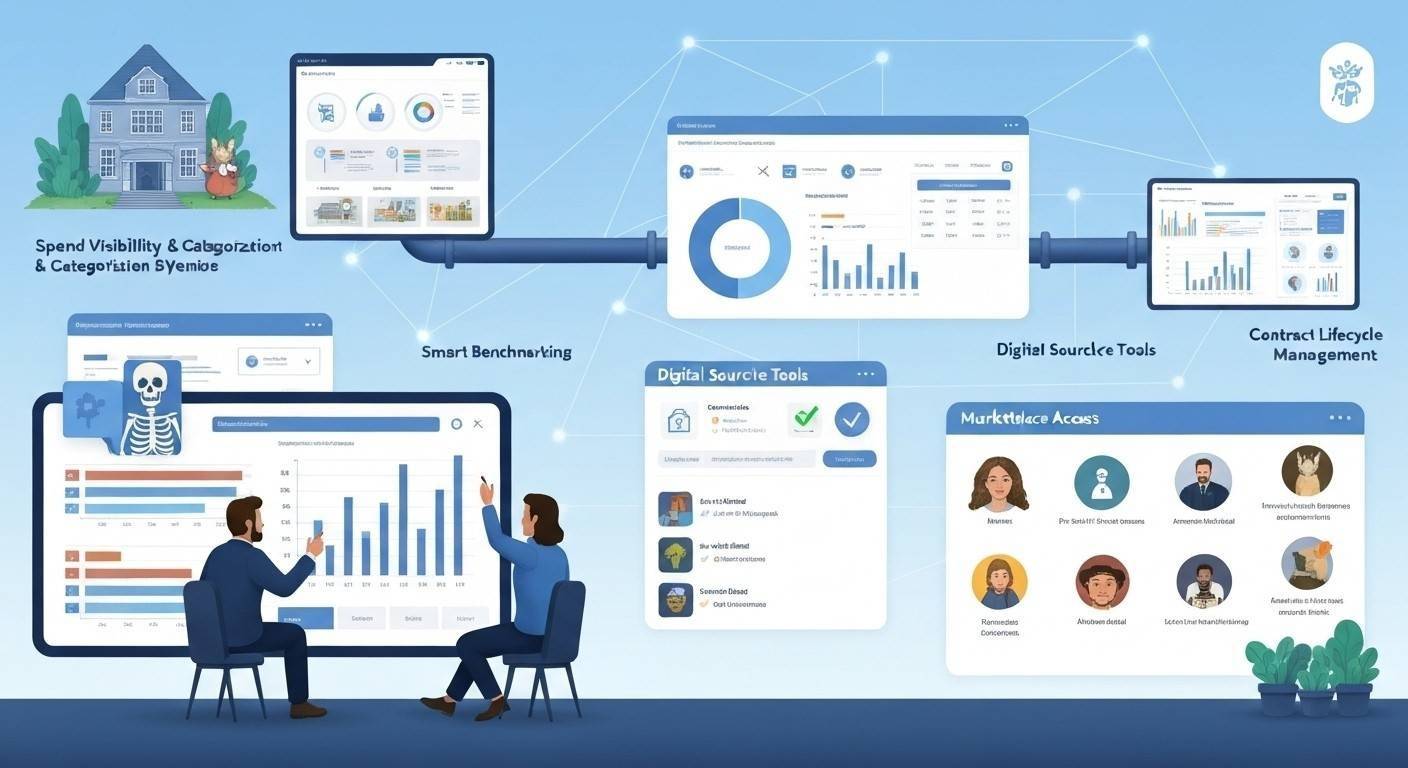
If you need to change vendors, GPO contracts are one of the best ways to accelerate that process. Valify gives you access to a broad portfolio of pre-vetted agreements through Valify Solutions Group (VSG), our preferred supplier network, so you can source more quickly and confidently.

This kind of access helps hospitals move away from outdated or underperforming contracts and into agreements with stronger pricing, better service terms, and clearer accountability. It’s one of the quickest buttons you can push when you’re looking to drive near-term savings.

Use benchmarking beyond pricing

Benchmarking isn’t a once-a-year activity. It should be used throughout the year to monitor pricing drift, identify outliers, and uncover contracts that may have gone unchecked for too long.

Smart benchmarking goes beyond unit costs. With Valify’s GPO-agnostic data and category-specific insights, you can benchmark against a wide slice of the market. That allows you to evaluate fragmentation and compare your spend across vendors and peer systems.

These insights give you a stronger position at the negotiation table and help you avoid overpaying simply because of legacy contracts or inertia.

Prioritize based on potential impact

Not all savings opportunities are worth your time. When bandwidth is limited, the key is to focus on the categories where you can move the needle.

Features like Valify Score make this easier by highlighting spend spikes and surfacing categories where sourcing intervention could lead to immediate returns. This is especially useful when you need to justify your efforts to senior leadership or build alignment around your roadmap.

Bring in advisory support

Hospitals that lack capacity or internal expertise may benefit from outsourcing their purchased services strategy. Valify’s Advisory Services group works alongside your team to assess opportunities, engage with stakeholders, and drive implementation.

There’s no upfront cost to get started, which makes this support accessible for organizations of all sizes. Advisory teams can help you uncover priority areas, secure executive buy-in, and manage complex negotiations — all while ensuring the work gets done.


Valify Powers Progress

If you’re using this planning season as a time to course correct or uncover hidden opportunities, now is the perfect time to tap into some of Valify’s features. These capabilities can help you gain insights faster, hold vendors accountable, and share findings more effectively across your team.

AI Spend Insights

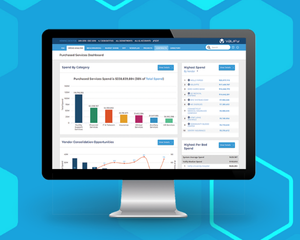
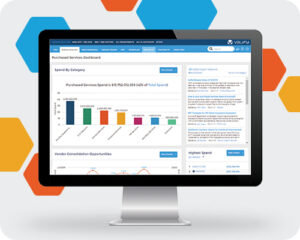
computer desktop showing graphs on screen on blue background

This feature combines the strength of Valify’s data platform with custom AI support, allowing users to interact with their spend data like never before.

You can ask questions to explore spending trends within a category, drill down by vendor or facility, or spot outliers that might otherwise be buried in spreadsheets. Even better, AI Spend Insights can return results in the form of custom charts and reports, making it easy to share findings with stakeholders or prepare for executive conversations.

Workplan

female hands holding pen with calculator

Workplan tracks how actual spend is trending against what’s been contracted, making it easier to spot when something starts to drift.

By catching these issues early, you can course correct before costs accumulate and throw off your budget. It’s a valuable way to hold vendors accountable to their agreements and stay ahead of unexpected costs.

Marketshare View

This feature shows you how much leverage you have based on your spend relative to the total market.

Let’s say the total market for a supplier is $1 million, and your organization accounts for $900,000. That puts you in a strong position when it comes time to negotiate. Marketshare View adds context that makes benchmarking more actionable, helping you understand your influence, not just your spend.

Combining these together can increase the accuracy of your decisions and help you act on insights with greater speed and confidence.


Plan smarter for the year ahead

No matter what challenges your team faced this year, your next budget cycle is a chance to reset and build momentum.

Whether you need the right tools, proven tactics, or expert support, Valify is here to help. Now is the time to bring more clarity and control to your purchased services strategy.

Schedule a complimentary demo today to see what’s possible.

Compliance for Hospitals

AI-Driven Purchased Services Management: Unlock Savings & Compliance for Hospitals

Key Takeaways

AI-powered spend analytics helps healthcare organizations reduce costs by providing clear visibility into spending patterns, vendor usage, and pricing discrepancies. It replaces manual reporting with real-time insights, supports informed decision-making, and identifies savings opportunities without disrupting clinical operations. As healthcare shifts toward value-based care and transparency, data-driven spend management is becoming essential.

Every hospital system runs on more than clinical expertise and dedicated staff. Behind the scenes, an entire ecosystem of outsourced services keeps things moving, including IT support, lab courier services, environmental cleaning, linen management, food delivery, biomedical maintenance, and even security. These are collectively known as purchased services in healthcare, making up a substantial share of non-labor hospital spending

Yet for many health systems, this spend remains a blind spot. It’s estimated that 45–60% of non-labor spending, sometimes hundreds of millions of dollars, is opaque, fragmented, and unmanaged. Contracts are buried in emails, vendors are inconsistent, and renewal dates are missed. Pricing varies wildly between facilities, even within the same system.

The conversation around AI in healthcare has focused on diagnostics, robotic surgeries, and clinical decision-making. However, a quieter, equally powerful revolution is happening in procurement, which uses AI not to replace clinicians but to make sense of a complex, disorganized service portfolio.

This article will explore the various aspects of AI-driven portfolio management, from cleaning up data to activating intelligent sourcing strategies.

Defining the Problem: The Chaos of Decentralized Purchased Services

Many hospitals operate like loosely connected islands. Different facilities use different vendors for the same services. Some negotiate their contracts, while others ride national GPO agreements. There’s little standardization and even less visibility.

Most health systems today deal with:

  • Disparate contract repositories across departments.
  • Duplicate vendors offering overlapping services.
  • Poor or nonexistent categorization of service spend.
  • Contract clauses and renewal terms that go unnoticed.

The result is:

  • Missed opportunities for volume-based savings.
  • Contract leakage, where spend happens off-agreement.
  • Diminished leverage when renegotiating or bidding.
  • Exposure to compliance and risk issues due to unmanaged terms.

Worse, leaders run into an information wall when they try to take action. There’s no centralized dashboard showing total spend by category, no way to easily compare vendors, and no insights on what “good” pricing even looks like.

This is where AI-driven portfolio management changes the game.

What AI-Driven Portfolio Management Actually Means

Let’s break it down. AI in this context isn’t about robots taking over. It’s about smart systems doing what humans simply can’t at scale, digesting vast amounts of fragmented data, making sense of it, and highlighting where action is needed.

Here’s what AI brings to the table:

  • Automated Data Normalization: Clean up messy AP files, unstandardized vendor names, and invoice descriptions.
  • Machine Learning Categorization: Map those spend items to standardized purchased service categories, over 1,400.
  • Pattern Recognition: Spot redundant vendors, outlier pricing, and underused agreements.
  • Predictive Benchmarking: Use internal history and peer data to suggest optimal rates and service levels.
  • Prescriptive Optimization: Deliver next steps, what to renegotiate, which vendors to consolidate, and where savings lie.

It’s not just reporting, it’s active portfolio intelligence.

Implementing AI in Purchased Services

Implementing AI in Purchased Services

Step 1 – Data Foundation: From Dirty Spend Files to Clean Portfolio Views

Ask any sourcing leader their biggest challenge, and they’ll tell you: the data is a mess. Vendor names appear in a dozen different variations. Invoice line items are vague (“Service Fee” or “Monthly Charge”), with no clear category or description.

AI solves this problem at the source.

  • Entity Resolution Algorithms: Identify and merge records that refer to the same vendor, no more “ABC Tech” vs. “A.B.C. Technologies Inc.”
  • Natural Language Processing (NLP): Reads unstructured invoice text and assigns accurate intent (e.g., linen rental vs. cleaning).
  • Ontology Development: Builds a normalized structure of categories so that “IT Services” means the same thing across your organization.

Within weeks, your AP data is transformed into a structured, searchable portfolio with spend analytics technology. This portfolio is the foundation for everything else.

Step 2 – Category-Level Insights: Beyond What ERP Reports Can Show

ERP systems can tell you who you paid and how much. But they can’t tell you whether it made sense, or how it compares across your organization.

AI-driven tools can analyze:

  • Utilization patterns: Which departments used courier services most frequently, and why?
  • Outlier pricing: Why is the same lab test three times as expensive at Facility B?
  • Vendor overlap: Are you paying five different shredding companies to service overlapping areas?

With these insights, hospitals can generate Category Intelligence Reports that show:

  • Total spend by service line.
  • Number of active vendors.
  • Range of pricing across facilities.
  • Internal and external benchmarks.
  • Contract status and savings potential.

It’s a new level of transparency, and one that helps stakeholders actually act on the data.

Step 3 – AI-Enhanced Benchmarking: Dynamic, Not Static

Forget the old model of comparing your prices to a national average. AI-powered benchmarking adjusts for the real world.

It factors in:

  • Facility type (rural hospital vs. academic medical center).
  • Service tier and urgency.
  • Regional pricing variations.
  • Historical volumes and usage patterns.

Using regression models, AI can predict what you should pay, not just the market average. Sometimes, the goal isn’t lower pricing; it’s better service levels or right-sizing your scope of work.

Step 4 – Strategic Sourcing Automation

RFPs are time-consuming. Even experienced teams often avoid competitive bidding because they’re buried under manual work.

AI fixes that.

  • Trigger-based sourcing: Get notified when a vendor is underperforming, a contract is about to expire, or your spend in a category spikes.
  • Smart vendor shortlists: Based on geography, historical pricing, and compliance ratings.
  • Automated bid scoring: AI scorecards rank bids not just on price, but also on contract flexibility, service levels, insurance coverage, and diversity status.

This means your sourcing team can run more events, faster, and with less effort.

Step 5 – Contract Intelligence and Compliance Monitoring

Even after sourcing is complete, the real work begins, tracking performance and enforcing compliance.

AI-powered platforms can:

  • Flag contracts nearing expiration or hidden auto-renewal clauses.
  • Compare actual spend against contracted rates.
  • Identify off-contract vendors still getting paid.
  • Monitor SLA compliance across vendors.

At any point, you can see:

  • What percentage of the spend is under contract?
  • Which vendors are out of compliance?
  • Where you’re exposed to financial or legal risk.

In short, AI doesn’t just help you sign better contracts, it helps you manage them, too.

Operational and Cultural Challenges to Implementation

It’s essential to be realistic. AI isn’t a plug-and-play miracle. Success depends on people, process, and leadership.

You’ll need:

  • Executive buy-in from supply chain, finance, and IT.
  • Governance to align decentralized facilities.
  • Retraining of sourcing teams is required, not to run RFPs but to act as strategic category managers.

That takes time, support, and clear policy alignment across departments. Change management is essential, but the payoff is worth it, both in cost savings and sustainable healthcare cost reduction strategies.

Looking Forward: The Future of Autonomous Purchased Services Management

We’re not far from a world where AI does even more. Imagine:

  • Predictive cost modeling that links directly to financial forecasts.
  • AI bots drafting vendor contracts based on your playbooks.
  • Integrations with IoT and telematics that measure actual service delivery.
  • Vendor rating systems are updated in real time and informed by usage data and stakeholder feedback.

The tools are evolving. And hospitals that embrace them early will be positioned to lead.

Conclusion: Rethinking Purchased Services as a Strategic Lever

Hospitals can’t afford to leave half of their non-labor spending in the shadows. Purchased services are too essential and too costly to remain unmanaged.

AI-driven portfolio management isn’t a procurement upgrade. It’s a new operating model that gives you control, clarity, and confidence.

And with a partner like Valify, you’re not adopting a platform. You’re getting an expert team that understands healthcare, knows how to clean and structure data, and brings years of sourcing expertise to every category.

Take the first step, conduct a purchased services portfolio audit. Ask yourself:

How much visibility do you actually have? To learn more about how Valify can help you modernize your purchased services strategy.

FAQs

Q1 – What are “purchased services” in a hospital, and why are they so hard to manage?

Purchased services are outsourced functions like IT, cleaning, food delivery, and security. They’re hard to manage due to decentralized contracts, inconsistent vendors, poor data quality, and a lack of visibility across facilities.

Q2 – How does AI improve visibility and control over purchased services spend?

AI cleans and categorizes spend data, identifies redundant vendors, benchmarks pricing, flags contract issues, and recommends sourcing actions, giving hospitals a centralized view of spending.

Q3 – Is this just about cost savings, or does it offer strategic value, too?

Beyond cost savings, AI helps hospitals standardize services, reduce compliance risk, improve vendor performance, and enable smarter, faster procurement decisions.

Q4 – What kind of data do we need to get started with AI-driven portfolio management?

You need accounts payable data, vendor lists, contracts, and invoices. AI tools can work with messy, unstructured data and standardize it quickly.

Q4 – How long does it take to see results from an AI-powered purchased services initiative?

Early insights and savings opportunities can surface within weeks. Full transformation, portfolio visibility, strategic sourcing, and contract compliance typically unfold over a few months.

Purchased Services Optimization

A Step by Step Guide to Purchased Services Optimization for Smaller Hospitals

Key Takeaways

Smaller hospitals often overlook purchased services like food, janitorial, IT, and waste management even though they represent a major budget line. Without oversight, contracts renew unnoticed, costs escalate, and performance suffers. This guide outlines a step-by-step roadmap to centralize data, benchmark vendors, renegotiate contracts, and adopt healthcare-specific tools like Valify. With smart optimization, even lean hospitals can save money, boost vendor accountability, and reinvest in patient care.

Running lean isn’t just smart, it’s survival. Smaller hospitals, in particular, walk a tightrope. Margins are thin, teams are stretched, and every decision counts. But here’s something many overlook: purchased services in healthcare.

The behind-the-scenes essentials: food service, IT support, janitorial contracts, waste hauling, keep your hospital humming. They don’t involve direct labor, so they’re easy to ignore. But that’s precisely why they need a closer look.

This guide gives you a step-by-step plan to take control. It’s not about cutting corners, it’s about getting smarter. With the right moves, even the smallest facility can save real money, improve vendor performance, and channel resources back to what matters: patient care.

Why Purchased Services Deserve Strategic Focus

They’re a Major Budget Line

Let’s be honest: How often do you consider your total spending on purchased services? It’s easy to miss because costs are spread across different departments or buried under generic categories. But when you pull it all together, the total can be staggering.

Even modest monthly bills for hospital purchased services add up to six figures over a year. And that’s money that could be powering clinical innovation, hiring, or tech upgrades.

Commonly Overlooked

Why do purchased services get so little love? Simple: no one owns them. Different teams manage different vendors. Contracts roll over year after year with barely a glance. There’s no central oversight, no tracking, no real accountability.

It’s not that people don’t care; they’re busy. But letting these expenses drift unchecked leads to quiet, steady overspending.

Not Just About Cutting Costs

Yes, savings are part of the story, but not the whole story. Optimization is really about strategy. It’s about aligning vendor services with your goals, improving outcomes, and eliminating operational waste.

When done right, optimizing purchased services supports long-term sustainability. It frees up money you can reallocate to better care and stronger teams.

Key Challenges Small Hospitals Face

Siloed or Incomplete Data

Does your vendor data live in a shared drive? A spreadsheet? Someone’s inbox? Maybe all three? That’s a problem.

Without a single source of truth, it’s almost impossible to see where the money is going. You can’t analyze spending patterns, track usage, or make informed decisions when the data is scattered like confetti.

Limited Contract Oversight

Smaller hospitals often have incredible people doing the work of entire departments. But that also means contracts get filed and forgotten. Renewal dates slip by. Terms aren’t reviewed. And when something goes wrong? It’s already too late.

This isn’t just inconvenient; it opens the door to compliance risks, poor service, and unexpected costs.

No Market Benchmarking

Here’s a tricky question: Are you overpaying for services? Without benchmarks, there’s no way to know.

Many hospitals are flying blind in negotiations. Vendors might be charging more than the market average, unless you’ve seen the data, you wouldn’t know it. That lack of context puts you at a significant disadvantage.

Manual Processes, Small Teams

No procurement department? No problem, until it is.

In small hospitals, one person may be juggling finance, facilities, contracts, and more. Optimization becomes a back-burner project when everything’s manual and time is tight. But the longer it waits, the more dollars slip away.

Step-by-Step Roadmap to Optimization

Step-by-Step Roadmap to Optimization

1. Centralize and Standardize Data

First things first: gather all vendor contracts and invoices in one place. Doesn’t matter if it’s a digital platform or a dedicated folder. The goal? Clearly describe your spend, service categories, and vendor relationships.

Use a standard classification system (like Valify’s) to group services. You might discover you’re paying two vendors for nearly the same job. That overlap? It’s costing you.

Bonus tip: highlight contracts that are about to expire. These are prime opportunities for quick wins.

2. Prioritize What to Tackle First

Don’t try to fix everything at once. That’s a fast track to burnout. Instead, zoom in on categories that are easy to fix and have the biggest payoff.

Start with non-clinical services that cost a lot but aren’t overly complex, like healthcare food service , laundry, and janitorial.

Check which contracts are up for renewal soon. Those are your low-hanging fruit.

Also, listen to your staff. Complaints often point to areas of poor value or underperformance.

3. Use Benchmarking to Make Smarter Decisions

This is where things get powerful. Benchmarking gives you complex data, real comparisons on what similar hospitals pay for the same services.

Tools like Valify offer national and regional pricing data. With that knowledge, you gain serious leverage when it’s time to negotiate. You stop guessing and start dealing with purpose.

Plus, you’ll spot where price differences are most significant. That helps you focus on the categories with the most savings potential.

4. Engage Department Stakeholders

This isn’t a solo mission. Get the people who use these services involved: nurses, environmental staff, food services, and facilities.

Their input makes the data more accurate, and their buy-in helps changes stick. Assign contract ownership to someone in each department so accountability is clear.

Vendor performance becomes a shared responsibility when everyone’s invested, not just a back-office task.

5. Renegotiate with Data-Driven Strategies

Now you’re ready to go back to your vendors. Prepare with benchmark data, internal usage stats, and clear expectations.

Ask for service level agreements (SLAs) that mean something.

Set KPIs that tie to results, not just activity.

Bundle services across departments to drive efficiency.

And remember, this isn’t about being aggressive. It’s about alignment. The goal is to create win-win partnerships where both sides see value.

6. Monitor and Iterate

Optimization isn’t a one-and-done project. It’s a rhythm.

Use dashboards or reports to monitor vendor performance, cost savings, and contract compliance. Confirm that what was promised on paper is showing up in practice.

Set regular review meetings, quarterly or twice a year. Make it a habit, not a hassle.

Choose the Right Technology for Purchased Services Optimization

Focus on Tools That Support Key Tasks

You don’t need an overwhelming platform with a thousand features. You need one that does a few things well: centralizes vendor data, tracks spend, benchmarks pricing, and monitors performance.

That’s it. Simple, practical, powerful.

Avoid Overbuilt Enterprise Platforms

Big-name ERP systems might look impressive, but they’re often built for larger organizations. They come with high costs, long onboarding times, and heavy IT demands.

For smaller hospitals, they’re often more of a hassle than help. Stick with lightweight tools explicitly designed for purchased services.

Select Healthcare-Specific Tools

Hospitals aren’t just businesses; they’re complex care ecosystems. Generic procurement tools don’t understand the nuances of compliance, clinical priorities, or service types.

Look for a tool built with healthcare in mind. It’ll save you a lot of frustration.

Prioritize Simplicity and Scalability

The right tool should be easy to roll out, simple to use, and flexible enough to grow with you. If it takes months to implement or needs constant IT support, it’s the wrong fit.

Your team is already busy, don’t add friction.

Support Decisions with Vendor-Neutral Insights

Beware of platforms that steer you toward certain vendors. The best tools offer unbiased data and let you decide what works.

Vendor-neutral insights help you make confident, informed decisions based on facts, not sales pitches.

Consider Purpose-Built Solutions Like Valify

Valify is made for healthcare-purchased services. It tracks spending, benchmarks pricing, shows contract timelines, and helps you spot opportunities without pushing any vendors.

It’s lean, focused, and ideal for hospitals that want clarity without complexity.

Conclusion

Let’s be clear: optimizing purchased services isn’t out of reach. Even if your hospital is small or short-staffed, you can still improve significantly. Start small. Centralize your data. Tackle easy wins. Use benchmarking to guide your decisions. One step at a time, you’ll build momentum.

And no, you don’t have to do it all alone.

Platforms like Valify provide structure, insights, and healthcare-specific guidance to simplify and measure optimization. Whether you’re renegotiating contracts or just trying to get a clearer picture of spending, it helps you move forward confidently.

Because in the end, efficiency doesn’t require complexity. It just takes focus and the proper support.

FAQs:

Which purchased services should we optimize first?

Start with high-spend, non-clinical services that are easy to manage,

like janitorial, laundry, food, or hospital waste management. These areas typically offer quick wins with minimal risk. Also, focus on contracts up for renewal soon to make timely and strategic changes.

What data is critical before reviewing vendors?

You’ll need clear visibility into contract terms, expiration dates, and total spend per vendor. Feedback from departments using the services is also essential. Most of all, benchmark pricing data helps you understand if you’re overpaying and gives you leverage during negotiations.

How often should we revisit contracts?

Ideally, review contracts annually, even if they’re long-term. At the very least, evaluate them 3–4 months before renewal. This gives you enough time to assess performance, compare pricing, and renegotiate if needed, without getting stuck in automatic extensions.

Are there risks in being too aggressive?

Yes. Cutting costs too aggressively can reduce service quality or create compliance issues. The goal should be to balance and reduce waste while maintaining reliable performance. Aim for fair value, and include clear service standards in every contract.

Can benchmarking help rural or independent hospitals?

Absolutely. Smaller or rural hospitals often lack negotiation power, and benchmarking gives them much-needed insight. It helps identify fair pricing and strengthens your position, even when resources or vendor options are limited.

Healthcare employees use AI technology to gather purchased services spend insights.

Valify is Using AI to Revolutionize Decision-Making

Artificial Intelligence (AI) is changing how healthcare organizations manage operations and improve financial health.

In purchased services, hundreds of vendors and service lines compete for attention. AI cuts through the noise. It gives teams instant clarity and control.

At Valify, we use AI to help healthcare systems streamline procurement and boost efficiency. Most importantly, we help customers find hidden cost savings like never before.

The challenge: complexity in purchased services spend

computer

Purchased services are often one of the most overlooked and complex areas of hospital spend. When sourcing is scattered across vendors and departments, it’s hard for healthcare organizations to see the full picture.

“Managing and centralizing purchased services, which can include multiple vendors across hundreds of categories, is incredibly complex,” explains Les Popiolek, CEO of Valify.

For many healthcare leaders, simply understanding where they stand is half the battle. Without centralized data, it’s harder to make quick, confident decisions. Supplier relationships become harder to manage. And valuable savings often slip through the cracks.

AI as the game-changer: from data overload to actionable insights

Traditional data analysis methods often involve cumbersome spreadsheets and disjointed reports. While these manual processes can get teams by, they are time-consuming and don’t always deliver the full picture.

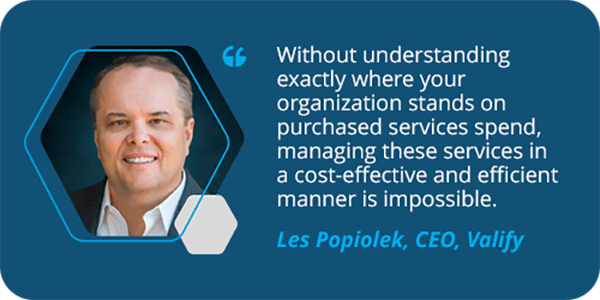
As Popiolek puts it: “Without understanding exactly where your organization stands on purchased services spend, managing these services in a cost-effective and efficient manner is impossible.”

Les Popiolek quote

Valify’s AI-powered platform solves this problem by organizing and analyzing spend data. Using advanced AI, Valify turns complex data into clear insights that healthcare leaders can trust.

How Valify’s AI Spend Insights helps healthcare teams win

The introduction of AI Spend Insights marks a major step forward for healthcare procurement teams.

AI Spend Insights is built to be simple and intuitive. Users can ask plain-language questions and receive clear, summarized answers without needing advanced training.

With AI Spend Insights, you can:

  • Spot high-cost areas across service categories
  • Find hidden vendor or contract redundancies
  • Benchmark spend against peers in real time
  • Speed up sourcing decisions with confidence

“With AI, we are able to expand the power of our analytics to executives and other users who do not use Valify on a daily basis by adding features like AI Spend Insights,” says Rick Mattock, Director of Product Management at Valify.

Data security you can trust

As AI adoption grows across industries, data security remains a top priority. This is especially true in healthcare. Valify’s AI integrations are designed with security in mind, keeping client data safe and confidential.

Valify’s approach prevents external AI providers from using client prompts or outputs to train future models. Healthcare systems can trust that their procurement data stays within Valify’s secure environment.

Delivering more value, faster

Valify’s AI is built into every layer of the platform. From user experience to data enrichment and acquisition, these tools help healthcare systems work faster and smarter.
For healthcare supply chain leaders, this means:

  • More time back for high-value strategic initiatives
  • Less time spent on manual data processing
  • Stronger supplier management through clearer spend visibility
  • Increased savings from faster identification of cost-reduction opportunities

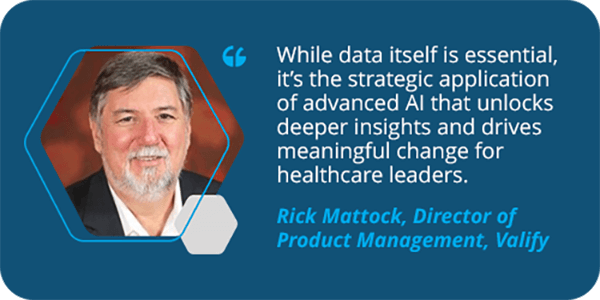
“We are advancing Valify’s AI capabilities to deliver unique insights and automated solutions, differentiating the platform from competitors,” adds Mattock. “While data itself is essential, it’s the strategic application of advanced AI that unlocks deeper insights and drives meaningful change for healthcare leaders.”

Rick Mattock quote

Why AI matters for healthcare procurement leaders

AI is here to stay. Organizations that embrace it will move faster and operate leaner. By applying advanced analytics to your purchased services data, you unlock powerful benefits. You gain a deeper understanding of spend patterns, contract efficiencies, and vendor performance.

Valify’s AI does more than automate tasks. It gives healthcare teams the confidence to make smart, data-driven decisions that reduce costs and improve operations.

Learn more about Valify’s AI and spend management tools

Want to take your organization’s purchased services strategy to the next level? Check out more of Valify’s solutions:

Ready to see AI Spend Insights in action?

We’d love to show you how Valify’s AI-powered tools can make an impact for your organization.

Schedule a demo today. See firsthand how we help healthcare teams reduce costs, work smarter, and take control of their purchased services.

Purchased Services Analytics

Too Much Data: The Paradox of Purchased Services Analytics

In the realm of healthcare procurement, data is king. For more than a decade, Valify has been a leader in purchased services data analytics. Yet, within this domain lies a paradox: while having data is a required step to make measurable progress on purchased services cost reduction, too much data can present a paralyzing challenge. This article delves into the challenges faced by healthcare systems, the evolving role of artificial intelligence (AI), and how integrating data with AI can lead to significant savings.

Aren’t We a Data Company?

Throughout our tenure, Valify has maintained its reputation as the gold standard in purchased services data analytics. Over the past decade, we’ve meticulously curated over $1 trillion in spend data, furnishing healthcare systems with invaluable insights into their financial landscapes. However, as we’ve labored alongside the professionals on the front lines, our users, we’ve always known one truth: while data serves as a cornerstone, achieving significant cost savings requires more than just numbers. It demands a strategic fusion of data, expertise, and manpower. The perennial question is what we can do as an analytics provider to empower our clients to make progress not just on the usual categories that everyone tackles, but on the full breadth of services spend?

What Are the Challenges?

The challenges confronting healthcare systems in managing their purchased services expenditures are diverse and complex. With an extensive range of over 1700 unique categories, it’s understandable that attention often gravitates towards the most visible areas of spending, such as food management or waste disposal. However, these categories only scratch the surface, with numerous smaller categories often overlooked and under-optimized. Adding to the complexity is the limited capacity of healthcare teams tasked with overseeing these expenditures. Despite their dedication, the sheer volume of data and the intricacies of sourcing across diverse categories can feel overwhelming. Moreover, time constraints further compound these challenges, as teams find themselves juggling competing priorities and struggling to allocate resources effectively.

AI and Its Potential

In recent years, the emergence of artificial intelligence has opened up exciting possibilities in the realm of data analytics. Powered by advancements in machine learning and natural language processing, AI holds the promise of revolutionizing how healthcare systems approach purchased services analytics. Imagine a world where teams can gain efficiency with machine-learning models that sift through the mountains of data, uncovering hidden opportunities for cost savings across various spending categories. With AI-driven algorithms that extract meaning from the data and present it in concise narratives, these teams gain valuable insights into vendor relationships and market trends, empowering them to make well-informed decisions that deliver substantial financial benefits for their organization. As we explore the potential of AI in this space, we anticipate new avenues for enhancing efficiency and driving impactful outcomes in purchased services analytics.

How Do We Solve This as an Industry?

The key lies in strategically integrating AI into healthcare procurement processes. Procurement teams must be equipped with AI-driven tools and insights that save them time by extracting valuable insights from the mountains of spend data. They need tools which speak their language to tell them the story behind the data, not just confront them with tables and charts. They need best in class software that serves as a force multiplier and which increases in value as they interact with it. And most importantly, these tools have to be built on top of pristine data – like that created by the tools, processes, and teams that Valify has worked hard to perfect over the last decade.

As we envision the future of purchased services analytics, it’s crucial to recognize that data alone won’t carry us forward. While data forms the bedrock of insights, it’s the strategic fusion with AI that will drive real progress. Through AI-driven analytics, healthcare organizations can break free from the constraints of conventional methods, unlocking new avenues for cost savings and efficiency. At Valify we’re leaning into this, and we’re excited to see how it will pave the way for a more sustainable future in healthcare procurement.

CIOReview Valify 50 Most Promising Healthcare Solution Providers 2019

Valify Recognized by CIO Review as one of the 50 Most Promising Healthcare Solution Providers – 2019″”


Valify_Certificate_2019


Valify: Bringing a Unique Value Proposition to Healthcare Purchased Services

Despite best efforts towards reducing the overall cost of operations, healthcare companies often miss out on regulating one of their most expensive cost-drivers. Generally sidelined and overlooked, purchased services contribute to about 45 percent of a hospital’s non-labor budget. It is the vastness and uncertainty of outsourced services that bring complexities, making it difficult for hospitals to identify an appropriate service contract benchmark and derive savings. When hospitals outsource services, they can unwittingly fall prey to unnecessary costs which include duplicated services, hidden contract fees, and automatic price escalations. 

Valify, a company specializing in purchased services analytics uses a web-based solution that identifies, benchmarks, and monitors savings on purchased services categories. “We are the only company 100 percent dedicated to purchased services,” says Chris Heckler, CEO and founder of Valify. 

In order to mitigate the uncertainty in the broad description of indirect spend, Valify has classified the domain that has approximately 1,200 specialties into seven primary categories, namely, financial and administration, facility support, HR, insurance, clinical, ancillary, and IT-telecom. By working with the customer’s finance or IT division, Valify accesses the data and links the information to its solutions. The company then processes the data through proprietary algorithms and classifies them in less than 10 days. The firm also provides dedicated analyst support for the client to maximize the use of this information for savings opportunities. 
Continue reading

Nurse checking patients blood pressure

Clinical Services in Healthcare: When to Outsource & When Not To

Key Takeaways

Choosing which clinical services to subcontract is not a straightforward task; nonetheless, it can be a time and money saver. Most hospitals have their radiology interpretations, laboratory testing, remote patient monitoring, and tele-ICU collaborations done by outside experts. This not only frees up more time for doctors to attend to patients but also facilitates faster results. However, outsourcing can also be risky, such as having a disparity in quality or losing a certain degree of control. Intelligent hospitals monitor costs, turnaround times, and patient outcomes, using software like Valify to help with decisions and ensure that outsourcing is indeed a value-adding activity.

One of the hardest decisions that a healthcare leader has to make is when to outsource clinical services. Hospitals that have to pay for clinical services at the same time that they are expected to provide high-quality patient care need a strong guideline to know which services to outsource and which to retain in-house. Healthcare outsourcing, mainly for clinical functions, is transforming the care delivery process and the way organizations manage their expenses. The healthcare outsourcing market, which is mainly driven by international demand, is expanding very quickly as providers are trying to attain better operational efficiency.

Why This Decision Matters in 2026

Today’s healthcare environment is more complex and competitive than ever:

These trends mean hospitals must understand not just if they should outsource, but when and how outsourcing fits into their strategy.

What Are Clinical Services in Healthcare?

“Clinical services” include all activities directly related to patient care, diagnosis, treatment, and therapeutic support. Common Clinical Services That May Be Outsourced

  • Imaging interpretation (radiology reads)
  • Pathology or specialized lab work
  • Dialysis support services
  • Tele‑ICU or remote monitoring
  • Pharmacy compounding or clinical support
  • Specialty clinician consult services

These differ from administrative outsourcing, like billing or scheduling; they affect clinical outcomes, quality, and patient experience.

The Growing Role of Outsourcing in Healthcare

Outsourcing clinical functions is no longer a niche strategy. Healthcare providers are increasingly working with third‑party specialists because:

  • Staffing shortages make it hard to recruit and retain specialized clinical professionals.
  • Hospitals face rising operational costs and need predictable budgets.
  • New technologies enable remote diagnostics and monitoring.
  • Regulatory complexity makes in‑house management more burdensome.

Today, hospitals can partner with outside specialists to deliver certain clinical services without compromising quality or continuity of care.

Benefits of Outsourcing Clinical Services

Let’s examine the fundamental reasons why hospitals choose to contract clinical services and how these reasons correspond with the overall business and clinical objectives.

  • Access to Specialized Talent

By outsourcing, hospitals get a chance to use the facilities of the most skilled professionals without incurring the burden of full in-house staffing costs. For instance, rural or community hospitals may send their radiology readings to imaging groups having the specialized expertise for better accuracy.

  • Better Control Over Costs

Most hospitals find that outsourcing leads to the reduction of costs in the whole process, particularly for the services that are highly specialized or require expensive equipment. Outsourcing changes the capital costs (CapEx) into predictable operating costs (OpEx), thus allowing the leaders to budget more confidently.

  • Faster Results for Critical Services

The dedicated outsourced partners generally provide faster results, especially in the areas of imaging reads or remote patient monitoring. This can also result in freeing up clinicians so that they can concentrate more on patient care, which will not only improve outcomes but also staff satisfaction.

  • Flexibility to Scale Up or Down

If there is an increase in the number of patients, outsourcing clinical teams can also increase according to the demand. This would eliminate the long-term hiring and training efforts, which are often costly. Hospitals that adopt outsourcing strategically can even increase or decrease their services without causing a major disruption to their workforce.

Risks & When NOT to Outsource Clinical Services

Outsourcing clinical functions isn’t risk‑free. It may be the wrong choice when:

  • Quality Control Is Essential

Some hospitals deliver consistently higher quality care because their internal teams understand organizational standards and culture. If outsourcing partners cannot meet quality benchmarks, patient outcomes may suffer.

  • Loss of Operational Control

Outsourcing means relying on an external team to manage workflows, data, and clinical protocols. This can be challenging if the partner’s processes are not tightly integrated. If there are no clear Service Level Agreements (SLAs) in the contracts, there can be gaps in care and accountability left unattended. 

  • Cultural or Strategic Misalignment

Certain clinical services need to be well integrated with the internal teams and the entire workflow of the institution. It is a must for outsourced partners to be on the same page with the institution in terms of values and goals; otherwise, the whole service delivery might seem alienating. 

  • Data Security and Compliance Concerns

One of the key elements of clinical outsourcing is the strictest following of privacy regulations (like HIPAA). If the vendors are lacking in the area of compliance, the probability of a data breach happening is greater.  Key takeaway: Outsourcing should not result in violation of patient privacy or compliance with regulations. 

How to Decide: Key Indicators for Outsourcing

To make a smart decision and avoid common pitfalls, hospitals should track both financial and quality indicators.

Financial KPIs to Consider

Metric What It Tells You
Cost per clinical service Whether internal costs exceed national or peer benchmarks
Spend variance over time Gaps between budgeted and actual clinical spend
Capital vs. operating costs Potential savings from outsourcing
Return on investment (ROI) Whether outsourcing yields measurable savings

Using a tool like Valify’s spend analytics, hospitals can uncover hidden opportunities and risks in clinical service spend.

Operational & Quality Metrics

  • Turnaround time for lab or imaging services
  • Patient outcome measures (e.g., readmission rates)
  • Clinical compliance scores and error rates
  • Patient satisfaction scores

A rising trend in delays or quality dips may signal that internal resources are stretched too thin.

Capacity & Strategic Considerations

Ask questions like:

  • Does our facility have the staffing to support this service internally?
  • Is demand for this clinical service growing faster than we can scale?
  • Would outsourcing improve patient experience or clinical outcomes?

If the answer is “yes” to multiple questions, an outsourced evaluation is likely warranted.

Best Practices for Outsourcing Clinical Services

Once the decision is made to outsource, execute with a strategy that protects quality and maximizes value.

  • Choose Partners With Proven Outcomes

Look for vendors with benchmarked performance data, ideally tied to quality and turnaround metrics.

  • Align Outsourcing With Internal Goals

Make sure the outsourcing partnership supports your broader clinical and operational strategy, not just cost reduction.

This means aligning performance metrics, communication frequency, and reporting structures.

  • Build a Strong Governance Framework

Set up review cadences, oversight committees, and performance dashboards with clear thresholds for quality and compliance.

Valify’s WorkPlan dashboard and benchmarking tools help ensure that outsourced clinical services remain on track.

  • Use Data to Monitor Performance

Track outcomes over time using objective data:

  • Monthly performance dashboards
  • Quality benchmarks vs. industry standards
  • Cost savings compared to forecasted internal costs

Real‑time visibility enables continuous improvement, not just quarterly or annual reviews.

Real‑World Examples of Clinical Outsourcing

Example 1: Radiology Reporting

A mid‑sized hospital outsourced radiology interpretations during peak hours. Turnaround time improved by 25%, while internal staff could focus on urgent inpatient needs.

Example 2: Specialized Laboratory Testing

A hospital without high‑complexity lab equipment partners with a specialized vendor for advanced tests. Internal costs drop while diagnostic accuracy improves.

Example 3: Remote Patient Monitoring

An integrated health system deployed outsourced remote monitoring services for chronic care patients. Patient follow‑ups improved, and hospital readmissions fell.

Decide, Outsource, Excel with Valify

Outsourcing clinical services can be a great advantage for hospitals, but only if the decision is backed up by data and is in line with the goals of patient care. It is not merely a matter of saving money; rather, it involves making intelligent choices that ensure quality and efficiency.

We provide hospitals with a comprehensive view of our Purchased Services expense, which covers clinical categories as well. Our analytics, benchmarking tools, and contract management solutions give you the insights essential for making decisions regarding the outsourcing of certain services or keeping them in-house.

Are you curious about how outsourcing can lead to the efficiency of the operations and better healthcare?

Schedule a demo with Valify today and get rid of the uncertainties in your decision-making process.

Frequently Asked Questions:

Which clinical services in hospitals should be recommended for outsourcing at the very beginning?

The top candidates include services that require specialized skills and involve high equipment costs: the likes of radiology reads, lab tests, tele-ICU support, and pharmacy compounding. Also, consider the areas where the internal staff are overworked or where the technology costs are the highest to start with.

What are the implications of outsourcing on patient wait times and care quality?

Outsourced specialists would probably be able to provide quicker results, which would consequently reduce the possibilities of delays for imaging or lab work. This, in turn, will allow the in-house clinicians to concentrate more on the bedside care which is very likely to improve the whole patient’s experience.

What should I be cautious of when selecting a clinical services vendor?

You should pay attention to the quality benchmarks, the reliability of the turnaround time, and the strict compliance standards. A difference in culture or lack of communication can lead to gaps in care, so always do a thorough check.

How is outsourcing actually saving my hospital money?

Monitor costs by service, ROI, and operating vs. capital expenses. Actual spending compared to industry benchmarks not only shows the true savings but also helps identify areas for further improvement.

Can benchmarking and data really point out the specific services that should be outsourced?

Definitely. Data analytics illuminate the ‘hidden’ costs, areas of discrepancies in performance, and places where efficiency can be increased. Expanding tools such as Valify’s spend insights allow empowered and informed, evidence-based decision-making from the leaders.

Valify logo on blue background

What’s Ahead for Hospital Purchased Services Cost Reduction Technology in 2018

Purchased services represents up to 45% of the non-labor expense budget within a health system. As more executives look to purchased services categories for potential expense reduction, 2018 is an important year, and Valify has several important innovations planned to assist clients in controlling and reducing purchased services expense in the year ahead:

Continue reading